
Desserts
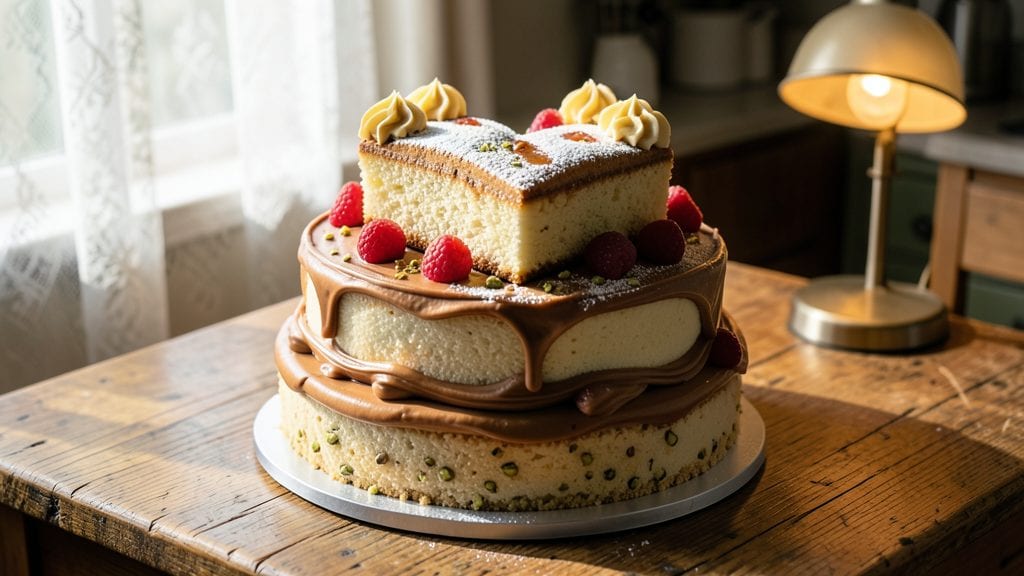
This vintage heart cake recipe brings old-world charm to your dessert table with its buttery shortbread base and delicate fondant layers. 💛 The secret to its timeless appeal lies in the crisp, crumbly crust that supports layers of fluffy vanilla cake and smooth buttercream, all shaped into a romantic heart form.
I first tried this recipe after finding a faded family photo of my grandmother's wedding cake—now I recreate it every Valentine's Day.
The magic starts with a rich shortbread crust that bakes until golden and fragrant, setting the perfect foundation. Between the layers, a light vanilla cake keeps things airy, while homemade buttercream adds that classic vintage sweetness.
The real showstopper? Pressing fondant into heart shapes and decorating with delicate lace patterns or fresh edible flowers for that old-fashioned elegance.
What you'll end up with is a cake that looks like it belongs in a museum display case—romantic, intricate, and utterly delicious. The combination of textures (crisp crust, tender cake, velvety frosting) makes every bite feel like a little love letter.
Perfect for weddings, anniversaries, or just because someone deserves something special.
Want to make it your own? Swap the vanilla cake for chocolate or add a layer of raspberry jam for extra flavor. This cake isn't just dessert—it's a centerpiece that tells a story. Let's get baking!
Ingredients for vintage heart cake
Buttery layers, delicate fondant, and a touch of vintage romance—just a few simple ingredients transform into showstopping heart cake.
| Ingredient | Amount | Notes |
|---|---|---|
| Unsalted Butter 🧈 | 1 ½ cups | Cold, cubed for crust |
| All-Purpose Flour 🌾 | 2 ½ cups | Sifted for shortbread |
| Granulated Sugar 🍚 | ½ cup | Fine for texture |
| Vanilla Extract 💧 | 1 tbsp | Pure, high-quality |
| Vanilla Cake Mix 🍰 | 15 ¼ oz | Boxed mix (15.25 oz) |
| Large Eggs 🥚 | 3 whole | Room temperature |
| Milk 🥛 | 1 cup | Whole preferred |
| Vegetable Oil 🫒 | ¼ cup | For cake mix |
| Powdered Sugar 🍚 | 3 cups | For buttercream |
| Heavy Whipping Cream 🥛 | 1 cup | Cold for buttercream |
| Salted Butter 🧈 | ½ cup | Room temperature |
| White Fondant 🎀 | 1 ½ lb | Store-bought or homemade |
| Edible Glitter ✨ | 1 tbsp | Optional for decoration |
| Fresh Edible Flowers 🌸 | ¼ cup | For garnish (optional) |
| Vanilla Bean Paste 💧 | 1 tbsp | For extra flavor |
The shortbread crust is where the magic happens. European-style butter (like Plugrá) gives that rich, crumbly texture, but any good unsalted butter works. I grab mine from Whole Foods or the bakery section at Kroger—look for high-fat content (80% or more). The fondant should be smooth and pliable; if it cracks, knead it longer or add a tiny bit of shortening. For the cake mix, Betty Crocker or Duncan Hines are reliable, but homemade vanilla cake elevates it to another level. The vanilla bean paste adds depth—Nestlé or Gourmet Vanilla brands are my go-to.
No vanilla bean paste? Extra vanilla extract plus a pinch of almond extract works in a pinch. Fondant too tricky? Buttercream with a thin layer of marzipan gives a similar elegant look. The edible flowers can be swapped for candied violets or freeze-dried petals if fresh ones wilt. For the buttercream, powdered sugar from Domino dissolves smoothly—avoid the clumpy stuff. If your frosting is too thick, add milk one teaspoon at a time. The cake mix calls for oil, but melted butter makes it taste richer.
Shortbread crust keeps 3 days in an airtight container, but the fondant dries out fast—cover it with plastic wrap. The cake layers can be assembled 2 days ahead; just wrap tightly in plastic. Fondant decorations? Use a rolling pin and heart-shaped cutter for clean edges. Store the finished cake in a cool, dark place—it's meant to be admired, not devoured too quickly. Freeze the unfrosted layers for up to 3 months if you're prepping ahead.
Why You'll Love This Recipe
- No Fondant Fuss: I love that this recipe lets me use a boxed vanilla cake mix—because let’s be real, sometimes you just don’t feel like measuring flour by the teaspoon. The shortbread crust? That’s where the magic happens: just cube the cold butter, mix it into the flour, and press it into a pan. No rolling pins, no stress. It’s the kind of crust that’s crispy on the edges but still holds up like a champ under the layers.
- Creamy, Crunchy, Pure Bliss: That buttercream? Oh, it’s chef’s kiss with the vanilla bean paste—rich, velvety, and just sweet enough. The shortbread base adds a buttery crunch, while the cake layers stay moist thanks to the whole milk and eggs. Between us, the contrast is what makes this cake unforgettable. It’s like a hug in dessert form.
- Fancy for Any Occasion: This cake isn’t just for Valentine’s Day—it’s my go-to for birthdays, bridal showers, or even a lazy Sunday treat. The fondant heart centerpiece makes it look instantly special, but the cake mix layers mean I can pull it together in a pinch. Plus, the edible flowers and glitter? They add that vintage charm without requiring a baking degree.
- Make-Ahead Hero: Freezing the unfrosted layers for up to three months? Game-changer. I’ll often bake the cake mix layers ahead, stack them with buttercream, and freeze them. Then, when the big day arrives, I just thaw, add the shortbread crust, and cover with fondant. The fondant dries out fast, so I cover it immediately with plastic wrap—but honestly, the effort is worth the showstopping result.
Step-by-step instructions for vintage heart cake
Here's how to build that nostalgic heart cake with crisp shortbread, moist layers, and show-stopping fondant.
👨🍳 Step 1: Make the Buttery Shortbread Base
Cut the 1½ cups unsalted butter into small cubes and chill for 30 minutes while you sift the 2½ cups all-purpose flour with the ½ cup granulated sugar in a large bowl. Work quickly—cold butter is key for that signature crumbly texture.
Use a pastry cutter or your fingers to work the butter into the flour until you reach pea-sized crumbs with some flour still visible. Press the mixture evenly into a 9x13-inch pan, then prick all over with a fork. Bake at 350°F for 18-20 minutes until just golden at the edges. Let cool completely before assembling—this prevents soggy layers later.
🍳 Step 2: Bake and Layer the Cake Mix Layers
Preheat your oven to 350°F and grease three 8-inch round cake pans. In a large bowl, combine the 15¼ oz vanilla cake mix, 3 large eggs, 1 cup milk, and ¼ cup vegetable oil until just mixed (don't overbeat). Divide evenly among the pans.
Bake for 25-30 minutes or until a toothpick comes out clean. Cool in pans for 10 minutes, then transfer to a wire rack. Once completely cool, level the tops if needed and stack with vanilla buttercream (made by beating the ½ cup salted butter with 3 cups powdered sugar and 1 tbsp vanilla extract until fluffy). Chill the stacked cake for 2 hours—this firming up makes fondant application much easier.
🥘 Step 3: Prepare the Vanilla Buttercream Filling
In a stand mixer fitted with the whisk attachment, beat the 1 cup heavy whipping cream and ½ cup salted butter on medium speed until soft peaks form. Gradually add the 3 cups powdered sugar, then mix in the 1 tbsp vanilla extract and 1 tbsp vanilla bean paste until smooth and glossy. Taste and adjust sweetness if needed—this is what brings all the layers together.
Spread half the buttercream between the shortbread base and first cake layer, then add the second layer with more buttercream. Repeat with the final layer. Wrap the assembled cake tightly in plastic and refrigerate for 4 hours or overnight. This chilling prevents the fondant from melting when you apply it later.
🎨 Step 4: Create the Fondant Heart Centerpiece
Roll out 1 lb of the 1½ lb white fondant on a lightly floured surface to ¼-inch thickness. Cut a 6-inch heart shape using a template or freehand with a sharp knife. Knead the remaining ½ lb fondant with the 1 tbsp edible glitter until evenly distributed, then roll out to ⅛-inch thickness for the outer layer.
Brush the cake's sides with a little milk to help the fondant adhere, then carefully press the heart center onto the top. Cover the entire cake with the glitter fondant, smoothing with your fingers. Press the ¼ cup fresh edible flowers gently into the sides for a vintage touch. Let the fondant set for 1 hour at room temperature before serving.
Pro Tips For Making Vintage Heart Cake
- Cube Butter Like Ice: Cut that 1.5 cups unsalted butter into uniform cubes—think 1-inch chunks, not random blobs—and freeze them for 20 minutes before mixing with flour. I learned this the hard way: uneven cubes melt at different rates, and suddenly you’re fighting greasy dough instead of crisp shortbread. Cold butter is your friend here—don’t skip the chill.
- Sift Flour, Save Yourself: That 2.5 cups all-purpose flour must be sifted before mixing with the 0.5 cup granulated sugar for the shortbread. Yes, it’s extra work, but unsifted flour packs down unevenly, and your crust will turn out dense instead of light and crumbly. Trust me, your future shortbread will thank you—it’s the thing that matters most for that vintage texture.
- Chill the Cake Layers: After baking the cake mix layers, let them cool in the pans for exactly 10 minutes—no more, no less—then transfer to a wire rack. Skipping this step means steam gets trapped, and your layers end up gummy. Once fully cooled, level the tops if needed (I know, it’s tempting to skip), and chill the stacked cake for 2 hours before fondant. This isn’t optional—fondant on a warm cake is a disaster waiting to happen.
- Whip Cream to Soft Peaks: When making the buttercream, beat the 1 cup heavy whipping cream and 0.5 cup salted butter until you get soft peaks—not stiff, not wobbly, but just enough to hold a shape when you lift the whisk. Dumping in the 3 cups powdered sugar too early will deflate your cream, and suddenly your buttercream is grainy instead of silky. Patience here makes all the difference for that vintage smoothness.
Troubleshooting perfect results
Crumbly Shortbread Fails
If your shortbread turns out dense instead of crumbly, it’s likely because the butter wasn’t cold enough. Cut the 1½ cups unsalted butter into tiny cubes and freeze for 45 minutes before mixing—this ensures that pea-sized crumbs form properly.
Overworking the dough also creates a tough texture, so stop as soon as the flour is just combined. 🔥
Cake Layers Too Dense
Underbaked or overmixed cake layers are the usual culprits. Bake the vanilla cake mix layers until a toothpick comes out clean—no wet crumbs! And don’t overbeat the batter; mix just until the ingredients are combined.
If your cake layers are still too dense, try reducing the ¼ cup vegetable oil to 2 tablespoons for a lighter texture.
Buttercream Too Thick
Your buttercream might be too stiff if you didn’t use cold heavy whipping cream or overmixed it. Beat the ½ cup salted butter and 1 cup heavy whipping cream until soft peaks form, then gradually add the 3 cups powdered sugar.
If it’s still too thick, add 1 teaspoon milk at a time until it’s spreadable but holds shape.
Fondant Won’t Stick
Fondant clinging to your cake is a common issue, often caused by a dry surface. Brush the cake’s sides with a thin layer of milk or simple syrup before applying the fondant.
Also, ensure your fondant is at room temperature—cold fondant cracks, while warm fondant melts. Roll it out to ¼-inch thickness for the heart shape and ⅛-inch thickness for the outer layer. 💫
Heart Shape Distorted
If your heart shape looks uneven, it might be from uneven rolling or cutting. Use a rolling pin to roll the fondant evenly, then cut with a sharp knife or heart-shaped cutter.
Press gently but firmly to avoid stretching the fondant. For extra precision, place the cutter on a piece of parchment paper before pressing down.
Nutrition facts
Frequently asked questions
Why does the shortbread crust need to cool completely before assembling?
Letting the shortbread crust cool completely prevents soggy layers when you add the cake and buttercream. The heat from warm crust can melt the buttercream or steam the cake layers, ruining the texture. Patience here ensures every bite has that perfect crisp-to-soft contrast.
Can I make this cake ahead of time?
The unfrosted layers can be frozen for up to 3 months, and the shortbread crust keeps 3 days in an airtight container. Assemble the cake and apply fondant just before serving to keep it looking fresh and prevent drying.
What if my fondant cracks when rolling it out?
Fondant cracks when it's too cold or dry. Knead it longer to soften, or warm it slightly between your hands. Roll it out on a lightly floured surface and keep it ¼-inch thick for the heart shape—this prevents stretching and tearing while you work.
Can I substitute fresh edible flowers with something else?
Yes! If fresh edible flowers aren't available, use candied violets or freeze-dried petals for a similar vintage look. Just press them gently into the fondant sides—avoid overcrowding to keep the design clean and elegant.
How do I fix a cake layer that's too dense?
Underbaking or overmixing are the usual culprits. Bake until a toothpick comes out clean, and mix the batter just until combined. For extra lightness, reduce the ¼ cup vegetable oil to 2 tablespoons—this helps create airier layers.