Desserts
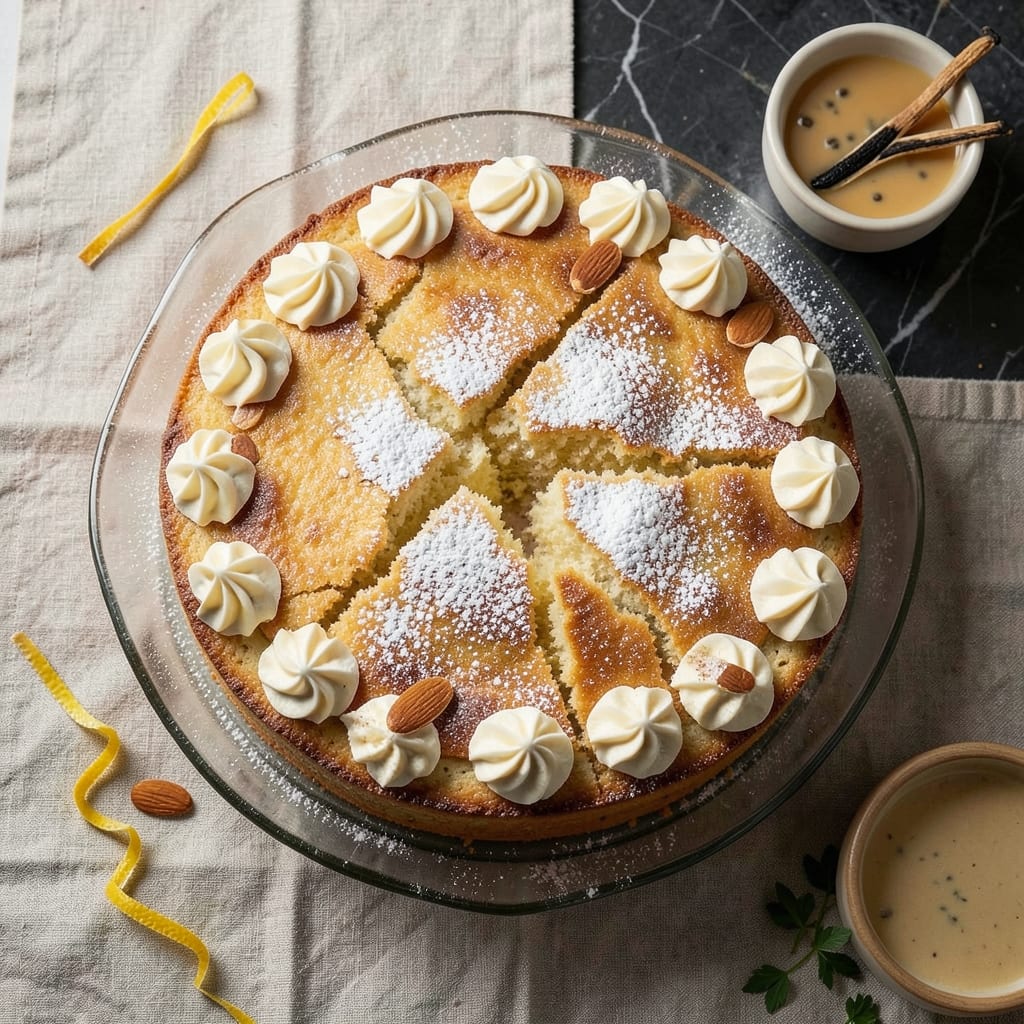
This 6-egg vanilla cake delivers layers so moist they’ll make you question every boxed mix you’ve ever bought. The secret? Six eggs create a tender, velvety crumb that stays fresh for days—no dryness, no crumbling. I perfected this recipe after years of testing, and the vanilla bean infusion takes it from good to unforgettable.
The structure comes from properly whipped eggs and butter, while the vanilla bean adds depth that powdered extract can’t match. You’ll mix everything in one bowl (no fuss), then bake until golden with a springy center. This isn’t just cake—it’s a showstopper that tastes like a bakery’s finest.
What makes this recipe work is the balance: rich but not heavy, sweet but not cloying. The eggs create a tender crumb that holds up to frosting or fruit fillings, while the vanilla bean ensures every slice tastes like a luxury dessert. Ready in just 60 minutes, it’s perfect for birthdays, holidays, or whenever you crave something truly special.
For extra indulgence, try adding a layer of raspberry jam or chocolate ganache between tiers. The possibilities are endless, but the foundation—those six eggs and that vanilla bean—is what makes it exceptional. Let’s get baking!
Ingredients for 6 egg vanilla cake
Six eggs, two vanilla beans, and a touch of citrus—this is your dream cake lineup.
| Ingredient | Amount | Notes |
|---|---|---|
| Large Eggs 🥚 | 6 whole | Room temperature for best mixing |
| Unsalted Butter 🧈 | 1 ½ cups | Softened, not melted (70°F) |
| Granulated Sugar 🍚 | 2 cups | Superfine preferred for smooth texture |
| All-Purpose Flour 🌾 | 2 ½ cups | Sifted, spooned and leveled |
| Vanilla Bean 🌿 | 2 whole | Seeds scraped, pod reserved |
| Baking Powder 🧂 | 2 tsp | Aluminum-free preferred |
| Salt 🧂 | ½ tsp | Fine sea salt |
| Whole Milk 🥛 | 1 cup | Room temperature |
| Vanilla Extract 🍯 | 1 tbsp | Pure, for extra depth |
| Lemon Zest 🍋 | 1 tbsp | Fresh, finely grated |
| Vegetable Oil 🫒 | ½ cup | Light, for moisture |
The eggs are non-negotiable here. Room temperature is key—cold eggs won't whip properly. Kirkland Signature or Organic Valley eggs work best for rich flavor. Skip the powdered vanilla extract—real vanilla beans make all the difference. Trader Joe's sells them pre-split for convenience, but whole beans give you that extra depth. The butter? Plugrá or Land O'Lakes unsalted is my go-to for consistent results. If you're using salted, reduce the added salt slightly.
No vanilla beans? Double the vanilla extract and add a pinch of cinnamon to mimic that depth. Swap whole milk for evaporated milk if you're out—it adds richness. The lemon zest can be skipped if you're not a fan, but it brightens the whole cake. For the flour, King Arthur or Bob's Red Mill are reliable brands. If you're at high altitude, add another tablespoon of flour to prevent sinking. And trust me, vegetable oil over melted butter keeps this cake ultra-moist—no dry crumb here.
This cake keeps beautifully—3 days at room temp covered, 1 week in the fridge. For extra indulgence, wrap tightly in plastic and freeze for up to 3 months. The secret to reheating? 10 seconds in the microwave—just enough to soften the crumb without drying it out. I always make a double batch because it disappears faster than you'd think.
Why You'll Love This Recipe
- Six Eggs, One Bowl: I swear by this method—just crack, whisk, fold. No sifting, no extra mixing, and those six eggs make the batter so rich it practically bakes itself into a tender crumb.
- Vanilla Bomb: That split vanilla bean? It’s not just flavoring—it’s the star. The first slice smells like a bakery, and every bite has this deep, creamy vanilla punch that’s dangerously addictive.
- Leftover Goldmine: This cake holds up for days, if you can resist. Slice it thin, toast it, or layer it with whipped cream—it’s my go-to for breakfast, dessert, or a midnight snack when nothing else is left.
- Budget Baking: Six eggs might sound pricey, but they deliver serious cake for less than half the cost of boxed mix. Plus, butter and sugar stretch further here than in most recipes—more cake for fewer ingredients.
Step-by-step instructions for ultra-moist vanilla cake
Here's how to create layers so tender they practically melt in your mouth.
Infuse the Vanilla and Prepare Wet Ingredients
First, split the 2 whole vanilla beans lengthwise with a sharp knife and scrape out the seeds into a small bowl. Add the seeds to the 1 cup whole milk and let it steep for 10 minutes at room temperature. This infuses the milk with deep vanilla flavor that regular extract can't match.
In a large mixing bowl, combine the 6 whole large eggs (room temperature) with the 2 cups granulated sugar. Beat on medium speed for 3-4 minutes until the mixture is pale, thick, and nearly tripled in volume. This step is crucial—it incorporates air that creates those light, airy layers. The mixture should look like ribbons when you lift the beaters.
In a separate bowl, whisk together the 1.5 cups softened unsalted butter, 0.5 cup vegetable oil, 1 tbsp vanilla extract, and the 1 tbsp lemon zest. The lemon zest adds a bright note that balances the richness. Slowly pour this mixture into the egg-sugar mixture while continuing to beat on low speed. This prevents the butter from separating and ensures a smooth batter.
Combine Dry Ingredients and Fold Gently
In a medium bowl, sift together the 2.5 cups all-purpose flour, 2 tsp baking powder, and 0.5 tsp salt. Sifting aerates the flour and prevents dense layers. Gently fold the dry ingredients into the wet mixture using a spatula, mixing just until combined. Be careful not to overmix—you should still see some flour streaks. Overmixing develops gluten, which makes the cake tough instead of tender.
Now, add the vanilla-infused milk to the batter. Fold it in gently until just incorporated. The batter should be smooth and slightly thick, like a well-tempered cake batter. If it looks too thick, you can add 1-2 tablespoons of the vanilla-infused milk to loosen it slightly. This ensures the cake will rise properly and remain moist.
Divide and Bake for Perfect Layers
Preheat your oven to 350°F and grease three 8-inch round cake pans with vegetable oil, then line the bottoms with parchment paper. Divide the batter evenly among the pans, filling each about ⅔ full. Tap each pan gently on the counter to remove any air bubbles.
Bake for 25-30 minutes, or until a toothpick inserted into the center comes out clean. The cakes should spring back slightly when pressed in the center. Rotate the pans halfway through baking for even browning. The tops should be golden brown, but don't overbake—they'll continue cooking slightly as they cool.
Cool and Layer for Maximum Moisture
Remove the cakes from the oven and let them cool in the pans for 10 minutes. Then, transfer them to a wire rack to cool completely. This gradual cooling prevents cracking and helps the layers set properly. While the cakes cool, you can prepare your filling and frosting—this is where the magic happens for that ultra-moist texture.
Once completely cool, place one layer on a serving plate. Spread a thin layer of your preferred vanilla buttercream or filling (like lemon curd or whipped cream) on top. Repeat with the remaining layers, finishing with the last layer on top. This layering technique ensures every bite is bursting with flavor and moisture.
Pro Tips For Making 6 Egg Vanilla Cake
- Whisk Eggs Until Ribbon Stage: Six eggs need serious attention—whisk them in a stand mixer (or by hand) until the ribbons hold for 2 full seconds. I learned this the hard way when my cake turned dense; those extra 30 seconds of whisking make all the difference for a light, airy crumb.
- Scrape the Vanilla Bean: Don’t just scrape the seeds—rub the empty pod against the sugar while mixing. That pulp hides deep flavor, and skipping it means your cake tastes like vanilla extract, not real vanilla. (Yes, even if you’re impatient like me.)
- Don’t Overmix the Batter: Once you fold in the flour, stop when it’s just combined—no streaks, but no extra stirring. Overmixing develops gluten and turns your cake into a dense brick. I used to ignore this and wondered why my vanilla cake tasted more like a muffin.
- Use Room-Temp Butter: Cold butter makes for a tough cake; room-temperature butter (soft but not melted) blends smoother and creates a finer crumb. Pop it in a bowl with warm water for 10 minutes if you’re in a rush—just don’t let it turn into soup.
Essential equipment for great 6 egg vanilla cake
Mixing Essentials
You’ll need a stand mixer with a whisk attachment—this is non-negotiable for properly whipping those 6 eggs and 2 cups sugar into ribbons. I use my KitchenAid Artisan Series for its consistent power, but a hand mixer works if you mix in 2-minute intervals to avoid overheating. For measuring, a digital kitchen scale ensures precision with the 1.5 cups butter and 2.5 cups flour, but if you’re using cups, King Arthur Measure Cups with their built-in levelers are a game-changer. 🥚
Baking Tools
Three 8-inch round cake pans are your best bet—Wilton Perfect Results pans with non-stick coating prevent sticking and ensure even baking. Grease them with vegetable oil (not butter) for a clean release. A parchment paper circle in each pan’s bottom saves you from scrubbing later. For testing doneness, a long skewer or toothpick is essential, but I also keep a thermometer handy to confirm 205-210°F at the center. 🧈
Vanilla Infusion Kit
Split your 2 vanilla beans with a sharp microplane or small knife—this gives you more surface area for flavor extraction. A small glass jar with a lid works perfectly for steeping the seeds in 1 cup milk for 10 minutes. If you’re serious about vanilla, invest in a vanilla bean splitter from Sur La Table—it’s a $10 tool that makes this step effortless. For scraping seeds, a small spoon or the back of a knife works, but a vanilla bean scraper ensures you get every last bit. 🌿
Baking Time Timer
Set a timer for 25 minutes when you start baking, but keep an eye on the cakes at 20 minutes—ovens vary! A wire cooling rack is a must for even cooling, and I always keep a small offset spatula handy to loosen the edges if needed. For layering, a serrated knife helps trim domed tops neatly. Pro tip: Use a pencil and ruler to mark ½-inch layers on your knife for consistent cuts. 🕒
Frosting Prep Tools
While your cakes cool, gather your frosting tools: a spatula for spreading, a piping bag with star tip for decorating, and a small offset spatula for smoothing. For fillings, a pastry brush helps distribute lemon curd evenly between layers. If you’re making vanilla buttercream, a hand mixer or stand mixer paddle attachment whips it to fluffy perfection in 3-4 minutes. Keep everything at room temperature to avoid lumps. ✨
Storage Solutions
Once assembled, store your cake in an airtight container or domed cake carrier to maintain moisture. For short-term storage (3 days), a cool, dark place works, but the fridge is better for longer shelf life. If freezing, wrap each layer individually in plastic wrap before stacking with parchment between layers. A sharp serrated knife makes slicing frozen cake easier—just let it sit at room temperature for 10 minutes before serving. 🧊
Nutrition facts
Frequently asked questions
Why does this recipe use six eggs instead of the usual four?
The six eggs create a richer, more velvety texture that stays moist for days. Each egg adds structure while keeping the crumb tender—this is why bakery-style cakes use more eggs than boxed mixes. The extra yolks also deepen the flavor and help the cake hold up to frosting.
Can I substitute powdered sugar for granulated in this recipe?
No, never substitute powdered sugar—it won't dissolve properly and will create lumps in your batter. Granulated sugar dissolves completely when whipped with eggs, creating that signature light, airy texture. For frosting, you can use powdered sugar, but keep the cake recipe as written.
What if my cake comes out dense instead of light?
Dense cake usually means overmixing or under-whipped eggs. Make sure you beat the eggs and sugar until they're pale and tripled in volume (about 3-4 minutes on medium speed). Also, don't overmix after adding dry ingredients—just fold until combined. If your oven runs hot, reduce temperature to 340°F next time.
How do I make this cake gluten-free?
Replace the 2.5 cups all-purpose flour with a 1:1 gluten-free flour blend like Bob's Red Mill or King Arthur. Add ½ tsp xanthan gum if your blend doesn't include it, and increase baking powder to 2.5 tsp. Keep all other ingredients identical—just expect slightly denser layers. For best results, bake at 340°F and check doneness at 20 minutes.
Can I bake this cake in a different pan size?
Yes, but adjust baking time and temperature. For 9-inch pans, reduce batter by ⅓ per pan and bake at 340°F for 20-25 minutes. For 6-inch pans, use full batter and bake at 330°F for 30-35 minutes. Always use parchment paper and grease pans well to prevent sticking.