
Desserts
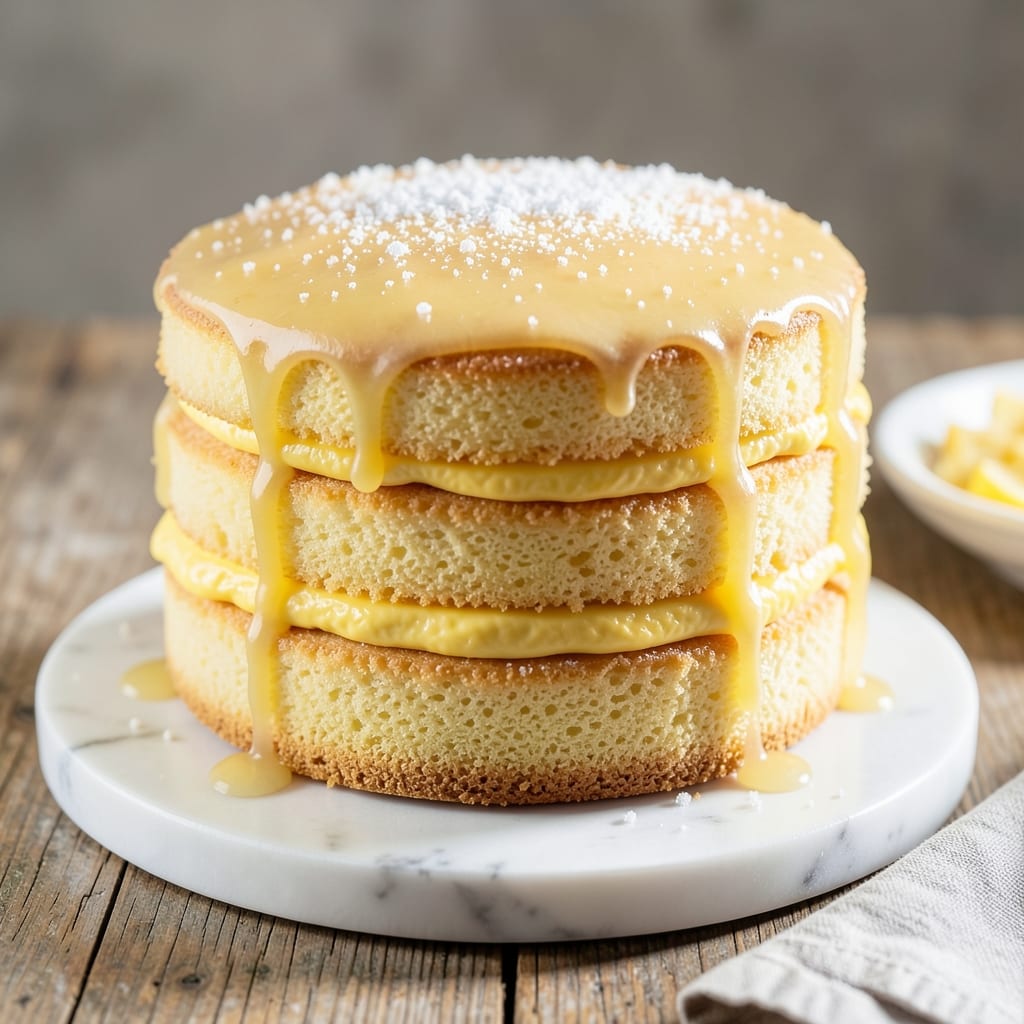
This two-layer lemon cake recipe delivers the perfect balance of bright citrus and creamy richness that makes it a crowd favorite. The secret lies in a tender, moist cake infused with fresh lemon zest and juice, paired with a velvety cream cheese frosting that adds a contrasting tang. I've perfected this recipe over years of baking, ensuring each slice offers that signature burst of lemon flavor without being overpowering.
The cake itself is a study in simplicity—just six essential ingredients come together to create layers that are light yet sturdy enough to support the frosting. Baking at the right temperature ensures a golden, even finish, while the cream cheese frosting, lightly sweetened with powdered sugar, brings a smooth, velvety texture that complements the cake's citrus notes. The contrast between the zesty cake and creamy frosting is what makes this dessert truly special.
What you'll end up with is a showstopping cake that's as beautiful as it is delicious—golden layers separated by fluffy frosting, ready to be sliced and served. The frosting's slight tang enhances the lemon's brightness, creating a harmonious flavor profile that's impossible to resist. Perfect for birthdays, celebrations, or simply treating yourself, this recipe delivers professional-quality results with minimal fuss.
Whether you're a seasoned baker or just starting out, this two-layer lemon cake is designed to impress. The instructions are clear and straightforward, ensuring success every time. Once you try this recipe, you'll understand why it's a staple in so many kitchens—it's the kind of dessert that feels like a hug in every bite.
Ingredients for 2 layer lemon cake
Six simple ingredients for the cake, five for the frosting—just enough to create a showstopper.
| Ingredient | Amount | Notes |
|---|---|---|
| All-Purpose Flour 🌾 | 2 ½ cups | Sifted for light texture |
| Granulated Sugar 🍚 | 2 cups | White or light brown |
| Unsalted Butter 🧈 | 1 cup | Cold, cubed for cake |
| Large Eggs 🥚 | 4 whole | Room temperature |
| Fresh Lemon Juice 🍋 | ½ cup | From 2-3 lemons |
| Lemon Zest 🍋 | 2 tbsp | Finely grated |
| Baking Powder 🍞 | 2 tsp | Diamond Crystal preferred |
| Salt 🧂 | ½ tsp | Fine sea salt |
| Cream Cheese 🧀 | 8 oz | Room temperature |
| Powdered Sugar 🍚 | 3 cups | Sifted for smooth frosting |
| Heavy Cream 🥛 | ½ cup | Cold for whipping |
| Vanilla Extract 🌸 | 1 tsp | Pure vanilla preferred |
The flour and sugar are the backbone here, but the butter matters most—use unsalted and let it sit out for 30 minutes before creaming. I grab mine from Whole Foods or Trader Joe's where it's always fresh. For the lemons, go for the brightest ones you can find—organic lemons from the produce section have the most zest. If you're not using the whole lemon, save the rest for lemonade or marinades. The baking powder? Diamond Crystal is my go-to—it's lighter than others and gives a better rise.
No fresh lemons? Bottled lemon juice works in a pinch, but the zest is harder to substitute. For the butter, vegan butter in a bind, but it'll change the texture slightly. Cream cheese brands vary—Philadelphia is reliable, but Kite Hill is great if you're avoiding dairy. Want extra tang in the frosting? Add 1 tsp more lemon juice. The vanilla extract can be imitation, but pure vanilla is worth the splurge—it makes a noticeable difference in flavor.
The cake layers keep well wrapped at room temperature for 2 days, or in the fridge for 5 days. The frosting? Whip it up just before assembling—it's stable for 4 hours at room temp but tastes best fresh. I always make a double batch of frosting and freeze half in a container—thaws in 10 minutes. Store the whole cake in the fridge for up to 1 week, but bring it to room temp before serving for the best texture.
Why You'll Love This Recipe
- No Mixer Needed: I swear by this recipe when my stand mixer’s on vacation—just cream butter and sugar by hand, crack eggs, and fold in flour. The lemon juice zings through the batter so fast, you’ll forget you didn’t use a machine.
- Zesty Magic: That first bite? Bright, buttery, and just sweet enough—thanks to the fresh lemon juice cutting through the sugar. The crumb is tender, the frosting tangy, and honestly? It’s the kind of cake that makes you want to bake it twice in one day.
- Birthday to Brunch: I’ve served this at my mom’s 70th, my kid’s playdate, and lazy Sunday mornings. The layers hold up beautifully, and the lemon flavor feels fancy enough for celebrations but simple enough for a weekday treat. (Pro tip: Add berries for a crowd.)
- Leftovers That Don’t Suffer: Unlike some cakes, this stays moist for days—no dry crumb here. I’ve packed slices for lunch, gifted portions to neighbors, and even reheated slices in the toaster for a quick breakfast. Budget-friendly? Absolutely. Versatile? Even more so.
Step-by-step instructions for two-layer lemon cake
Here's how to bake a perfectly moist lemon cake with a tangy cream cheese frosting that balances every bite.
Prepare the Cake Batter
Preheat your oven to 350°F and grease two 8-inch round cake pans, lining the bottoms with parchment paper. In a medium bowl, whisk together the 2.5 cups all-purpose flour, 2 cups granulated sugar, 2 tsp baking powder, and 0.5 tsp salt. Sift the dry ingredients to ensure a light, airy texture.
In a separate large bowl, beat the 1 cup cold cubed unsalted butter until creamy, about 2-3 minutes on medium speed. Add the 4 whole room-temperature eggs one at a time, mixing well after each addition. Scrape down the sides of the bowl as needed. Stir in the 0.5 cup fresh lemon juice and 2 tbsp lemon zest until fully combined.
Gradually add the dry ingredients to the wet mixture, mixing on low speed until just combined. Avoid overmixing—stop as soon as the batter comes together. Divide the batter evenly between the prepared pans and smooth the tops with a spatula.
Bake the Cake Layers
Bake the cakes for 25-30 minutes, or until a toothpick inserted into the center comes out clean. The edges should be golden brown, and the tops should spring back when gently pressed. Rotate the pans halfway through baking for even cooking.
Let the cakes cool in their pans for 10 minutes before transferring them to a wire rack to cool completely. Here's the thing—cooling is crucial. If you try to frost warm cakes, the frosting will melt and slide off, ruining all your hard work.
Make the Cream Cheese Frosting
While the cakes cool, prepare the frosting. In a medium bowl, beat the 8 oz room-temperature cream cheese until smooth, about 2 minutes. Gradually add the 3 cups powdered sugar, mixing on low speed until combined. Add the 0.5 cup cold heavy cream and 1 tsp vanilla extract, and beat until light and fluffy, about 3-4 minutes.
This is where the magic happens—the cream cheese frosting's tang cuts through the sweetness of the cake, creating that perfect balance. If the frosting is too thick, add 1-2 teaspoons of milk or lemon juice to loosen it. For extra brightness, you can add 1 tbsp of lemon juice to the frosting mixture.
Assemble the Cake
Once the cakes are completely cool, place one layer on a cake stand or plate. Spread a thin layer of frosting over the top to help the second layer adhere. Place the second cake layer on top and gently press down.
Now, frost the entire cake with the remaining frosting, using a spatula to smooth the sides. For a polished look, chill the cake in the refrigerator for 30 minutes before serving. This helps the frosting set and makes slicing easier. Serve slices at room temperature for the best texture and flavor.
Pro Tips For Making 2 Layer Lemon Cake
- Bake at 325°F—not 350°F: I learned this the hard way—hotter temps make the top brown too fast while the center stays underdone. Lemon cake’s delicate texture needs gentle heat; 325°F gives even baking without a gummy middle.
- Zest before juicing: Fresh lemon zest packs more flavor than juice alone. Run a microplane over the peel first, then juice—just don’t include the bitter pith. (Yes, it’s extra work, but the citrus brightness makes a real difference.)
- Cool layers completely: I used to rush and frost warm cake, and the buttercream would melt into a sad, greasy mess. Let each layer sit 20 minutes in the pan, then transfer to a rack for another 15. Patience here keeps the structure intact.
- Sift the flour—twice: Lumps in flour mean uneven texture. Sift once before mixing, then sift again after creaming butter and sugar. (I know, it’s tedious, but your cake’s crumb will thank you.) Skip this, and you’ll taste the difference in every bite.
Common mistakes when making perfect results
Overmixing the Batter
I've seen this happen more times than I can count—overmixing the cake batter turns your light, airy layers into dense, tough ones. The goal is to combine the wet and dry ingredients just until they're just mixed, about 20-25 strokes with a spatula. Once the flour disappears, stop immediately. Overmixing develops gluten, which makes the cake chewy instead of tender. Trust me, your cake will thank you. 💫
Skipping the Cooling Step
This is a classic rookie mistake that leads to frosting disasters. Warm cake layers absorb frosting like a sponge, causing it to melt and slide off. Always let your cakes cool completely—at least 2 hours at room temperature—before assembling. If you're in a hurry, pop them in the fridge for 30 minutes to speed things up, but don't skip this step entirely.
Using Room-Temperature Butter
The butter in this recipe needs to be cold and cubed, not softened. Room-temperature butter creates a cake that's too dense and can lead to tunnels or cracks in the layers. Take it straight from the fridge, cut it into ½-inch cubes, and let it sit at room temperature for only 30 minutes before creaming. This ensures the right texture without sacrificing flavor.
Incorrect Oven Temperature
Baking at the wrong temperature is a surefire way to ruin your cake. Too high (375°F+) causes the outside to burn before the inside cooks, while too low (325°F-) leaves the center undercooked. Stick to 350°F for even baking, and always preheat your oven for 15-20 minutes before baking. An oven thermometer is worth its weight in gold here—many home ovens run 25°F hotter than set.
Not Leveling the Layers
Uneven cake layers lead to a wonky, lopsided cake that's hard to frost smoothly. Use a serrated knife or cake leveler to trim the tops of your cooled layers before assembling. This ensures clean edges and an even surface for spreading frosting. I swear by a KitchenAid cake leveler—it makes this step effortless. 🔪
Frosting Too Thick or Thin
Frosting that's too thick won't spread evenly, while frosting that's too thin slides off the sides. The ideal consistency is like thick whipped cream—smooth but still spreadable. If your frosting is too thick, add 1 tsp lemon juice or milk at a time. If it's too thin, chill the bowl for 10 minutes to thicken it up before using. A silicone spatula helps smooth it out beautifully.
Nutrition facts
Frequently asked questions
Can I substitute bottled lemon juice for fresh?
Yes, but the flavor won't be quite the same. Use ⅓ cup bottled lemon juice (about 1 cup fresh) and add an extra 1 tbsp lemon zest to compensate for the lost brightness. For the frosting, bottled juice works perfectly—just use the same amount as called for.
How do I make this cake gluten-free?
Replace the 2.5 cups all-purpose flour with a 1:1 gluten-free flour blend (like Bob's Red Mill or King Arthur). For best results, add ½ tsp xanthan gum to help bind the layers. You may need to reduce the baking powder to 1.5 tsp since gluten-free batters rise differently.
Can I bake this cake in a different pan size?
For 6-inch pans, reduce baking time to 18-22 minutes and use ¾ of the batter per pan. For 9-inch pans, increase time to 30-35 minutes and use 1.5x the batter. Always check doneness with a toothpick—never rely solely on time.
What's the best way to store leftovers?
Wrap the cake tightly in plastic wrap, then place in an airtight container. It stays fresh for 3 days at room temperature or 1 week in the fridge. For longer storage, freeze slices wrapped individually—they'll keep for 2 months and thaw in 1 hour at room temp.
How can I make this cake less sweet?
Reduce the granulated sugar to 1.5 cups in the batter and use 2.5 cups powdered sugar in the frosting. For extra tartness, add 1 tbsp lemon juice to the frosting. The cream cheese already provides natural sweetness, so you'll notice the difference immediately.