
Appetizers
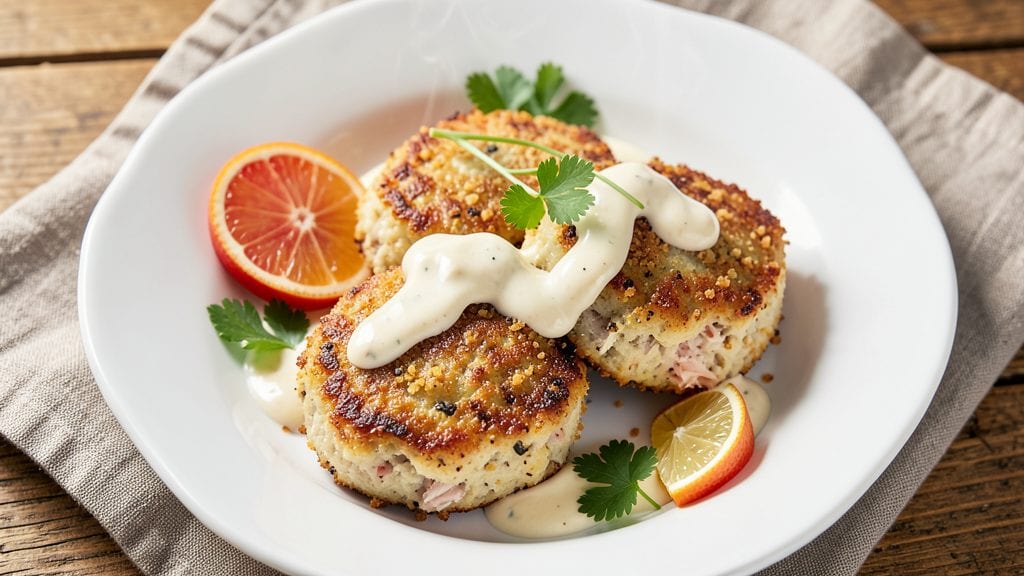
This original Old Bay crab cake recipe delivers the perfect balance of crispy-golden shells and tender, flaky crab hearts—just like your favorite seafood restaurant. The secret lies in the proper ratio of fresh crab meat, binding ingredients, and precise seasoning with Old Bay, creating a texture that's impossible to resist.
I've perfected this method over years of testing, ensuring every bite stays moist inside while developing that signature golden crust.
The foundation of great crab cakes begins with quality ingredients: fresh lump crab meat, mayonnaise for binding, and a mix of breadcrumbs and Old Bay seasoning. What sets this recipe apart is the technique—gently folding the mixture rather than overmixing, which preserves the flaky texture of the crab.
Whether you prefer pan-searing for extra crispiness or baking for a lighter approach, the result is consistently restaurant-quality every time.
By the time you serve these golden crab cakes, you'll have a dish that's crispy on the outside, flaky and tender within, and bursting with Old Bay's signature blend of spices.
The aroma alone will draw everyone to the table. This recipe is designed to impress, whether you're hosting a dinner party or simply craving a taste of the coast.
Pair with lemon wedges, tartar sauce, or a side of coleslaw to complete the experience. The instructions ahead will guide you through every step, ensuring your crab cakes turn out perfectly every time. Let's get started!
Ingredients for original old bay crab cake
Fresh crab meat and Old Bay seasoning make these crispy, flaky crab cakes restaurant-worthy.
| Ingredient | Amount | Notes |
|---|---|---|
| Fresh Lump Crab Meat 🦀 | 1 ½ lb | Backfin or claw meat preferred |
| Mayonnaise 🥛 | ¼ cup | Dukes or Hellmann's preferred |
| Panko Breadcrumbs 🍞 | ½ cup | For extra crispiness |
| Old Bay Seasoning 🌶️ | 2 tbsp | Original blend only |
| Large Eggs 🥚 | 1 whole | Cold for better binding |
| Shallots 🧅 | 2 whole | Finely minced |
| Fresh Lemon Juice 🍋 | 1 tbsp | From Meyer lemon if available |
| Extra-Virgin Olive Oil 🫒 | 1 tbsp | For pan-searing |
| Unsalted Butter 🧈 | 2 tbsp | For baking option |
| Fresh Chives 🌿 | 2 tbsp | Chopped for garnish |
| Sea Salt 🧂 | ½ tsp | For final seasoning |
| Black Pepper 🌶️ | ¼ tsp | Freshly ground |
| All-Purpose Flour 🌾 | 2 tbsp | For dredging |
The crab meat is everything here—backfin or claw meat gives the best texture. Seafood markets often have it pre-picked, but if you're buying whole crabs, save the meat yourself. I always grab mine from Whole Foods or Trader Joe's—their freshness is unmatched. Look for meat that's bright white and slightly moist, not dried out. The mayonnaise acts as a binder, so Dukes or Hellmann's work best—they're stable and don't separate. Panko breadcrumbs are key for that perfect crispy shell, but if you're in a pinch, regular breadcrumbs will do.
No Old Bay? Mix 1 tbsp paprika, 1 tsp celery salt, 1 tsp dried thyme, and 1/2 tsp black pepper for a quick substitute. The shallots add depth, but green onions work in a pinch. If you're short on lemon juice, lime juice at the same amount gives a similar tang. For the egg, cold is crucial—it helps bind the mixture better. The flour is for dredging before cooking, giving that extra golden crust. If you're baking instead of pan-searing, use the butter for brushing—it adds richness and helps with browning.
Crab cakes keep best in the fridge for 1 day before cooking, but you can prep the mixture ahead and store it in an airtight container. Once cooked, they reheat beautifully—350°F for 5-10 minutes is perfect. For extra crispiness, serve immediately. The leftovers? Freeze for up to 1 month—just thaw in the fridge overnight before reheating. Garnish with fresh chives right before serving to keep them vibrant.
Why You'll Love This Recipe
- I’ll be real: I make the mixture the night before and store it in the fridge. That way, morning-of cooking is just shaping and pan-searing—no stress. And if you’re feeding a crowd, you can prep everything ahead and freeze the cakes for up to a month. Just thaw and cook like normal. Game over.
- No-Fuss Assembly: Honestly, this isn’t one of those recipes that requires a Pinterest-worthy setup. Just toss the fresh lump crab meat with mayo, Old Bay, and shallots—no fancy prep. The cold egg and optional flour handle the binding, so you’re not stuck wrestling with a crumbly mess. My hands get covered in crab juice, but that’s just part of the charm.
- Crispy-Creamy Perfection: That panko crust? Chef’s kiss. The Old Bay and lemon juice keep it bright and briny while the mayo and butter create a creamy center. You get that perfect bite—crispy edge, flaky middle—every single time. Trust me, the first bite will make you forget all about sad, dry crab cakes from the past.
- Weeknight Hero: Between work and errands, I need a dish that’s as reliable as my coffee maker. These crab cakes take 30 minutes from fridge to table, and they’re so good, I’ve served them at last-minute dinner parties without a second thought. Even my picky cousin who “hates seafood” asked for seconds.
Step-by-step instructions for original Old Bay crab cakes
Here's how to build crab cakes with that signature crispy shell and tender interior.
Prepare the Crab Mixture
In a large mixing bowl, combine the 1½ lb fresh lump crab meat, ¼ cup mayonnaise, 2 tbsp Old Bay seasoning, 1 tbsp fresh lemon juice, and ½ tsp sea salt. Use your hands to gently fold everything together until just incorporated—don't overmix or the crab will break down. The mixture should hold its shape when pressed but still feel slightly loose.
Next, add the 2 finely minced shallots and ¼ tsp black pepper, mixing lightly to distribute. The shallots add subtle sweetness that balances the Old Bay's bold flavor. If your crab meat has any shell fragments, pick them out now for a cleaner texture. This step is where all the flavors come together, so take your time to ensure even distribution.
Bind and Chill the Batter
In a separate small bowl, lightly beat the 1 large egg until the whites and yolks are just combined. Add the egg to the crab mixture and fold in gently with a silicone spatula. The egg acts as the binder that will hold the crab cakes together during cooking. If the mixture feels too wet, add 2 tbsp all-purpose flour and mix until just combined—this helps create that signature crispy exterior.
Transfer the mixture to a shallow dish and cover with plastic wrap. Refrigerate for at least 30 minutes (up to 2 hours for best results). Chilling firms up the mixture, making it easier to handle and ensuring the crab cakes hold their shape when you cook them. This step is crucial for preventing crumbly crab cakes—don't skip it!
Form and Crumb the Crab Cakes
Remove the crab mixture from the refrigerator and line a baking sheet with parchment paper. Using a ½-cup measuring cup, scoop portions of the mixture and gently shape them into ¾-inch thick patties, about 3 inches in diameter. Press down lightly to create a smooth, even surface—this helps them cook uniformly and develop that perfect golden crust.
Place each crab cake on the prepared baking sheet and sprinkle generously with ½ cup panko breadcrumbs, pressing them gently into the top surface. The panko will create that iconic crispy shell we're after. Work in batches if needed, as you'll want to cook them fresh from the crumb coating. If the mixture feels sticky, wet your hands slightly to help shape without sticking.
Cook to Golden Perfection
Heat 1 tbsp extra-virgin olive oil and 2 tbsp unsalted butter in a large skillet over medium heat until the butter foams and the oil shimmers. Add the crab cakes and cook for 3-4 minutes per side until they develop a deep golden-brown crust. The edges should look crispy, and the center should feel just firm when pressed gently with a spatula—this ensures they're cooked through without drying out.
Don't overcrowd the pan, or the crab cakes will steam instead of crisp. If needed, work in batches and keep the cooked crab cakes warm in a 200°F oven while you finish cooking the rest. The butter and oil combination creates that rich, flavorful crust while keeping the interior tender. This is where the magic happens—patience pays off with that perfect balance of textures.
Serve with Fresh Garnishes
Transfer the cooked crab cakes to a serving platter and immediately garnish with 2 tbsp chopped fresh chives. The bright, fresh flavor of the chives cuts through the richness of the crab and butter. Serve while still warm, with lemon wedges on the side for an extra burst of brightness. These crab cakes should be golden and crispy on the outside with a flaky, tender interior that practically melts in your mouth.
For an extra touch, you can serve them with a side of remoulade sauce or a simple tartar sauce made with the remaining ¼ cup mayonnaise and a squeeze of lemon. The contrast of the cool sauce with the warm, crispy crab cakes makes every bite even more delicious. Enjoy immediately—they're best fresh from the pan!
Pro Tips For Making Original Old Bay Crab Cake
- Press for Crisp, Not Crumble: When shaping the crab cakes, don’t just slap the mixture into patties—press firmly with your palm to create a smooth, even surface. This isn’t about compacting the crab (you’ll still get that tender interior), but about ensuring the panko sticks properly and the edges crisp uniformly. I used to rush this, and my crab cakes would either fall apart or develop soft spots—turns out, a little pressure makes all the difference.
- Chill Like It’s Non-Negotiable: That 30-minute (or longer) fridge rest isn’t just a suggestion—it’s the difference between crab cakes that hold together and ones that crumble into your pan. Cold egg binds better, and the mixture firms up enough to handle without sticking to your hands. Skip it, and you’re fighting with a sticky, unstable mess. Trust me, 20 minutes of waiting beats 10 minutes of frustration.
- Butter Matters More Than Heat: The butter in your pan isn’t just for flavor—it’s what gives those crab cakes their signature golden crust. Medium heat is key here: too hot, and the butter burns before the panko crisps; too low, and you’ll end up with greasy, sad crab cakes. Watch for that foam and shimmer—when the butter’s dancing, that’s your cue to add the crab cakes. And for the love of Old Bay, don’t rush the 3-4 minutes per side.
- Save the Chives for Last: If you garnish with chives before serving, you’re missing the point—they’re there to add a bright, fresh finish that contrasts with the rich, spiced crab. Sprinkle them on after cooking, not before, or they’ll wilt into oblivion. And while you’re at it, keep those lemon wedges on the side until the last second; the acidity will cut through the butter if it sits too long. Freshness matters here.
Essential equipment for this dish
Nonstick Skillet
Your first essential tool is a 10-12 inch nonstick skillet with sturdy handles. I swear by the All-Clad Stainless Steel line—they're durable, distribute heat evenly, and release those crab cakes beautifully without sticking. If you're on a budget, T-fal E76561 is a fantastic alternative that still delivers that golden crust.
The nonstick surface is a game-changer because it prevents the crab cakes from tearing apart when you flip them. 🔥
Measuring Cups & Spoons
Precision matters when forming crab cakes, so invest in a stainless steel measuring set like the OXO Good Grips. These cups and spoons have clear markings and ergonomic handles, making it easy to scoop your ½-cup portions accurately.
I use them to ensure each patty gets the right amount of mixture, which is crucial for even cooking. The ½-cup measure becomes your secret weapon for perfect-sized crab cakes every time.
Parchment Paper
Parchment paper is a must-have for shaping and baking your crab cakes. It prevents sticking during the chilling step and makes transferring them to the oven or skillet effortless. I keep a roll of Reynolds Wrap parchment paper on hand because it’s affordable and widely available.
Line your baking sheet with it before forming the cakes, and you’ll never have a messy cleanup. It also makes reheating leftovers a breeze—just wrap them in parchment and pop them in the oven. ✨
Digital Thermometer
A digital meat thermometer like the Thermoworks MW200 ensures your crab cakes are cooked to perfection without overcooking. I use it to check the internal temperature of the crab cakes after cooking—they should reach 145°F for safety, but the texture is best when they’re just firm, not rubbery.
This tool is especially helpful if you’re baking instead of pan-searing, as ovens can vary in heat distribution. It’s a small investment that pays off in consistently delicious results.
Mixing Bowls & Silicone Spatula
For mixing the crab cake batter, I rely on a set of nested stainless steel bowls (I love the OXO Good Grips set) and a silicone spatula for gentle folding. The silicone spatula won’t scratch your bowls and is flexible enough to get into every corner of the mixture.
Gently folding the ingredients together is key to preserving the flaky texture of the crab meat, so avoid using a wooden spoon or metal utensil that could tear the mixture. This combo makes the process smooth and stress-free. 💫
Nutrition facts
Frequently asked questions
Why does my crab cake mixture turn out too wet?
If your mixture feels too wet, it's likely because you didn't chill it enough or skipped adding the 2 tablespoons all-purpose flour as a binder. Chill the mixture for at least 30 minutes and gently fold in the flour only if needed—this helps absorb excess moisture while keeping the texture flaky. Overmixing also breaks down the crab, so fold just until combined.
Can I make these crab cakes ahead of time?
You can prep the crab mixture up to 24 hours ahead and store it in an airtight container in the fridge. For best results, shape and coat the cakes with panko just before cooking. If you must store them longer, freeze the cooked cakes for up to 1 month—just thaw overnight in the fridge before reheating.
What’s the best way to ensure my crab cakes stay crispy?
Keep them warm in a 200°F oven while cooking the rest of the batch, and serve immediately after cooking. If reheating leftovers, place them on a wire rack over a baking sheet to prevent sogginess. The key is the panko breadcrumbs—press them firmly into the top of each cake before cooking for maximum crispiness.
What if I don’t have Old Bay seasoning?
Mix 1 tablespoon paprika, 1 teaspoon celery salt, 1 teaspoon dried thyme, and ½ teaspoon black pepper for a similar flavor. The shallots and lemon juice will still add brightness, so don’t worry about losing too much depth! This substitute works perfectly in a pinch.