
Desserts
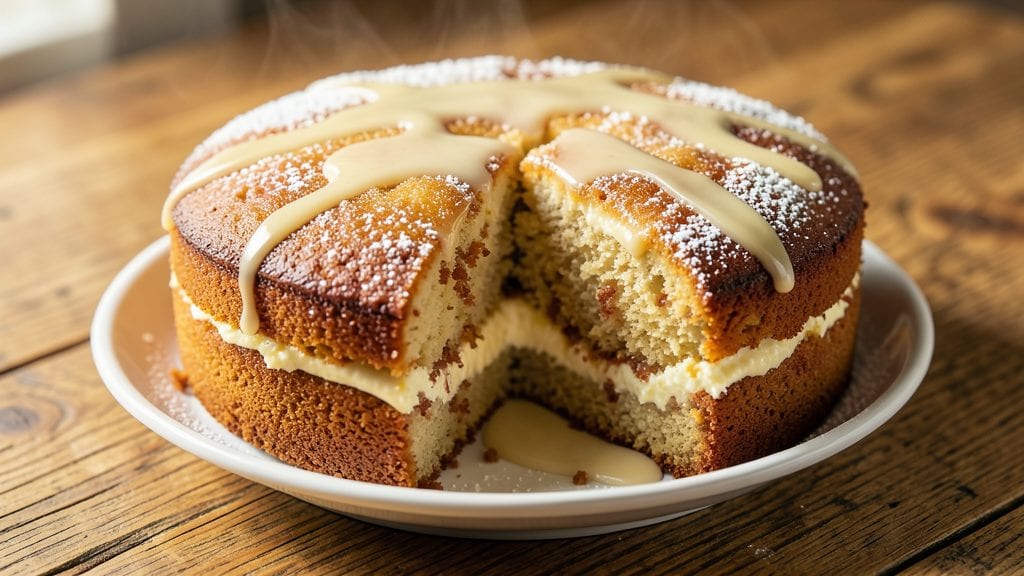
This old-fashioned cream cheese pound cake recipe brings back the classic dense, moist layers with that signature tangy kick that makes it irresistible. The secret lies in creaming butter and cream cheese together until perfectly smooth, creating a tender crumb that stays moist for days.
I’ve perfected this recipe over years of baking, ensuring every slice delivers that rich, velvety texture with just the right balance of sweetness and cream cheese brightness.
What sets this recipe apart is the traditional technique of mixing the batter by hand—no electric mixers here—to incorporate maximum air while keeping the texture dense yet tender. The cake bakes in a loaf pan, producing those signature layers that hold up beautifully when sliced.
Whether you serve it plain or topped with a simple glaze, the flavor is consistently reliable, making it a staple for holidays, brunch, or anytime you crave something comforting.
The result is a moist, ultra-rich pound cake with a fine crumb and subtle tang from the cream cheese that lingers in every bite. The recipe includes optional variations like citrus zest or vanilla for added depth, but the classic version remains foolproof.
Baking time is precise, and cooling properly ensures that perfect texture you’ve been searching for.
This cake is perfect for feeding a crowd or enjoying a single slice with tea. The method is straightforward, but the payoff is a dessert that tastes like a homemade masterpiece. Let’s get started on creating your own batch of this timeless classic.
Ingredients for old fashioned cream cheese pound cake
Classic pantry staples meet traditional baking techniques for this timeless cream cheese delight.
| Ingredient | Amount | Notes |
|---|---|---|
| Unsalted Butter 🧈 | 1 ½ cups | Softened to room temperature |
| Cream Cheese 🧀 | 8 oz | Full-fat, room temperature |
| Granulated Sugar 🍚 | 2 ½ cups | Superfine preferred for smoothness |
| All-Purpose Flour 🌾 | 2 ½ cups | Sifted, spooned lightly |
| Large Eggs 🥚 | 4 whole | Room temperature, separated |
| Baking Powder 🍞 | 2 tsp | Aluminum-free preferred |
| Salt 🧂 | ½ tsp | Fine sea salt |
| Vanilla Extract 🌸 | 1 tbsp | Pure, high-quality |
| Milk 🥛 | ½ cup | Whole milk preferred |
| Lemon Zest 🍋 | 1 tbsp | Optional, for brightness |
| Powdered Sugar 🍚 | ½ cup | For optional glaze |
| Heavy Cream 🥛 | ¼ cup | For optional glaze |
The butter and cream cheese are non-negotiable for that signature tangy richness. Philadelphia brand is ideal for its consistent quality, but any full-fat cream cheese works—just ensure it's room temperature to blend smoothly. European-style butter adds extra flavor, but standard unsalted butter delivers reliable results. Sift the flour and baking powder together to avoid lumps, and measure carefully; this cake relies on precise ratios for its signature dense yet tender crumb. For the eggs, separate yolks and whites—the whites need to be whipped to stiff peaks for optimal volume.
No vanilla extract? Vanilla bean paste or even a scraped vanilla bean work beautifully. Short on lemon zest? A pinch of citric acid mimics the brightness. The milk can be swapped for buttermilk or heavy cream for extra richness, though whole milk keeps it classic. For the glaze, powdered sugar and heavy cream should be mixed to a drizzling consistency—add a splash of milk if too thick. This cake freezes beautifully; wrap tightly and store for up to 3 months for a quick dessert solution.
This cake keeps well at room temperature for 3-4 days in an airtight container, though it's best enjoyed fresh. The layers hold up perfectly when sliced, making it ideal for feeding a crowd. For extra moisture, brush warm slices with simple syrup before serving. The batter can be prepared ahead and chilled for up to 24 hours—just let it sit at room temperature before baking to ensure even layers.
Why You'll Love This Recipe
- No Mixer, No Problem: Honestly, I thought I’d need a fancy mixer for this—until I realized the stand mixer step is just for the butter, cream cheese, and sugar. Once that’s whipped light and fluffy (about 4-5 minutes), the rest is just folding in eggs and dry ingredients. My hand mixer did just fine, and honestly, the batter’s so forgiving that even a whisk would work in a pinch.
- Tangy Cream Cheese Magic: That 8 oz of full-fat cream cheese isn’t just decoration—it’s what gives this cake its signature rich, slightly tangy depth. Paired with the 2.5 cups of granulated sugar and 4 room-temperature eggs, every bite is like a buttery, velvety hug. Trust me, the cream cheese isn’t overpowering; it’s the secret weapon that makes this cake crave-worthy.
- Leftover Legend: This cake doesn’t just disappear in one sitting. Between us, it’s the kind of dessert that begs for seconds, and the third slice? Totally justified. The good news? It holds up beautifully for 3-4 days in an airtight container, or you can freeze it for up to 3 months. Need a last-minute birthday cake or a post-holiday treat? This is your go-to.
- One-Pan, Two-Cakes: I love that this recipe makes two 9-inch layers, so you’re not stuck with a tiny slice. Plus, it’s all in one pan—grease those pans with butter, line them with parchment, and you’re golden. No weirdly shaped loaves or awkward layering. Just two perfect cakes that bake evenly at 350°F for 50-60 minutes. Minimal fuss, maximum reward.
Step-by-step instructions for cream cheese pound cake
Here's the method for achieving that signature ultra-moist texture with a tangy cream cheese flavor.
Cream Butter, Cream Cheese, and Sugar Together
In a stand mixer fitted with the paddle attachment, combine the 1½ cups unsalted butter and 8 oz cream cheese. Beat on medium speed until completely smooth and creamy, about 3-4 minutes. This ensures the cream cheese fully incorporates without any lumps.
Gradually add the 2½ cups granulated sugar while continuing to mix on medium speed. Beat for another 4-5 minutes until the mixture is light and fluffy, nearly doubling in volume. You'll see it go from pale to a slightly off-white color—this indicates proper aeration. Scrape down the sides of the bowl with a rubber spatula to ensure even mixing.
Here's the thing—don't rush this step. The reason we mix for this length of time is to incorporate air into the batter, which creates that signature tender crumb. If you skip this, you'll end up with a dense cake instead of the light, moist texture we're after.
Add Eggs and Dry Ingredients Alternately
Add the 4 large eggs, one at a time, mixing well after each addition. I like to let each egg incorporate completely before adding the next. This prevents the batter from curdling and ensures even distribution of the eggs throughout the mixture.
With the mixer running on low speed, alternately add the 2½ cups all-purpose flour (spooned and leveled) and the ½ cup milk, beginning and ending with the flour. Mix just until the dry ingredients are incorporated—about 30-45 seconds total. Overmixing develops gluten, which makes the cake tough instead of tender.
Finally, stir in the 2 tsp baking powder, ½ tsp salt, 1 tbsp vanilla extract, and 1 tbsp lemon zest using a spatula. Fold just until combined. The batter will be thick but pourable. This is normal—it's what gives pound cake its dense yet moist texture. If the batter looks too thick, you can add 1-2 tablespoons more milk to achieve the proper consistency.
Bake in Prepared Pans for Even Cooking
Preheat your oven to 350°F. Generously grease two 9-inch round cake pans with butter, then line the bottoms with parchment paper circles. This prevents sticking and makes removing the cake from the pans much easier.
Divide the batter evenly between the two pans, smoothing the tops with a spatula. Bake for 50-60 minutes, or until a toothpick inserted into the center comes out clean. The cakes should be golden brown on top and slightly domed in the center.
Your oven might run hot, so start checking at the 50-minute mark. If the tops are browning too quickly, tent the pans with aluminum foil to prevent overbrowning while allowing the cake to finish cooking. The internal temperature should reach 210°F at the center for perfect doneness.
Cool and Glaze for Maximum Moisture
Remove the cakes from the oven and let them cool in the pans for 10 minutes. Then, run a thin knife around the edges to loosen them from the pans. Invert the cakes onto a wire rack to cool completely. This step is crucial—cooling upside down helps maintain the cake's moisture and prevents a gummy texture.
For the glaze, whisk together the ½ cup powdered sugar and ¼ cup heavy cream until smooth. Drizzle the glaze evenly over the cooled cake layers. This optional step adds extra moisture and a beautiful finish. The glaze should be thin enough to drip slightly down the sides but not so runny that it pools at the bottom.
Here's what to watch for: The cake should be fully cooled before glazing, or the glaze will melt into the cake instead of creating that professional-looking finish. If you're serving immediately, you can glaze right before serving to keep the cake fresh and moist.
Pro Tips For Making Old Fashioned Cream Cheese Pound Cake
- Whip Cream Cheese First: I learned this the hard way—don’t just toss in the 8 oz cream cheese with the butter and hope for the best. Beat it alone for 30 seconds first until completely smooth, then add the butter. This prevents those stubborn lumps that turn your cake into a textured disaster.
- Superfine Sugar Saves Time: Using 2.5 cups of superfine sugar isn’t just about smoothness—it dissolves faster and blends into the butter-cream cheese mix without grit. If you’re stuck with regular sugar, pulse it in a food processor first, but don’t skip it entirely. Your mixer will thank you.
- Don’t Overmix the Flour: Those 30-45 seconds of mixing the 2.5 cups flour with milk are critical. Overmixing turns your tender pound cake into a chewy brick. Fold just until no dry streaks remain—gluten develops fast, and once it does, you can’t undo it.
- Check Internal Temp, Not Just Time: The 50-60 minute bake time is a guideline, but your oven’s hot spots lie. Use an instant-read thermometer—210°F at the center guarantees doneness. A clean toothpick is good, but an underdone cake will stay gummy longer than you’d think.
Common mistakes when making great old fashioned cream cheese pound cake
Skipping the Creaming Step
This is the most common mistake I see—rushing the butter and cream cheese mixing. You need to beat them for 3-4 minutes until completely smooth and lightened.
If you skip this, your cake will be dense instead of tender. The air incorporated here creates that signature moist texture—don't cut corners! 🔥
Overmixing the Batter
Once you add the flour, mix just until combined—about 30-45 seconds. Overmixing develops gluten, making your cake tough instead of tender. I always remind myself to stop mixing when the flour disappears. This is especially important with pound cake recipes where texture is everything.
Incorrect Pan Prep
Generously greasing your pans with butter and lining the bottoms with parchment paper is non-negotiable. Skipping this step means your cake will stick and tear when removing. I always use 9-inch round cake pans and double-check the butter is spread evenly before adding batter.
A little extra effort here saves a lot of frustration later.
Checking for Doneness Too Early
Your cake might look done at 50 minutes, but it needs to reach 210°F internal temperature for perfect doneness. Inserting a toothpick too early can give false hope—wait until it comes out clean.
I've learned this lesson the hard way after pulling cakes too soon and ending up with gummy centers.
Glazing Too Soon
This is a common pitfall that ruins the presentation. Always let your cake cool completely before glazing—at least 2 hours. Glazing too early causes the glaze to melt into the cake instead of creating that beautiful drizzle.
I've had guests notice when I've rushed this step, and it's always disappointing.
Ignoring the Cooling Process
Letting your cake cool upside down in the pans for 10 minutes before inverting is crucial. This helps maintain moisture and prevents a gummy texture. I've seen bakers skip this step and end up with cakes that fall apart when sliced.
It's a small effort that makes a big difference in texture.
Nutrition facts
Frequently asked questions
Why does this cream cheese pound cake need such long mixing times?
The 3-4 minutes of beating butter and cream cheese together isn't optional—it incorporates air into the batter, creating that signature tender crumb. This step transforms dense cake into moist, fluffy layers. Skipping it turns your cake from light to heavy, so take your time!
Can I use a different pan size for this recipe?
Stick with 9-inch round cake pans for best results—they ensure even baking and proper layer formation. If you must adjust, reduce batter by 1/3 cup for 8-inch pans or increase by 1/3 cup for 10-inch pans. Always check doneness with a toothpick!
What if my batter looks too thick after adding flour?
Add 1-2 tablespoons milk at a time until the batter is pourable but still thick. The batter should coat the back of a spoon—this is perfect for pound cake's dense texture. Overthinning creates a cake cake instead of the classic rich layers.
How do I prevent my cake from drying out after baking?
Cool upside down in the pans for 10 minutes first, then invert onto a wire rack. Store in an airtight container with a slice of bread or damp towel inside to retain moisture. For extra freshness, wrap tightly and refrigerate overnight before slicing.