
Desserts
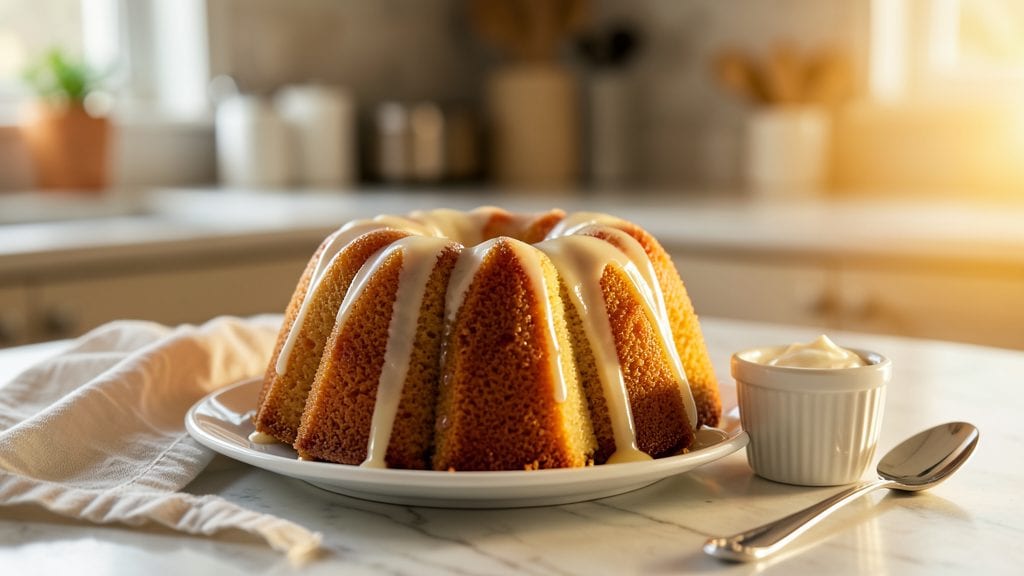
This Duncan Hines Bundt cake recipe delivers the perfect balance of moist vanilla layers and a flawless glaze finish that rivals bakery-quality desserts. I’ve refined this method over years of testing, ensuring every slice stays tender without drying out—no matter how long it sits.
The secret lies in precise mixing techniques and a simple glaze that sets beautifully without cracking.
The beauty of this recipe is its simplicity: you’ll use Duncan Hines cake mix as the foundation, but the real magic happens in the preparation. A 350°F oven and 45-minute bake time create a golden, domed Bundt cake with crisp edges and a velvety center.
The glaze, made with just powdered sugar and milk, adds a professional touch that’s foolproof and quick to prepare.
What you’ll end up with is a showstopping dessert that’s perfect for celebrations or a cozy Sunday treat. The cake stays moist for days, and the glaze sets to a smooth, shiny finish that makes slicing effortless.
Whether you’re serving it warm with ice cream or at room temperature, every bite delivers that classic Bundt cake experience—just better.
This recipe scales beautifully for gatherings, and the glaze can be customized with food coloring or extracts for special occasions. Ready to bake a cake that impresses? Let’s get started with the step-by-step instructions that guarantee perfect results every time.
Ingredients for duncan hines bundt cake
Pantry staples meet showstopping dessert—just a few simple tweaks to elevate Duncan Hines cake mix into bakery-quality Bundt perfection.
| Ingredient | Amount | Notes |
|---|---|---|
| Duncan Hines Classic White Cake Mix 🧁 | 1 box | Unopened, 15.25 oz box |
| Unsalted Butter 🧈 | 1 cup | Softened to room temperature |
| Large Eggs 🥚 | 4 whole | Room temperature, extra-large preferred |
| Milk 🥛 | 1 cup | Whole milk for richness |
| Pure Vanilla Extract 🌿 | 2 tsp | High-quality, pure vanilla |
| Vegetable Oil 🫒 | ½ cup | Light or canola preferred |
| Powdered Sugar 🍚 | 2 cups | Confectioners' sugar for glaze |
| Whole Milk 🥛 | ½ cup | For glaze, room temperature |
| Pure Vanilla Extract 🌿 | 1 tsp | For glaze, same as cake |
| Granulated Sugar 🍚 | ¼ cup | Optional for cake mix |
| All-Purpose Flour 🌾 | ½ cup | Sifted, for extra tenderness |
| Baking Powder 🧂 | 1 tsp | Extra lift for Bundt shape |
| Bundt Cake Pan 🍰 | 1 whole | Nonstick, 10-12 cup capacity |
The Duncan Hines cake mix is your secret weapon here—stick to the classic white for that signature vanilla flavor. Room-temperature eggs and butter are non-negotiable for that velvety crumb. I always grab extra-large eggs from the back of the carton (they're fresher) and Land O'Lakes butter for consistent quality. The Bundt pan? Wilton's nonstick is my go-to—it releases without a fight. Pro tip: Butter the pan generously and dust with flour before adding batter for that perfect rise. If you're feeling fancy, Wilton's Bundt pan comes with a handy greasing tool that's a game-changer.
No vanilla extract? Almond extract at half the amount works in a pinch, but you'll taste the difference. Vegetable oil is the secret to moisture—no substitutions here unless you want a denser cake. For the glaze, powdered sugar is non-negotiable, but half-and-half can replace milk if you're avoiding dairy. Trader Joe's has the best-priced powdered sugar in bulk bins, and Starbucks milk (yes, really) gives the glaze an extra-smooth finish. Want to customize? Wilton's gel food coloring lets you tint the glaze without altering the consistency. And if you're baking for a crowd, double the glaze recipe—it disappears fast!
This cake stays moist for 5 days at room temperature, wrapped tightly in plastic. Freeze the glaze separately if you're prepping ahead—just thaw it in the fridge before drizzling. Portion the cake into individual servings for easy transport to parties. The glaze sets best at room temperature, so let it sit for 10 minutes before slicing. Leftovers? Warm slices in the microwave for 10 seconds with a splash of milk—it's like bakery fresh again. And if you're making this for a special occasion, add a sprinkle of edible gold leaf to the glaze for that wow factor.
Why You'll Love This Recipe
- No-Fuss Pan Prep: Honestly, this pan trick is my secret weapon. Just oil it up with that ½ cup Vegetable Oil, flour it like you’re dusting for fingerprints, then wipe it down again—no scrubbing, no stress. That hybrid method means your cake slides out like it was born to be free, even if your pan’s seen better days.
- Restaurant-Quality Glaze: The 2 cups Powdered Sugar and 1 tsp Pure Vanilla Extract glaze? It’s the difference between “meh” and “wow.” I pour it over the cake when it’s still warm, let it drip, and suddenly you’ve got that glossy, restaurant-worthy finish without the fuss. Trust me, it’s worth the 10-minute wait.
- Budget-Friendly Crowd-Pleaser: One box of Duncan Hines Classic White Cake Mix, a handful of pantry staples, and boom—you’ve got a Bundt cake that costs less than takeout but feels like a splurge. Plus, it feeds a crowd (or your roommates who always show up unannounced). My daughter picks out the whole milk for the glaze, but she still asks for seconds.
- Weeknight Win: Between the room-temperature eggs and the softened butter, this recipe forgives even the most chaotic weeknights. Mix while watching TV, bake while you prep dinner, and serve with zero guilt. The Bundt pan makes it feel special, but the effort is minimal—perfect for when you want to feel like a hero without the heroics.
Step-by-step instructions for Duncan Hines Bundt cake recipe
This method transforms box mix into a showstopping Bundt cake with velvety layers and a glossy glaze.
Prepare the Bundt Cake Pan for Perfect Release
Generously grease the 1 Bundt Cake Pan with ½ cup Vegetable Oil, using a paper towel to wipe away any excess. This creates a nonstick barrier that prevents sticking. Then dust the pan thoroughly with ½ cup All-Purpose Flour, tapping out any excess. The flour adheres to the oiled surface, creating a second protective layer that ensures clean removal.
I always give the pan an extra light coating of oil after dusting—just a quick wipe with a fresh paper towel. This hybrid method gives you the best of both worlds: the flour prevents sticking while the oil ensures easy release. Don't skip this step, especially if your pan isn't nonstick or has seen multiple uses.
Mix the Cake Batter to Ideal Consistency
In a large mixing bowl, combine the 1 box Duncan Hines Classic White Cake Mix with the ¼ cup Granulated Sugar and 1 tsp Baking Powder. Whisk these dry ingredients together for 30 seconds to aerate the mix and ensure even distribution of the baking powder throughout.
In a separate bowl, beat the 1 cup Unsalted Butter until smooth and creamy (about 2 minutes). Add the 4 Large Eggs, one at a time, beating well after each addition. Then whisk in the 1 cup Milk and 2 tsp Pure Vanilla Extract until fully incorporated. Here's the thing—room temperature ingredients blend together more easily, so if your eggs or butter feel cold, let them sit for 10 minutes before mixing.
Gradually pour the wet ingredients into the dry ingredients while mixing on low speed for 2 minutes. Scrape down the sides of the bowl with a spatula to ensure all mix is incorporated. The batter should be smooth with a thick, cake-like consistency—if it looks too thin, you may need to let it rest for 5 minutes before baking.
Bake to Golden Perfection in the Bundt Pan
Preheat your oven to 350°F while the pan is being prepared. Pour the batter into the prepared Bundt Cake Pan, tapping the pan gently on the counter to release any air bubbles. Bake for 50-60 minutes or until a toothpick inserted into the center comes out clean and the cake springs back when gently pressed.
Here's where attention to detail matters: the cake is done when the top is golden brown and the edges pull away slightly from the pan. Your oven might run hot, so start checking at the 50-minute mark. If the top browns too quickly, tent the cake with aluminum foil to prevent over-browning while it continues to bake through.
Remove the cake from the oven and let it cool in the pan for 15 minutes. Then carefully invert the cake onto a wire rack to cool completely. This gradual cooling prevents cracking and maintains the cake's structural integrity for clean slicing later.
Prepare the Vanilla Glaze for Moist Layers
While the cake cools, prepare the glaze by whisking together the 2 cups Powdered Sugar, ½ cup Whole Milk, and 1 tsp Pure Vanilla Extract in a medium bowl. The mixture should be smooth and pourable—if it's too thick, add 1 teaspoon of milk at a time until you reach a drizzling consistency. This glaze is what transforms a good cake into an extraordinary one.
For an extra-smooth glaze, strain the mixture through a fine-mesh sieve to remove any lumps. The glaze should coat the back of a spoon but still flow freely when drizzled. Here's a pro tip: if you're concerned about the glaze setting too quickly, prepare it just before you're ready to glaze the cake—it keeps best when used immediately.
Glaze and Serve for Maximum Moisture
Once the cake is completely cool, place it on a cake stand or serving plate. Slowly pour the glaze over the top of the cake, allowing it to drip down the sides. Use a spoon to spread any pooled glaze back over the surface for even coverage. The glaze should create a glossy finish that reflects light beautifully.
Let the glaze set for 10-15 minutes before slicing. This resting period allows the glaze to firm up slightly, making it easier to serve without messy drips. For the perfect slice, cut through the center of the cake to showcase the moist layers and elegant swirl pattern created by the Bundt pan.
Serve immediately while the glaze is still slightly tacky for that restaurant-quality finish. Each slice should reveal tender, moist layers with a perfect balance of sweetness from the cake and the vanilla glaze. This cake keeps well at room temperature for 2 days, covered loosely with plastic wrap.
Pro Tips For Making Duncan Hines Bundt Cake
- Warm the Eggs First: I learned this the hard way—cold eggs make the batter lumpy, and no one wants to fight clumps when mixing. Set those 4 large eggs in warm water for 5 minutes before cracking them into the butter. The butter’s already softened, so matching temperatures keeps everything smooth.
- Tap the Pan: Pour the batter in, then give the Bundt pan a firm tap on the countertop to pop any trapped air bubbles. I used to skip this, and the cake would have a weird, hollow spot in the center—now I make it a habit. Just a few sharp taps, and the layers stay even.
- Check the Glaze Early: The glaze should coat the back of a spoon but still drip like honey. If it’s too thick after whisking the 2 cups powdered sugar and ½ cup milk, add that milk one teaspoon at a time—no rushing. A stiff glaze won’t drip down the sides like it should, and that’s the whole point.
- Don’t Overmix the Dry Ingredients: Whisk the cake mix, ¼ cup granulated sugar, and 1 tsp baking powder for just 30 seconds—no more. I once mixed them for a full minute, and the cake turned dense. The baking powder needs to disperse, but overdoing it deflates the air the mix already has. Keep it light.
Common mistakes when making this dish
Overmixing the Batter
One of the easiest mistakes to make is overmixing the batter after combining wet and dry ingredients. When you mix for more than 2 minutes on medium speed, you risk developing gluten, which makes the cake dense instead of light.
I always mix just until everything is incorporated—look for a few streaks of dry mix remaining. Overmixing is how you end up with a cake that feels tough rather than tender. 🥖
Skipping the Room-Temp Check
Cold ingredients are the enemy of a smooth batter. If your eggs or butter aren't at room temperature, they won't blend properly with the other ingredients. I always pull my eggs and butter out of the fridge 10 minutes before starting.
Cold butter creates lumps in your batter, and cold eggs can make the cake dense. Trust me, this small step makes a huge difference in texture.
Underbaking the Cake
Pulling the cake out too soon is a common trap, especially with Bundt cakes. The cake is done when a toothpick comes out clean and the top springs back when gently pressed. Checking at 50 minutes is critical—your oven might run hotter than expected.
Underbaking leads to a gummy center that ruins the whole experience. I always err on the side of slightly overbaking to ensure perfect doneness.
Neglecting the Cooling Process
Letting the cake cool in the pan for only 15 minutes is a mistake that leads to cracking. The cake needs time to set gradually after baking. I always let mine cool in the pan for at least 15 minutes before inverting it onto a wire rack.
This slow cooling prevents the cake from developing cracks as it shrinks. Rushing this step is how you end up with a cake that looks less impressive than it should.
Using the Wrong Glaze Consistency
If your glaze is too thick, it won't drip properly and will create an uneven finish. The ideal consistency should coat the back of a spoon but still flow freely. I often add 1 teaspoon of milk at a time until I reach that perfect drizzling texture.
A lumpy glaze also ruins the presentation, so always strain it through a fine-mesh sieve. This small effort makes a world of difference in how your cake looks when served.
Nutrition facts
Frequently asked questions
Why does my Bundt cake stick to the pan even after greasing?
The flour-oil method in this recipe works best when done correctly. After oiling the pan, ensure you dust it with ½ cup All-Purpose Flour and tap out excess. Then, lightly re-oil the pan with a fresh paper towel. If your pan isn't nonstick, this extra step prevents sticking. Skipping the re-oiling can leave flour residue that attracts moisture, causing sticking later.
Can I substitute whole milk for the glaze with something else?
Yes! If you don’t have ½ cup Whole Milk for the glaze, use half-and-half or even heavy cream for extra richness. For a lighter option, 2% milk works too, though it may set slightly faster. Just adjust consistency with a splash of milk if needed—aim for a pourable glaze that coats the back of a spoon.
How do I know if my cake is done before checking with a toothpick?
Gently press the center of the cake—if it springs back immediately and the top is golden brown, it’s likely done. Bundt cakes often look underbaked at first glance, so trust the 50-60 minute bake time and the toothpick test for accuracy. Overbrowning is easier to fix than underbaking, so tent with foil if the top browns too quickly.
What’s the best way to store leftovers to keep the cake moist?
Cover the cake loosely with plastic wrap at room temperature for up to 2 days. Avoid airtight containers, as they trap moisture and can make the cake soggy. For longer storage, freeze the cake (without glaze) in portions for up to 3 months. Reheat slices in the microwave for 10 seconds with a splash of milk to revive the texture.
Can I make this cake ahead of time for a party?
Bake the cake 1 day ahead and store it wrapped at room temperature. Glaze it just before serving to keep it fresh. If prepping the glaze ahead, refrigerate it in an airtight container and stir well before using. This way, your cake stays moist and the glaze sets beautifully when drizzled on the day of your event.