
Desserts
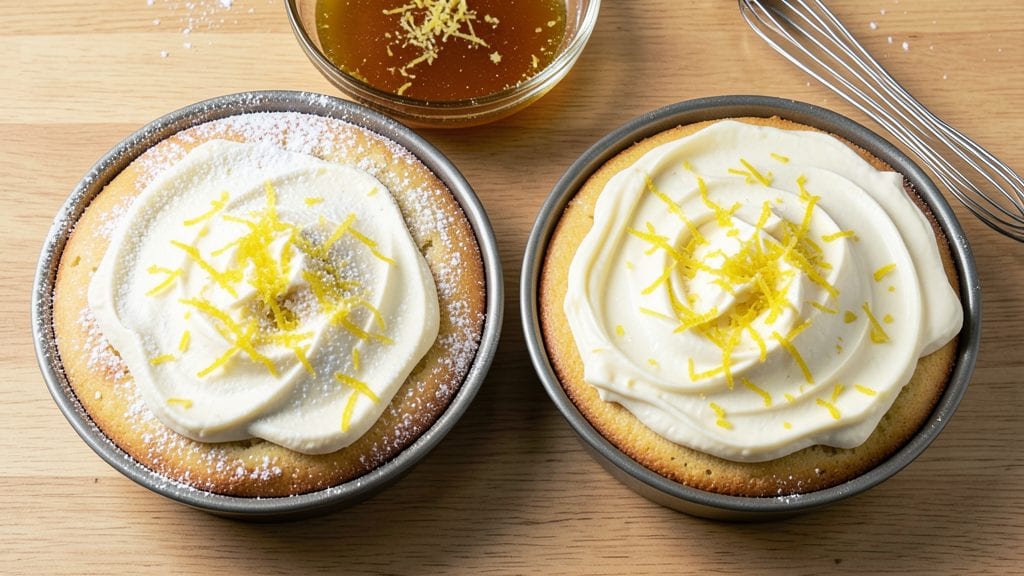
This copycat Portillo's lemon cake recipe delivers the iconic zesty layers and buttery frosting that made it a Midwest classic. The secret lies in a precise balance of bright lemon flavor and tender cake layers, topped with a velvety buttercream that holds its shape beautifully.
I've replicated the signature texture through careful ingredient ratios and baking techniques that ensure moist crumb and crisp edges.
The cake itself relies on a simple yet effective formula: all-purpose flour, baking powder, and a touch of salt create the perfect foundation, while fresh lemon juice and zest infuse every bite with that signature tang.
The frosting uses a classic American buttercream method, where butter and powdered sugar combine to form a smooth, pipeable consistency that complements—not overpowers—the lemon flavor. Professional bakers know the importance of room-temperature ingredients and proper mixing times to achieve the right texture.
What makes this recipe truly special is the assembly process, where layering technique determines the final product's success. Each layer must be level and evenly frosted to create clean edges and professional presentation.
The result is a cake that's both visually stunning and bursting with the bright, citrusy flavor that Portillo's fans know and love. This isn't just a copycat recipe—it's a proven method for achieving restaurant-quality lemon cake at home.
Whether you're preparing for a special occasion or simply craving a slice of nostalgia, this recipe delivers consistent results every time. The key to success lies in attention to detail during baking and assembly, ensuring each component comes together perfectly.
Once you try this version, you'll understand why Portillo's lemon cake has remained a beloved dessert for decades.
Ingredients for copycat portillo's lemon cake
Perfectly balanced lemon layers with professional buttercream frosting—this copycat delivers Portillo's signature taste.
| Ingredient | Amount | Notes |
|---|---|---|
| All-Purpose Flour 🌾 | 3 ½ cups | Sifted for even texture |
| Granulated Sugar 🍬 | 2 ¼ cups | Fine grain preferred |
| Unsalted Butter 🧈 | 1 ½ cups | Room temperature, cubed |
| Fresh Lemon Juice 🍋 | 1 ½ cups | From 6-8 lemons |
| Lemon Zest 🍋 | ¼ cup | Fine grated, no pith |
| Large Eggs 🥚 | 6 whole | Room temperature preferred |
| Baking Powder 🔥 | 2 tbsp | Double-acting preferred |
| Fine Sea Salt 🧂 | 1 ½ tsp | Diamond Crystal preferred |
| Vanilla Extract 🌸 | 2 tbsp | Pure, not imitation |
| Powdered Sugar 🍮 | 4 cups | Sifted for smooth frosting |
| Heavy Whipping Cream 🥛 | 1 ½ cups | Full-fat for richness |
| Buttercream Stabilizer 🧈 | ½ oz | Gelatin or cornstarch |
The foundation of this recipe lies in the quality of your lemons. Freshly squeezed juice is non-negotiable—store-bought bottled lemon juice lacks the vibrant acidity needed for authentic flavor. For the zest, use only the outermost layer of the lemon peel, avoiding the bitter white pith. Professional bakers recommend sifting the flour to eliminate lumps and ensure a tender crumb, a technique often overlooked in home baking. The butter must be room temperature—cold butter creates dense layers, while melted butter leads to greasy crumbs. For the best results, use Diamond Crystal sea salt as it measures more accurately than iodized table salt.
Substitutions are possible but require adjustments for texture and flavor. Buttermilk can replace 1 cup of whole milk if needed, but acidity must be balanced with an additional 1/2 tsp of baking soda. For the frosting, Greek yogurt can replace 1/2 cup of heavy cream for a lighter texture, though it may slightly alter the richness. If gelatin isn't available, 1 tbsp cornstarch dissolved in 2 tbsp warm water works as a stabilizer, though it may require additional mixing time. Always use fine powdered sugar—coarse sugar creates graininess in the frosting. The vanilla extract should be pure and high-quality—imitation extracts lack depth of flavor.
This cake performs best when assembled immediately after baking. Cool layers completely before frosting to prevent soggy bottoms, but don't let them sit too long—moisture evaporates quickly. Store the assembled cake uncovered at room temperature for 2 hours to allow flavors to meld before refrigerating. It keeps well for 3-4 days in an airtight container at room temperature, though it's best enjoyed within 48 hours for peak freshness. For longer storage, freeze individual layers wrapped tightly—thaw at room temperature before assembling. The frosting can be made ahead and refrigerated for up to 5 days, though it's best piped fresh for optimal texture.
Why You'll Love This Recipe
- No-Bake-Pan Nightmare: Honestly, this isn’t one of those recipes that requires a fancy setup. Just grease two 9-inch pans with that 1½ cups unsalted butter, line them with parchment, and you’re golden. No fancy molds, no weird shapes—just two simple layers that bake in 25-30 minutes. My oven’s a bit finicky, but I’ve never had a cracker or a burnt edge with this method. The sifted flour and baking powder combo ensures a light texture without the fuss.
- Citrus Overload (In the Best Way): The 1½ cups fresh lemon juice and ¼ cup lemon zest aren’t just thrown in—they’re the stars. That vanilla extract and salt balance it all out so it’s not just sour, but bright. The buttercream frosting? It’s got 1 tbsp lemon juice and 1 tsp zest swirled in, so every bite is like a little sunshine. My kids think it’s weirdly addictive, and I won’t argue.
- Crowd-Pleaser for Any Occasion: This cake isn’t just for birthdays—it’s my go-to for brunch, potlucks, or even a fancy dinner dessert. The powdered sugar frosting and heavy whipping cream make it rich enough to feel special, but the lemon zest garnish keeps it fresh and approachable. I’ve served it at a casual backyard BBQ and a holiday gathering, and it’s always the first slice to disappear. No one asks for gluten-free or vegan versions because… well, it’s just too good.
- Budget Lemonade (Literally): You’d think a cake this fancy would break the bank, but here’s the thing: 6-8 lemons for the juice and zest? That’s a dollar’s worth of fruit, and the rest of the ingredients are pantry staples. The unsalted butter and granulated sugar are the only splurges, but they’re worth it. Plus, it makes two full layers, so you’ve got leftovers for days. I’ve even repurposed slices into lemon cake truffles—just crumble, roll in powdered sugar, and dip in melted buttercream. Zero waste, maximum flavor.
Step-by-step instructions for Portillo's lemon cake recipe
Here's the proven method to recreate Portillo's signature lemon cake with layers of bright citrus and velvety frosting.
Prepare the Lemon Cake Batter
Preheat your oven to 350°F and grease two 9-inch round cake pans with the 1½ cups unsalted butter, reserving ½ cup for the frosting. Line the bottoms with parchment circles for easy removal. Sift together the 3½ cups all-purpose flour, 2 tbsp baking powder, and 1½ tsp fine sea salt in a large bowl to eliminate lumps.
In a separate large bowl, cream together the 2¼ cups granulated sugar and the remaining 1 cup unsalted butter (after reserving ½ cup) on medium speed until light and fluffy, about 3-4 minutes. Add the 6 large eggs one at a time, mixing well after each addition. Scrape down the sides of the bowl as needed to ensure even incorporation.
Combine the 1½ cups fresh lemon juice, ¼ cup lemon zest, and 2 tbsp vanilla extract in a small measuring cup. Gradually pour this citrus mixture into the butter-egg mixture while mixing on low speed. With the mixer running on low, alternately add the sifted dry ingredients in three portions, mixing just until combined after each addition. Avoid overmixing—this keeps the cake tender.
Bake the Lemon Layers
Divide the batter evenly between the prepared cake pans, spreading it smoothly with a spatula. Bake for 25-30 minutes, or until a toothpick inserted into the center comes out clean and the tops spring back when gently pressed. Rotate the pans halfway through baking for even browning.
Once baked, transfer the pans to a wire rack and let the cakes cool in the pans for 10 minutes. Then invert them onto the rack to cool completely. This gradual cooling prevents cracking. While the cakes cool, prepare the buttercream frosting using the remaining ingredients.
Make the Lemon Buttercream Frosting
In a stand mixer fitted with the paddle attachment, beat the ½ cup reserved unsalted butter (softened) and 4 cups powdered sugar on medium speed until light and fluffy, about 2-3 minutes. Add the 1½ cups heavy whipping cream and the ½ oz buttercream stabilizer, then mix on medium-high speed for 3-4 minutes until smooth and creamy.
Remove the bowl from the mixer and scrape down the sides. Add the ¼ cup lemon zest (reserved from the batter) and 1 tbsp fresh lemon juice, then mix on low speed until fully incorporated. The frosting should be thick but pipeable. If needed, add 1-2 tbsp additional lemon juice to reach the desired consistency.
Assemble and Frost the Cake
Place one cake layer on a cake stand or plate. Spread a thin layer of frosting over the top to create a "crumb coat," then chill in the refrigerator for 15 minutes. This step prevents crumbs from getting into the final frosting layer.
Remove the cake from the refrigerator and apply the remaining frosting evenly over the top layer. Place the second cake layer on top and gently press down to create a level surface. Frost the sides of the cake smoothly, creating clean vertical lines with a spatula or offset spatula. Chill the cake for 30 minutes before slicing to allow the frosting to set.
Garnish and Serve
Once the frosting has set, garnish the cake with additional lemon zest arranged in a decorative pattern or as a border. For extra flair, add thin lemon slices around the base of the cake. Portillo's signature touch is the bright citrus aroma and visual appeal—this garnish ensures both.
Slice the cake with a sharp, hot knife (dipped in hot water and wiped dry between cuts) for clean, professional-looking pieces. Serve immediately or store covered at room temperature for up to 3 days, though the freshest slices are always best enjoyed within the first 24 hours for optimal texture and flavor.
Pro Tips For Making Copycat Portillo'S Lemon Cake
- Cream Butter Properly: Your mixer’s job isn’t to turn butter into soup—it’s to make it pale and fluffy. Beat the 1 cup unsalted butter and 2¼ cups granulated sugar for a solid 3-4 minutes until you could press your finger into the mixture and leave a clean indent. I learned this the hard way when my first batch turned out dense because I rushed it.
- Sift That Flour: Skimping on sifting the 3½ cups all-purpose flour (and the 4 cups powdered sugar for frosting) is how you end up with a cake that looks like it’s got rocks in it. Use a fine-mesh sieve—no strainer—and tap the bowl gently to break up any hidden lumps. Trust me, your crumb structure will thank you.
- Don’t Overmix the Batter: The moment you start seeing streaks of flour in the batter and it looks like wet cement, stop. Overmixing develops gluten, and your cake will turn out tough instead of tender. Add the dry ingredients in three portions, mixing just until combined—about 10-15 seconds per addition. Your future self will thank you when you slice into a moist, cloud-like layer.
- Rotate the Pans Mid-Bake: That even golden-brown top isn’t luck—it’s physics. Rotate the cake pans front-to-back halfway through the 25-30 minutes bake time. Your oven’s heat zones aren’t perfect, and this simple swap guarantees both layers bake uniformly. I used to burn the edges of one side while the other stayed pale, and now? No more guesswork.
Creative variations of this dish
Midwest-Inspired Twist
Add a touch of Portillo’s signature to your cake by incorporating their famous lemon poppy seed filling. Mix ½ cup poppy seeds with ¼ cup granulated sugar, then spread thinly between the cake layers before frosting.
This subtle crunch and nuttiness became a staple in their original recipe—it’s what gives the cake that extra nostalgic bite. 💛
Chocolate-Dipped Delight
For a decadent twist, dip the bottom of the cake into melted dark chocolate before frosting. Use ½ cup high-quality dark chocolate (like Ghirardelli) melted with 1 tbsp coconut oil for a smooth texture.
This pairing balances the bright lemon with rich cocoa, creating a sophisticated contrast that’s surprisingly addictive.
Spiced Citrus Fusion
Infuse the frosting with warmth by adding ½ tsp ground cinnamon and a pinch of nutmeg to the 1 tbsp lemon juice before mixing into the buttercream. The spices complement the lemon without overpowering it, adding depth that feels very seasonal. I swear by Penzeys spices for consistent quality.
Coffee-Infused Layers
Boost the cake’s complexity by replacing ½ cup of the granulated sugar in the batter with instant espresso powder—just 1 tbsp dissolved in 1 tbsp warm water.
The coffee’s bitterness cuts through the sweetness, creating a sophisticated balance that’s especially popular in the Midwest. Use Starbucks Via for a reliable, neutral flavor.
Seasonal Berry Topping
For a summery update, top the frosted cake with a berry compote. Simmer 1 cup mixed berries (strawberries, blueberries, raspberries) with 2 tbsp sugar and 1 tsp lemon juice until thickened.
Spread it over the cake or pipe it in decorative swirls. The tartness brightens the cake’s citrus notes and adds a vibrant pop of color. 🍓
Nutrition facts
Frequently asked questions
Why does the recipe call for room-temperature butter?
Room-temperature butter creates a light, fluffy texture in the cake batter. Cold butter can lead to dense layers, while melted butter makes the cake greasy. The 1.5 cups unsalted butter must soften completely before mixing to achieve the right consistency.
How do I prevent my cake layers from cracking?
Let the baked layers cool in the pans for 10 minutes, then invert them onto a wire rack to cool completely. This gradual cooling prevents sudden temperature changes that cause cracks. Avoid opening the oven too soon—wait for the 25-30 minutes baking time to ensure even doneness.
Can I make the frosting ahead of time?
Yes! The frosting can be made 1-2 days ahead and stored in an airtight container at room temperature. Before using, let it sit at room temperature for 30 minutes to soften slightly. If it thickens too much, add 1-2 teaspoons of lemon juice to restore pipeability.
What if my frosting is too thin?
If your frosting is runny, gradually add 1-2 tablespoons of powdered sugar at a time while mixing. For extra stability, chill the bowl for 15 minutes before mixing again. The frosting should hold its shape when piped but still be smooth and creamy.