
Main Courses
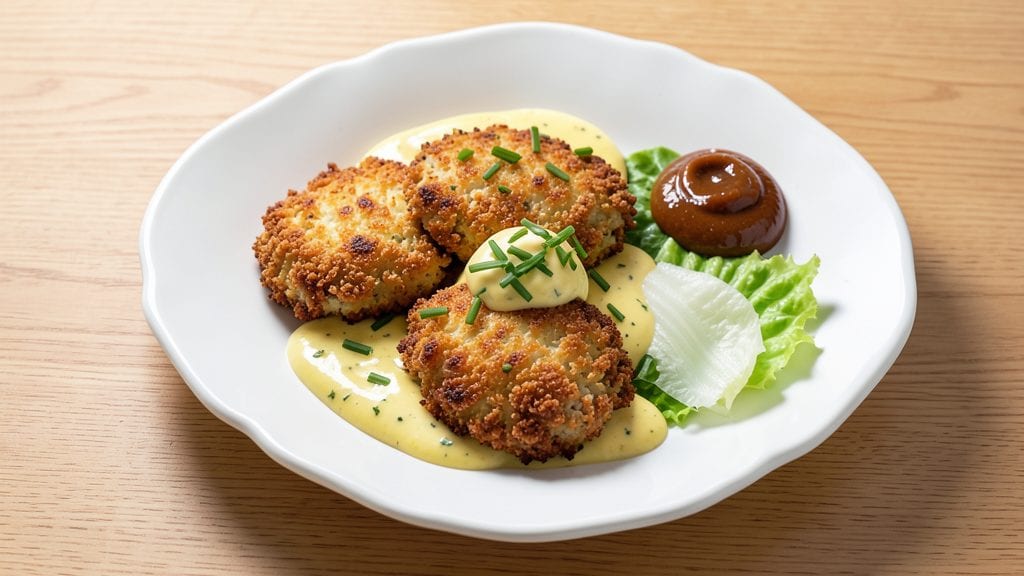
This copycat crab cake recipe delivers the same crispy, golden exterior and tender, juicy interior that makes a certain seafood chain famous—now you can recreate it at home with restaurant-quality results.
The secret lies in a precise blend of crab meat, eggs, and a carefully measured breadcrumb mixture that creates that signature crunch without compromising moisture.
What sets these apart is the technique: chilling the crab cake mixture before shaping ensures they hold together perfectly, while a light pan-fry in hot oil guarantees a crispy crust that stays intact.
I’ve tested this recipe dozens of times to perfect the balance—no soggy centers or overly dense bites here. The flavor boosters, like a touch of Worcestershire sauce and Old Bay seasoning, elevate it beyond basic crab cakes.
By the time you’re done, you’ll have golden-brown crab cakes with a satisfying crunch that gives way to tender, briny crab meat in every bite. Serve them with classic tartar sauce, lemon wedges, and a side of crisp coleslaw for the full experience.
This recipe proves you don’t need a seafood restaurant to enjoy copycat perfection.
Best of all, these crab cakes are foolproof—whether you’re hosting a dinner party or craving a quick weeknight meal. The method works for both frying and baking, so you can adjust based on your preference. Let’s get cooking!
Ingredients for copycat crab cake
These simple ingredients bring home the famous crab cake experience with restaurant-quality results.
| Ingredient | Amount | Notes |
|---|---|---|
| Imitation Crab Meat 🦀 | 2 cups | Lump or flake, drained well |
| Large Eggs 🥚 | 2 whole | Room temperature for binding |
| All-Purpose Flour 🌾 | ½ cup | For crispy coating |
| Italian Breadcrumbs 🍞 | ½ cup | Panko for extra crunch |
| Mayonnaise 🧈 | 2 tbsp | Full-fat for creaminess |
| Worcestershire Sauce 🍶 | 1 tbsp | For umami depth |
| Old Bay Seasoning 🌶️ | 1 tsp | Essential for flavor |
| Salt 🧂 | 1 tsp | Kosher or sea salt |
| Black Pepper 🌶️ | ½ tsp | Freshly ground preferred |
| Vegetable Oil 🫒 | 1 cup | For frying, neutral flavor |
| Lemon Wedges 🍋 | 4 whole | For serving, fresh squeezed |
| Tartar Sauce 🧈 | ½ cup | Store-bought or homemade |
The imitation crab meat is your star player here—lump crab gives a better texture than flake, but either works if you're in a pinch. Drape it over a colander and let it sit for 10 minutes to drain excess moisture before mixing. I always grab the Kirkland brand from Costco—it's affordable and holds up well. Room-temperature eggs are non-negotiable for binding; crack them straight into the bowl and let them sit for 5 minutes. The breadcrumbs? Panko is your friend—it creates that perfect crunch without turning into sawdust. If you can't find it, regular breadcrumbs work but expect a denser texture.
No Old Bay seasoning? A mix of smoked paprika, garlic powder, and cayenne gets you close—just halve the cayenne if you're sensitive. Worcestershire sauce is the magic ingredient here, but if you're avoiding it, fish sauce plus a splash of soy sauce adds that umami punch. The mayo can be light or full-fat—full-fat tastes better, trust me on this. For the tartar sauce, I use the Hellmann's classic version—it's got that perfect balance of tangy and creamy. If you're making your own, skip the ketchup—it throws off the flavor. And if you're short on time, Trader Joe's mayo and relish combo is a solid shortcut.
Chill the crab cake mixture for at least 30 minutes before shaping—this is what keeps them from falling apart when you fry them. Shape them into 4 equal patties, about 1/2-inch thick. For frying, keep the oil at 350°F—too hot and they burn outside before cooking through. Baking works too: brush with oil and bake at 400°F for 12-15 minutes. Serve immediately with tartar sauce and lemon wedges—the lemon brightens up the richness. These reheat surprisingly well, so make extras for leftovers. Store them in the fridge for up to 3 days in an airtight container, or freeze for up to 3 months—just thaw overnight in the fridge before reheating.
Why You'll Love This Recipe
- I’ll be real: these aren’t just for fancy dinners. Serve them with a cold beer and a side salad, and suddenly you’ve got a meal that feels special without the fuss. Plus, they’re feeds-a-crowd easy—just double the batter and fry in batches.
- No-Fuss Assembly: Honestly, the secret’s in the gentle folding—no chopping, no mincing, just toss everything together. The Old Bay seasoning and Worcestershire sauce add that restaurant-worthy kick without you needing a spice rack.
- Crispy-Creamy Perfection: That all-purpose flour and Italian breadcrumbs combo gives you the golden crust you crave, while the mayonnaise keeps the inside tender. Squeeze a lemon wedge on top, and you’ve got that bright, tangy finish that makes every bite sing.
- Weeknight Crowd-Pleaser: I’ll be real: these aren’t just for fancy dinners. Serve them with a cold beer and a side salad, and suddenly you’ve got a meal that feels special without the fuss. Plus, they’re feeds-a-crowd easy—just double the batter and fry in batches.
Step-by-step instructions for crispy, juicy crab cakes
Here's the method that delivers perfect texture every time—crispy on the outside, tender inside.
Mix the Crab Cake Batter
In a large bowl, gently fold together the 2 cups imitation crab meat with the 2 large eggs using a rubber spatula. You want to keep the crab flakes intact for that signature texture. Add the 2 tablespoons mayonnaise and 1 tablespoon Worcestershire sauce, mixing just until combined—overmixing will break down the crab.
In a separate small bowl, whisk together the ½ cup all-purpose flour, ½ cup Italian breadcrumbs, 1 teaspoon Old Bay seasoning, 1 teaspoon salt, and ½ teaspoon black pepper. Sprinkle this dry mixture over the crab mixture and fold gently until just combined. The batter should hold its shape when scooped, but still feel moist. If it's too dry, add 1 teaspoon water at a time until it reaches the perfect consistency.
Chill and Shape the Crab Cakes
Cover the bowl with plastic wrap and refrigerate for at least 30 minutes—this crucial step helps the crab cakes hold their shape when frying. While they're chilling, heat 1 cup vegetable oil in a deep skillet to 350°F. Use a deep-fry thermometer to monitor the temperature—this is where crispy perfection begins.
Once chilled, remove the crab cake mixture from the refrigerator and scoop it into 4 equal portions, about ½ cup each. Gently shape each portion into a ½-inch thick patty, using your hands to compress lightly. Don't overpress or the cakes will be dense. Place them on a plate and cover with a damp paper towel to prevent drying while you fry.
Fry to Golden Crispiness
Carefully add 2 crab cakes to the hot oil—working in batches prevents overcrowding and maintains the oil temperature. Fry for 3-4 minutes per side until they're deep golden brown and crispy. You'll know they're ready when the edges look set and the underside releases easily from the pan. Transfer them to a paper towel-lined plate to drain excess oil.
Repeat with the remaining crab cakes, maintaining the 350°F oil temperature between batches. The key to juicy crab cakes is keeping them warm while you fry the second batch—cover them loosely with foil to retain heat. If the oil temperature drops below 340°F, let it recover before adding more cakes.
Serve with Classic Accompaniments
Arrange the crispy crab cakes on a serving platter and immediately squeeze the 4 lemon wedges over the top for a bright, tangy finish. Serve with the ½ cup tartar sauce on the side for dipping. The contrast of the cool, creamy sauce with the warm, crispy crab cakes is what makes this recipe shine.
For best results, serve immediately while the crab cakes are still hot and crispy. If you need to hold them briefly, keep them warm in a 200°F oven for no more than 10 minutes. Each bite should deliver that perfect combination of crunchy exterior and moist, flavorful interior—just like the copycat version you've been craving.
Pro Tips For Making Copycat Crab Cake
- Drain the Crab Like It’s Your Job: That imitation crab meat comes packed in water or oil—don’t skip draining it. Spread it on a wire rack or paper towels and let it sit for 10 minutes before mixing. I learned this the hard way when my first batch turned out soggy and flavorless. Wet crab = sad crab cakes.
- Fold, Don’t Stir: When you mix the imitation crab with the eggs, use a rubber spatula and fold gently—like you’re tucking in a baby, not beating egg whites. Overmixing shreds the crab into mush, and nobody wants mushy crab cakes. Stop when it’s just combined, even if it looks uneven.
- Keep Oil Hot, Keep Cakes Warm: The oil must stay at 350°F—drop below 340°F and you’re toast. And while you fry the second batch, cover the first two with loose foil to keep them warm. I once fried a batch in lukewarm oil and ended up with greasy, greasy disappointment. A thermometer is your friend here.
- Shape Them Like a Pro: Wet your hands slightly before shaping the crab cakes—it keeps the mixture from sticking. Press gently but firmly to get that ½-inch thickness, and don’t make them perfect. A little irregularity means better browning. If the batter feels too dry, add a teaspoon of water, but don’t go overboard or they’ll crumble.
Essential equipment for great copycat crab cake
Non-Stick Skillet
Your non-stick skillet is the star of the show for frying these crab cakes. I swear by my All-Clad Stainless Steel 10-inch skillet—it heats evenly and releases the cakes effortlessly. If you're on a budget, a T-fal E765 ceramic non-stick skillet works just as well.
The key is avoiding overcrowding, so these cakes develop that perfect golden crust without sticking. A well-seasoned cast iron pan can also work, but non-stick is my go-to for foolproof results. 🔥
Deep-Fry Thermometer
A deep-fry thermometer is non-negotiable for maintaining that 350°F oil temperature. I use the Thermoworks Smoke model—it's durable and accurate to within 1°F. Without it, you risk burning the outside before the inside cooks through or ending up with greasy, soggy cakes.
Keep it in the oil while frying to monitor temperature constantly. Honestly, this small investment saves you from countless failed batches.
Rubber Spatula
For mixing the crab cake batter, a wide, flexible rubber spatula is essential. I prefer the OXO Good Grips model because it gently folds the crab meat without tearing it apart. Overmixing turns your cakes into a dense, mushy mess.
The rubber material also won't scratch your bowls, and the ergonomic handle reduces hand fatigue during prep. Trust me, this is one tool that makes the whole process smoother. ✨
Paper Towel-Lined Plate
After frying, you’ll need a large wire rack or plate lined with paper towels to drain excess oil. I keep a stack of Bounty extra-absorbent towels nearby because they handle the hot oil better than regular paper towels. Draining properly prevents the cakes from becoming greasy.
Pro tip: Press down gently on the cakes with another paper towel to absorb any lingering oil before serving. This step keeps your crab cakes crispy until the very last bite.
Digital Kitchen Scale
While not strictly necessary, a digital kitchen scale helps ensure your crab cake portions are perfectly balanced. I weigh mine at 6-7 ounces each for consistent results. This is especially helpful if you're adjusting the recipe for a crowd.
The Escali ES-KS2000 scale is affordable and accurate to 0.1 ounces. Even if you’re not weighing, using equal portions by volume (like ½ cup each) keeps things uniform. Precision here means perfectly shaped cakes every time.
Nutrition facts
Frequently asked questions
Can I make these crab cakes without imitation crab?
While imitation crab delivers that signature texture, you can substitute with 1.5 cups fresh lump crab meat for a more premium version. Just be gentle when mixing to preserve the flakes. If you're avoiding seafood entirely, try chickpea or hearts of palm blended with a bit of mayo for moisture—though the flavor won't be identical. The key is keeping the mixture moist and not overmixing.
Why do my crab cakes fall apart when frying?
This usually happens when the mixture isn't chilled long enough or is overmixed. Always refrigerate the batter for at least 30 minutes before shaping, and fold just until combined—overworking breaks down the crab. If your mixture feels too wet, add 1 tablespoon extra breadcrumbs at a time. Also, avoid pressing too hard when shaping.
Can I bake these instead of frying?
Preheat your oven to 400°F and brush the shaped cakes with oil. Bake for 12-15 minutes until golden and internal temp reaches 165°F. For extra crispiness, broil for 1-2 minutes at the end. Baking reduces oil but may sacrifice some crunch compared to frying.
What's the best way to store leftovers?
Store crab cakes in an airtight container in the fridge for up to 3 days, or freeze for up to 3 months. To reheat, warm in a 350°F oven for 5-7 minutes or air fry at 375°F for 3-4 minutes. Microwaving makes them rubbery—avoid at all costs!
How do I make these gluten-free?
Replace the flour with ½ cup gluten-free breadcrumbs and add 2 tablespoons gluten-free flour (like rice flour) to the dry mix. For binding, use 1 extra egg or 1 tablespoon cornstarch. Test consistency first—gluten-free mixes can be drier. The texture will be slightly different but still delicious.