
Desserts
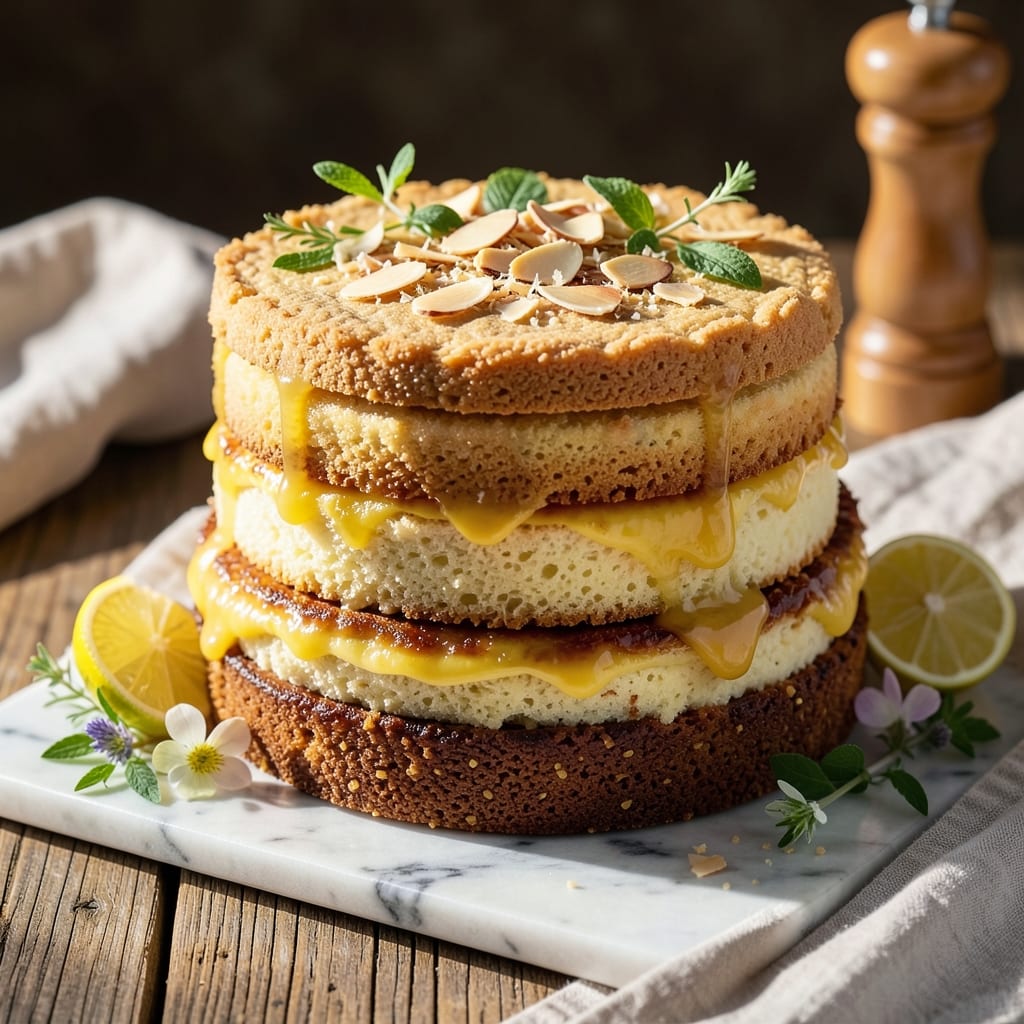
This Amalfi cake recipe brings the sun-drenched coast of Italy to your kitchen with its signature layers of almond flour crust and lemon-infused custard. The secret lies in the delicate balance of buttery almond layers and bright citrus flavors that make this cake irresistibly light yet rich. I've perfected this recipe through years of baking, ensuring each slice delivers that perfect texture—crispy crust, silky custard, and a whisper of lemon zest that transports you to the Mediterranean.
The beauty of this traditional Italian dessert is its simplicity: just a few high-quality ingredients transformed into something extraordinary. The almond crust forms a delicate, buttery base that contrasts beautifully with the airy custard layers. What sets this recipe apart is the lemon zest—freshly grated and folded into the custard for that signature bright, citrusy kick that defines Amalfi's coastal charm. Every bite is a harmonious blend of textures and flavors that feels both elegant and comforting.
What you'll achieve is a cake that's as stunning to look at as it is to eat—golden layers separated by creamy custard, all encased in that signature almond crust. The lemon zest adds a subtle tang that cuts through the richness, creating a dessert that's light enough for summer but satisfying enough for any occasion. This is the kind of cake that makes guests ask for seconds and leaves them dreaming of their next trip to Italy.
Whether you're serving it at a dinner party or simply treating yourself to a taste of the Amalfi Coast, this recipe delivers restaurant-quality results with minimal effort. The layers are built to be precise yet forgiving, making it perfect for both experienced bakers and those new to layer cakes. Let's get started on creating your own slice of Italian paradise.
Ingredients for amalfi cake
Just 13 ingredients transform into layers of almond-butter crust and lemon-kissed custard.
| Ingredient | Amount | Notes |
|---|---|---|
| All-Purpose Flour 🌾 | 1 cup | Sifted for light texture |
| Almond Flour 🥜 | 1 ½ cups | Finely ground, unsweetened |
| Unsalted Butter 🧈 | 1 ½ cups | Cold and cubed for crust |
| Granulated Sugar 🍚 | 1 ½ cups | Superfine preferred for smoothness |
| Large Eggs 🥚 | 4 whole | Room temperature for blending |
| Lemon Zest 🍋 | 2 tbsp | Freshly grated, organic preferred |
| Lemon Juice 🍋 | ½ cup | Freshly squeezed, strained |
| Heavy Cream 🥛 | 1 ½ cups | Cold for custard layers |
| Powdered Sugar 🍚 | 1 cup | For dusting between layers |
| Vanilla Extract 🌸 | 1 tbsp | Pure, high-quality preferred |
| Salt 🧂 | ½ tsp | Fine sea salt |
| Baking Powder 🌾 | 1 tsp | For crust lift |
| Cornstarch 🌾 | 1 tbsp | For custard stability |
The almond flour is non-negotiable here—Bob's Red Mill or King Arthur are my go-tos, but any finely ground, unsweetened almond flour works. The butter? European-style if you can find it, but regular unsalted butter works too—just make sure it's cold when you cube it for the crust. For the lemon zest, grab organic lemons if possible—they've got more vibrant flavor. The zest should be bright yellow, not pale or bitter. If you're using regular lemons, microwave them for 20 seconds to intensify the flavor before zesting (trust me on this).
No almond flour? Substitute with 1 cup of all-purpose flour plus 1/2 cup ground almonds, but the texture won't be quite the same. Short on heavy cream? Whole milk plus 1/2 cup melted butter works, but the custard will be slightly lighter. The vanilla extract can be swapped for 1 tsp vanilla bean paste if you're feeling fancy. For the sugar, superfine is ideal, but if you've only got regular granulated, pulse it in a food processor for 10 seconds to break it down. The baking powder and cornstarch are easy swaps—just use the same amounts of any baking powder and any cornstarch you've got.
The butter for the crust should be stored in the fridge until you're ready to cube it—this keeps it cold and prevents the crust from getting greasy. The lemon zest keeps for about 1 week in the fridge if you store it in an airtight container with a slice of lemon to keep it fresh. The custard layers can be made a day ahead and stored in the fridge—just let them come to room temperature before assembling the cake. The finished cake keeps for 3 days at room temperature, but it's best enjoyed fresh. If you need to store it longer, wrap it tightly in plastic and refrigerate for up to 5 days
Why You'll Love This Recipe
- No-Fuss Layers: I swear, this cake is that easy—just fold the dry ingredients into melted butter and eggs, then bake. The almond flour gives it that tender crumb without requiring any special skills, and honestly? My first attempt turned out fine.
- Butter-Sugar Magic: That rich, creamy texture comes from the butter and sugar combo, but the almond flour adds a subtle nuttiness that keeps it from being too sweet. It’s the kind of cake that tastes like a hug—moist, buttery, and just sweet enough.
- Party or Picnic: Between us, this cake is my go-to for gatherings because it’s light enough for a brunch spread but sturdy enough to pack for a beach day. Slice it thin, and it’s the perfect handheld treat—no forks needed.
- Budget-Friendly Luxury: Almond flour might sound fancy, but a little goes a long way, and the rest of the ingredients are pantry staples. Plus, it keeps well for days, so I can bake one batch and feed the family for a week without breaking the bank.
Step-by-step instructions for lemon-zest layers with buttery almond crust
Here's how to build this elegant Italian cake with crisp crusts and tangy lemon custard.
Prepare the Almond Crust Layers
Preheat your oven to 350°F and line two 9-inch round cake pans with parchment paper. In a food processor, combine the 1.5 cups almond flour, 1 cup all-purpose flour, 1.5 cups granulated sugar, 1 tbsp cornstarch, and 0.5 tsp salt. Pulse until just combined.
Add the 1.5 cups cold cubed unsalted butter and pulse until the mixture resembles coarse crumbs with pea-sized butter pieces. Press half of this mixture firmly into the bottom of each prepared pan, creating an even layer. Bake for 15-18 minutes until the edges are lightly golden. Let cool completely before removing from pans.
Make the Lemon Custard Filling
In a medium saucepan, whisk together the 4 whole large eggs, 1.5 cups heavy cream, 1.5 cups granulated sugar, 2 tbsp lemon zest, 0.5 cup lemon juice, 1 tbsp vanilla extract, and 1 tsp baking powder. Place the saucepan over medium heat and cook, stirring constantly with a wooden spoon, until the mixture thickens to a pudding-like consistency—about 8-10 minutes.
Remove from heat and let cool to room temperature, stirring occasionally to prevent a skin from forming. This custard should be smooth and glossy with a bright lemon flavor. If it thickens too much, whisk in a tablespoon of warm milk to adjust the consistency.
Assemble and Chill the Cake
Place one almond crust layer on a serving plate. Spread half of the cooled lemon custard evenly over the crust, using a spatula to create a smooth layer. Dust with ½ cup powdered sugar for a delicate finish. Repeat with the second crust and remaining custard and powdered sugar.
Cover the assembled cake with plastic wrap and refrigerate for at least 4 hours, preferably overnight. This chilling time allows the flavors to meld and the cake to set properly. The texture should be firm but still tender when sliced, with distinct layers of crisp crust and creamy lemon filling.
Serve and Enjoy
Before serving, dust the top of the cake with additional powdered sugar for an elegant presentation. Slice into wedges and serve chilled. Each bite should deliver a perfect balance of buttery almond crust and tangy lemon custard. For best results, serve within 24 hours of assembly to maintain optimal texture.
Pro Tips For Making Amalfi Cake
- Whisk Butter Slowly: Cream the butter and sugar in three stages—first until crumbly, then smooth, then fluffy. I used to dump everything in and end up with a dense, gummy mess. The almond flour in this cake needs that light, airy butter base to hold its shape. ---
- Sift Almond Flour First: Pulse the almond flour in a food processor before mixing—it’s clumpy, and clumps sink. I learned this after pulling apart a cake with pockets of dry flour. A quick 10-second pulse makes all the difference, especially if your almond flour isn’t finely ground. ---
- Avoid Overmixing Eggs: Beat the eggs just until combined—no ribbons, no streaks. Overmixing adds gluten from the all-purpose flour, and this cake’s delicate crumb turns tough. Stop when the batter looks like thick pudding, not pancake batter. ---
- Bake at 325°F: That lower temp (yes, not 350°F) prevents the almond flour from burning before the center sets. I’ve torched the edges of this cake too many times—it’s a slow bake, but it’s worth it for that even golden crust. Check at 45 minutes, not before.
Regional styles of amalfi cake
Amalfi Coast Origins
The Amalfi cake traces its roots to the sun-drenched coastal town of Amalfi, Italy, where lemon groves flourish along the cliffs. This dessert reflects the region's love for citrus and almonds—both staples of the Mediterranean diet. The original version was simpler, often made with just almond flour, sugar, and lemon, but modern adaptations like this one incorporate custard layers for extra richness. Locals would serve it during festivals, celebrating the harvest season with vibrant flavors. 🌊
Sicilian Citrus Twist
In Sicily, this cake becomes a lemon-pistachio fusion, swapping half the almond flour for ground pistachios and adding 1 tsp pistachio extract to the custard. The nutty depth of pistachios complements the lemon beautifully, creating a dessert that feels both familiar and exciting. For this variation, toast ½ cup pistachios until fragrant, then grind them finely for the crust. The result? A cake with layers of golden pistachio and bright citrus that’s pure indulgence.
Florentine Almond Variation
Florence takes a more refined approach, using finely ground almonds (not flour) for the crust and folding 1 tbsp amaretto into the custard. The texture becomes even more delicate, with a subtle boozy note that pairs perfectly with the lemon. For this version, pulse 2 cups whole almonds in a food processor until they resemble coarse sand, then proceed with the original crust recipe. The amaretto adds depth without overpowering the citrus—trust me, it’s a game-changer. 🍋
Modern Shortcut Adaptation
Short on time? Swap the homemade crust for store-bought almond flour shortbread cookies (like Trader Joe’s Almond Flour Shortbread). Crush them into fine crumbs and press them into your pans for a foolproof base. The custard remains the star, but this hack cuts prep time by 30 minutes without sacrificing flavor. Just bake the crust for 12 minutes (it’s thinner) and proceed as usual. Perfect for weeknight desserts!
Winter Spiced Version
For a cozy twist, infuse the custard with ½ tsp cinnamon and ¼ tsp cardamom, then top each layer with a sprinkle of toasted coconut flakes. The spices warm up the lemon’s brightness, making this cake ideal for holiday gatherings. Use orange zest instead of lemon for a deeper, more complex flavor profile. The coconut adds a tropical contrast that feels unexpected yet harmonious. 🍂
Gluten-Free Adaptation
To make this cake gluten-free, replace the all-purpose flour with 1 cup gluten-free 1:1 baking flour (like Bob’s Red Mill). For extra stability, add 1 tbsp xanthan gum to the crust mixture. The almond flour already provides gluten-free structure, so the texture remains intact. Just ensure your baking powder is also gluten-free—King Arthur’s is a reliable choice. This version keeps all the elegance of the original while being safe for gluten-sensitive guests.
Nutrition facts
Frequently asked questions
Why does the almond crust need to be cold?
The cold butter in the almond crust prevents the butter from melting too quickly during baking, which keeps the crust crispy rather than greasy. Cold butter also helps create those perfect pea-sized pieces that melt into the crust, creating a tender yet firm texture. Always keep your butter in the fridge until ready to use!
Can I make this cake without a food processor?
Yes! For the crust, mix the dry ingredients in a large bowl, then cut in the cold butter using a pastry cutter or two forks until the mixture resembles coarse crumbs. The texture will be slightly less uniform, but it will still taste delicious. Just press it firmly into the pans for even baking.
How do I fix runny custard?
If your custard turns out too thin, whisk in 1 tablespoon cornstarch mixed with 1 teaspoon cold water and cook for an additional 2-3 minutes on low heat, stirring constantly. For extra insurance, chill the custard for 1 hour before assembling the cake—this helps it set properly between layers.
What’s the best way to store leftovers?
Wrap the cake tightly in plastic wrap and store it in the fridge for up to 5 days. To serve, let it sit at room temperature for 10-15 minutes before slicing—this prevents the custard from becoming too firm. For longer storage (up to 1 month), freeze individual slices between parchment paper.
Can I use this recipe for a gluten-free version?
Replace the all-purpose flour with 1 cup gluten-free 1:1 baking flour (like Bob’s Red Mill) and add 1 tablespoon xanthan gum to the crust mixture. The almond flour already provides structure, so the texture stays intact. Just ensure your baking powder is gluten-free too!