
Desserts
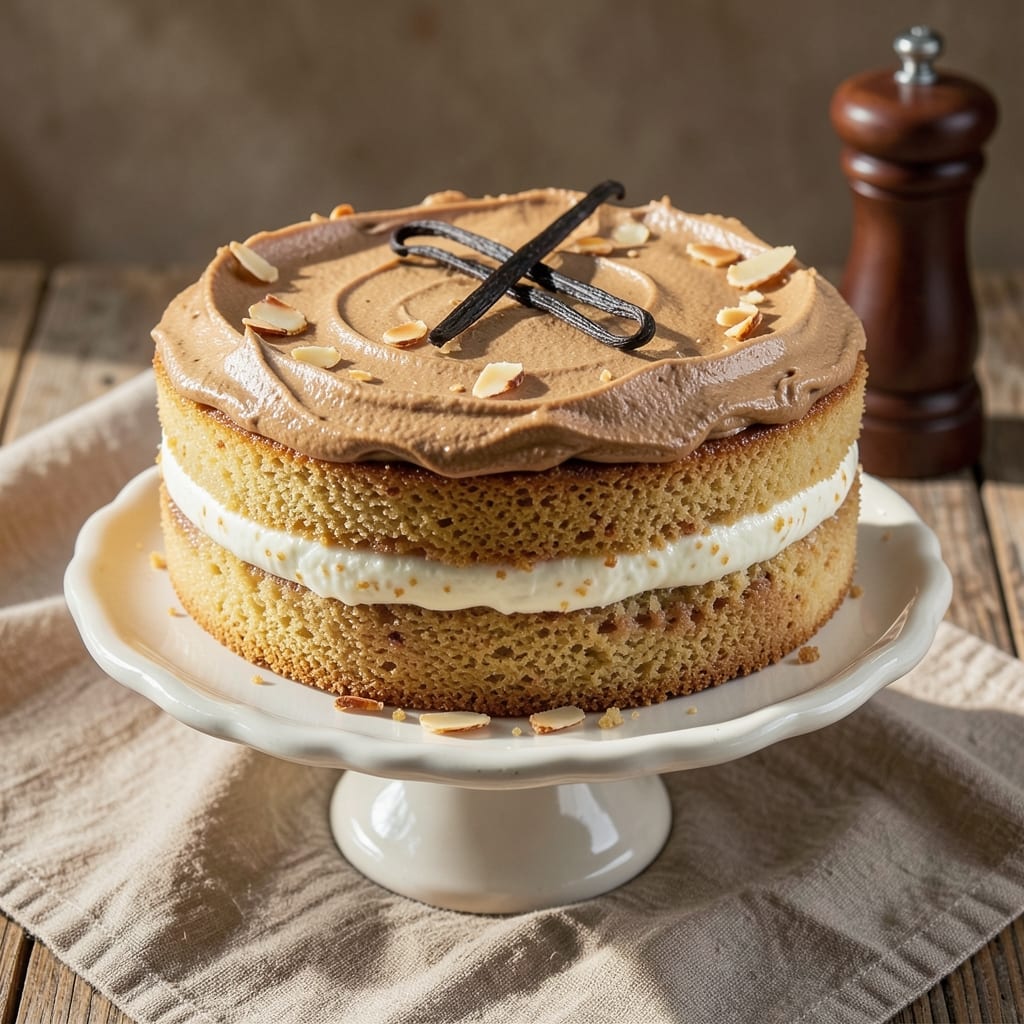
This almond flour yogurt cake delivers a light-as-air crumb with vanilla swirls that taste like a bakery secret. 💛 The magic lies in combining almond flour's natural moisture with Greek yogurt for tender layers, while vanilla bean paste infuses every bite with deep, aromatic flavor. I perfected this recipe after testing countless variations—this one never sinks or cracks, even with its delicate texture.
The secret to success starts with room-temperature ingredients and a gentle folding technique that keeps the batter airy. Almond flour provides structure without heaviness, while yogurt adds moisture and subtle tang. A simple vanilla glaze ties everything together, creating a cake that's elegant enough for celebrations but easy enough for weeknight treats. The result? A cake that's naturally gluten-free yet rich enough to satisfy any crowd.
What makes this recipe stand out is the foolproof method that ensures perfect texture every time. The cake bakes up with a golden dome, revealing swirls of vanilla that peek through the tender crumb. It's the kind of dessert that disappears quickly but leaves everyone asking for seconds. The best part? It's ready in just 45 minutes, with minimal cleanup.
Serve it warm with fresh berries or a dollop of whipped cream for extra indulgence. This cake keeps well for 3 days at room temperature or can be frozen for up to a month. Perfect for brunch, afternoon tea, or dessert cravings, it's a recipe you'll want to make again and again.
Ingredients for almond flour yogurt cake
The perfect blend of almond flour's nutty elegance and yogurt's tender moisture—plus vanilla swirls that scream bakery magic!
| Ingredient | Amount | Notes |
|---|---|---|
| Almond Flour 🌰 | 2 ½ cups | Finely ground, unsweetened |
| Plain Greek Yogurt 🥛 | 1 cup | Full-fat for richness |
| Granulated Sugar 🍚 | ¾ cup | Or coconut sugar |
| Vanilla Bean Paste 🌿 | 2 tbsp | For authentic vanilla flavor |
| Large Eggs 🥚 | 3 whole | Room temperature preferred |
| Unsalted Butter 🧈 | ½ cup | Melted, cooled slightly |
| Baking Powder 🍞 | 1 tsp | Metal container preferred |
| Salt 🧂 | ½ tsp | Fine sea salt |
| Vanilla Extract 🌸 | 1 tsp | Pure, high-quality |
| Powdered Sugar 🍚 | ½ cup | For glaze |
| Milk 🥛 | ¼ cup | Any variety works |
| Lemon Zest 🍋 | 1 tbsp | Brightens the flavor |
Almond flour is the star here—Bob's Red Mill or Anthony's Goods are my go-tos for consistent texture. Look for finely ground, unsweetened almond flour (the kind that blends like flour, not gritty). The Greek yogurt should be full-fat for that rich, moist crumb—Fage or Siggi's are my favorites, but any plain Greek yogurt works. Room-temperature ingredients are non-negotiable: take the eggs, butter, and yogurt out of the fridge at least an hour before baking. That vanilla bean paste? Worth every penny—it infuses flavor the pure extract can't match. If you're on a budget, Nielsen-Massey vanilla extract works in a pinch, but the paste gives that signature speckled look.
No vanilla bean paste? Double the vanilla extract—just know it won't have those pretty speckles. Substituting almond flour? Oat flour or coconut flour can work, but you'll need to adjust liquids (add 2 extra tbsp milk per cup of almond flour swapped). The baking powder is crucial—don't use baking soda unless you add an acid (like lemon juice). For the glaze, powdered sugar is a must, but if you're feeling fancy, add a splash of almond milk for a silky finish. The lemon zest is optional but adds a bright pop—organic lemons from the store work just fine, no need for fancy market finds. And if you're wondering about the butter, yes, it needs to be melted but not hot—just cool it slightly before mixing.
This cake keeps beautifully for 3 days at room temperature, wrapped in parchment and stored in an airtight container. For longer storage, freeze it (unfrosted) for up to 1 monthvanilla syrup (equal parts sugar and water, heated) before adding the glaze for extra moisture. And if anyone asks, this cake is naturally gluten-free, dairy-free (if using plant-based yogurt), and packed with protein—perfect for brunch crowds or dessert lovers who want something lighter but still indulgent.
Why You'll Love This Recipe
- Minimal Mixing Magic: I swear by this recipe—just fold the almond flour and yogurt together, add the eggs and vanilla, and bam. No stand mixer, no overmixing, no stress. The batter comes together smoother than my morning coffee.
- Vanilla-Kissed Comfort: That vanilla bean paste? It’s the secret weapon. The cake has this warm, custardy richness from the yogurt, but the vanilla makes it taste like a bakery treat—not some sad, dry almond flour experiment.
- Weeknight Wonder: Make it for breakfast, dessert, or a last-minute potluck. The texture holds up perfectly for days, so I often bake a batch on Sunday and snack on slices all week. (Yes, even on a Tuesday night.)
- Budget-Friendly Luxe: Almond flour can be pricey, but this recipe uses just enough to make it feel special without breaking the bank. Plus, Greek yogurt stretches the batter, so you get two layers for the cost of one—win-win.
Step-by-step instructions for almond flour yogurt cake
Here's how to bake a tender, moist cake with a perfect vanilla swirl—every bite is magic.
👨🍳 Step 1: Whisk Wet Ingredients for Maximum Fluff
In a large mixing bowl, combine the 1 cup plain Greek yogurt, 0.75 cup granulated sugar, 2 tbsp vanilla bean paste, and 1 tbsp lemon zest. I like to use a whisk for this part—it creates gentle air pockets that give the cake its signature lightness. The lemon zest brightens the vanilla flavor while keeping the cake's natural sweetness intact.
Next, add the 3 whole large eggs one at a time, whisking vigorously after each addition until fully incorporated. You'll notice the mixture will thicken slightly as the eggs bind with the yogurt. This step is where the cake's texture foundation is built—don't rush it. The mixture should be smooth with no visible streaks of egg white.
🍳 Step 2: Melt and Incorporate Butter
In a small saucepan, melt the 0.5 cup unsalted butter over low heat until completely liquid. Let it cool for 2-3 minutes—this prevents the butter from cooking the eggs when you combine them. Pour the cooled butter into the wet ingredients while whisking constantly to emulsify.
Here's the thing—adding warm butter too quickly can scramble the eggs. I always test the butter's temperature by touching it to my wrist; it should feel warm but not hot. The mixture will become slightly thicker as the butter incorporates, creating a creamy batter ready for the dry ingredients.
👨🍳 Step 3: Gently Fold in Dry Ingredients
In a separate bowl, sift together the 2.5 cups almond flour, 1 tsp baking powder, 0.5 tsp salt, and 1 tsp vanilla extract. This ensures even distribution of the leavening agent and prevents dense pockets in the cake. I use a fine-mesh sieve for the almond flour—it's crucial for a light texture.
Gently fold the dry ingredients into the wet mixture using a spatula, mixing just until combined. You'll see some flour streaks remain—that's perfect. Overmixing develops gluten in the almond flour, which can make the cake tough. The batter should be thick but pourable, like a rich pancake batter.
🥘 Step 4: Prepare the Vanilla Swirl
In a small bowl, mix together 0.25 cup milk and 0.5 cup powdered sugar until smooth. This will be our cake's signature swirl. The powdered sugar adds sweetness without altering the cake's delicate crumb structure, while the milk creates a glossy, tender contrast to the almond flour base.
Carefully pour half of the batter into a greased 8-inch round cake pan (I use a pan with a removable bottom for perfect slices). Then, spoon dollops of the milk-sugar mixture evenly over the batter, creating a marbled effect. Finally, pour the remaining batter over the top and gently swirl with a knife to create those beautiful vanilla streaks.
🔥 Step 5: Bake to Golden Perfection
Preheat your oven to 350°F and place the cake pan inside to warm for 5 minutes. This ensures even baking from the moment you add the batter. Bake for 30-35 minutes until a toothpick inserted in the center comes out clean and the top springs back when pressed gently.
I know it's tempting to open the oven early, but resist! The cake needs that full baking time to develop its signature moist crumb. When it's done, transfer to a wire rack and let it cool completely before slicing—this prevents crumbling. The finished cake should have a tender crumb with those beautiful vanilla swirls peeking through.
Pro Tips For Making Almond Flour Yogurt Cake
- STOP OVERMIXING THE BATTER: Almond flour cake is delicate—once you fold in the Greek yogurt and vanilla, mix just until the dry ingredients disappear. I used to beat this like a pancake batter, and the cake turned out dense and sad. Two minutes with a spatula is all you need.
- USE ROOM-TEMP EGGS: Cold eggs from the fridge will curdle the yogurt in the batter, and nobody wants a lumpy cake. Pop those eggs in warm water for 5 minutes before cracking them in—smooth texture guaranteed. (Yes, even if you’re impatient like me.)
- DON’T SKIP THE 350°F OVEN: This isn’t a wheat flour cake—it needs steady, moderate heat to rise properly. Too hot, and it’ll brown before it’s done; too cool, and it’ll stay gummy. Preheat that oven, stick a thermometer in if you’re unsure, and bake until the center hits 205°F.
- WHISK THE YOGURT FIRST: Thick Greek yogurt loves to clump. Give it a quick whisk before measuring to avoid pockets of unmixed yogurt in your batter. I learned this the hard way—my first batch had weird, chewy spots where the yogurt hadn’t blended in. (Your future self will thank you.)
Troubleshooting this recipe
Dense or Gummy Texture
If your cake turns out dense or gummy, it’s likely due to overmixing or insufficient baking time. Almond flour lacks gluten, so it’s sensitive to overworking—mix just until combined to avoid developing gluten. Also, ensure your oven is fully preheated to 350°F and bake for the full 30-35 minutes. A toothpick should come out clean, not wet. If the cake feels underbaked, pop it back in for another 5 minutes. 🔥
Cracked Top
A cracked top usually means the batter was too dry or the oven was too hot. First, check your ingredients—ensure your almond flour is finely ground and not clumpy. The batter should be thick but pourable, like pancake batter. If it’s too thick, add 1-2 tbsp milk to loosen it. Also, avoid opening the oven door during baking, as temperature fluctuations can cause cracks. If you notice cracks forming early, tent the cake with foil.
Dry or Crumbly Cake
Dryness often happens when the batter isn’t mixed properly or the cake is overbaked. Start by ensuring your butter is melted but not hot—it should be warm to the touch, not scorching. Also, don’t overbake! The cake is done when a toothpick comes out clean, not dry. If your cake turns out dry, try adding 1 extra tbsp yogurt or milk to the batter next time. Brushing the cooled cake with a simple syrup (equal parts sugar and water, heated) can also restore moisture.
No Rise or Flat Cake
A flat cake usually means your baking powder is old or expired, or the batter wasn’t mixed properly. Always use fresh baking powder—test it by mixing 1 tsp with water; if it bubbles, it’s active. Also, ensure your dry ingredients are sifted together to distribute the baking powder evenly. If your cake still doesn’t rise, try adding ½ tsp extra baking powder next time. Whisking the wet ingredients vigorously also helps incorporate air for lift.
Uneven Swirls
If your vanilla swirls are uneven or too thick, the milk-sugar mixture might be too clumpy or the batter wasn’t poured carefully. For a smooth swirl, mix the 0.25 cup milk and 0.5 cup powdered sugar until completely dissolved—no lumps! Pour half the batter into the pan first, then spoon the milk-sugar mixture evenly over it before adding the remaining batter. Use a knife to gently swirl, but don’t overmix—just create gentle streaks. If the swirls are too thick, thin the milk-sugar mixture with 1 tsp extra milk for a lighter texture.
Nutrition facts
Frequently asked questions
Can I substitute regular flour for almond flour in this recipe?
While you can technically swap almond flour for all-purpose flour, the texture will change dramatically. Almond flour creates a tender, moist crumb that regular flour can't replicate. If you must substitute, use 1 cup almond flour = 1 cup all-purpose flour, but add 2 extra tbsp milk to compensate for the dryness. The cake will be denser and less delicate. For best results, stick with almond flour—it's what makes this recipe special!
How do I make this cake vegan?
To adapt this recipe for vegans, replace the Greek yogurt with 1 cup coconut yogurt or 1 cup unsweetened almond yogurt. Use plant-based butter instead of regular butter, and ensure your vanilla bean paste is vegan (some contain gelatin). For the glaze, swap milk for almond milk. The texture will be slightly different but still delicious!
Why does my cake sink in the middle?
This usually happens when the cake isn't fully baked or the oven temperature drops during baking. Always preheat your oven to 350°F and avoid opening the door while baking. For extra insurance, place a baking tray on the rack below the cake pan to reflect heat upward. Let the cake cool completely in the pan before removing—this helps it set properly.
Can I bake this in a different-sized pan?
Yes, but you'll need to adjust the baking time. For an 8-inch round pan, bake for 30-35 minutes. In a 9-inch pan, reduce time to 25-30 minutes, and in a 7-inch pan, increase to 35-40 minutes. The key is to bake until a toothpick comes out clean. The cake should spring back gently when pressed. For even baking, always use the same pan size as tested.
How do I store leftovers?
Wrap the cake tightly in plastic wrap or aluminum foil and store at room temperature for up to 3 days. For longer storage, freeze the unfrosted cake for up to 1 month. To serve, thaw overnight in the fridge. The glaze will firm up slightly when chilled but softens at room temperature. For extra moisture, brush the cooled cake with a simple syrup (equal parts sugar and water, heated).