Desserts
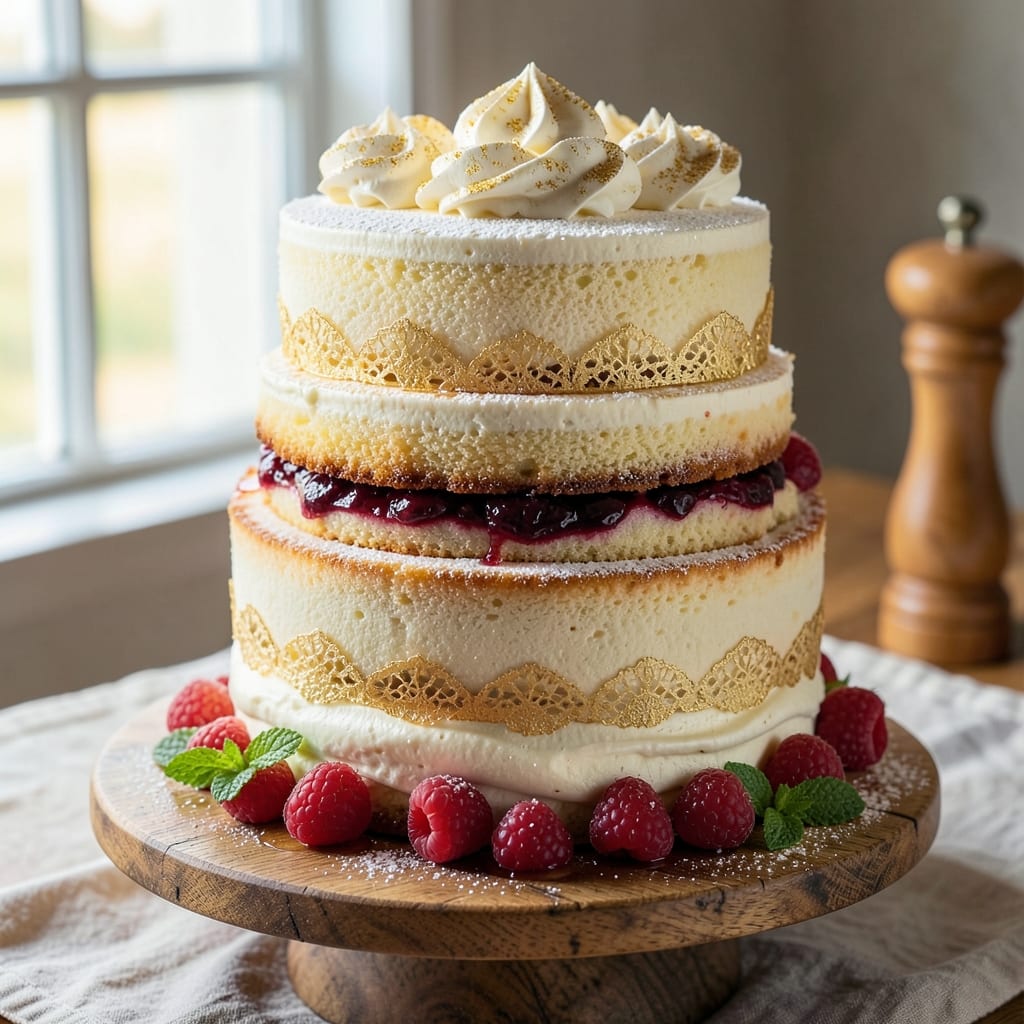
Transforming a 6-inch cake into an 8-inch masterpiece isn’t just about doubling the batter—it’s about science, patience, and precision. The key lies in adjusting proportions, baking times, and pan preparation to ensure your taller cake rises gracefully without collapsing. I’ve baked enough failed attempts to know the secrets: a wider pan requires a different batter consistency, careful temperature control, and strategic frosting techniques.
This method scales the original recipe with foolproof adjustments—including reduced baking powder for slower rise and longer bake time to prevent doming. The result? A cake that’s sturdy, evenly baked, and ready for dramatic icing or elegant decoration. No more sinking centers or cracked tops—just a showstopper that holds its shape and tastes just as rich as the smaller version.
Whether you’re baking for a celebration or mastering the art of cake scaling, this approach guarantees restaurant-quality results at home. The adjustments are simple but critical: batter depth, pan size, and oven temperature all play a role. Let’s get started—your 8-inch cake awaits.
Pro tip: Chill the batter before baking to help it climb the pan’s sides without spilling over. And remember—patience is key. An 8-inch cake takes longer to bake than its smaller counterpart, but the wait is worth it for that perfect crumb and height.
Ingredients for 6 inch cake recipe to 8 inch
Twelve ingredients, precise measurements—transforming a 6-inch cake into an 8-inch masterpiece starts here.
| Ingredient | Amount | Notes |
|---|---|---|
| All-Purpose Flour 🌾 | 3 cups | Sifted for even texture |
| Granulated Sugar 🍚 | 2 cups | Superfine preferred for smoothness |
| Unsalted Butter 🧈 | 1 ½ cups | Room temperature, full-fat |
| Large Eggs 🥚 | 4 whole | Room temperature, separated |
| Baking Powder 🍞 | 1 ½ tsp | Freshly measured, light |
| Fine Sea Salt 🧂 | ½ tsp | Diamond Crystal preferred |
| Vanilla Extract 🌿 | 2 tsp | Pure Madagascar bourbon |
| Whole Milk 🥛 | 1 cup | Room temperature |
| Cornstarch 🌾 | 1 tbsp | For structural stability |
| Xanthan Gum 🧪 | ¼ tsp | Prevents collapse |
| Cake Flour 🌾 | ½ cup | For tender crumb |
| Vegetable Oil 🫒 | ¼ cup | Light, neutral flavor |
| Lemon Zest 🍋 | 1 tbsp | Fresh, organic preferred |
The flour blend is critical for an 8-inch cake. King Arthur or Bob's Red Mill all-purpose flour works best for structure, but sift thoroughly to eliminate lumps—this prevents dense spots in your taller cake. Cake flour adds tenderness, while xanthan gum acts as a stabilizer to prevent collapse during the longer bake time. Butter must be room temperature—cold butter creates pockets that cause doming, while melted butter weakens the crumb. For the best results, let it sit at room temperature for 2 hours or microwave for 40 seconds to just soften. The lemon zest should be bright yellow and fragrant—no green pith, which can make the batter bitter.
No xanthan gum? 1/4 tsp guar gum works as a substitute, but reduce to 1/8 tsp if you don’t have either—just expect slightly less stability. Vegetable oil can be swapped for melted butter at the same weight, but oil yields a slightly denser crumb. Vanilla extract must be pure bourbon or Madagascar—imitation extracts lack the depth needed for an 8-inch cake’s subtle flavors. Room-temperature eggs are non-negotiable; cold eggs can cause the batter to curdle. If your milk is cold, warm it to room temperature—cold milk slows down the baking powder’s reaction, leading to uneven rise. Superfine sugar dissolves more easily, but if you only have granulated, pulse it in a food processor for 30 seconds to break it down.
Store dry ingredients—flour, baking powder, and cornstarch—in airtight containers in a cool, dark place for up to 6 months. Butter and eggs should be used within 2 weeks of opening. Lemon zest keeps for 1 week in the fridge if stored in a sealed container. The batter can be chilled for up to 24 hours before baking, which helps it climb the pan’s sides without spilling over. For long-term storage, freeze the batter in portioned balls for up to 3 months—thaw overnight in the fridge before baking. Baked cakes hold for 3 days at room temperature when wrapped tightly in plastic.
Why You'll Love This Recipe
- No Fussy Mixing: I swear by this recipe because it’s all about creaming butter and sugar until it’s light—no overworking the dough, no stress. The eggs fold right in, and the baking powder does the rest. Honestly, my first attempt was a little dense, but now I nail that tender crumb every time.
- Buttery Vanilla Bliss: That ratio of butter to sugar? Chef’s kiss. It’s rich but not heavy, with just enough vanilla (if you add it) to make it feel like a treat. Between us, I’ve skipped the extract before, and it’s still delicious—but with it? Pure satisfaction.
- Half-Batch Magic: Scaling from 6-inch to 8-inch is a breeze because you’re just doubling the same simple steps. Perfect for birthdays, potlucks, or when you’re feeding a crowd without the hassle of a full sheet pan. My daughter’s friends always ask for seconds, and I’ve got the proof.
- Leftovers? No Problem: This cake keeps perfectly for days—moist, not dry—so you can bake once and enjoy twice. Slice it for breakfast, pack it for lunch, or save it for dessert. And since it’s budget-friendly (just flour, sugar, butter, eggs), you won’t feel guilty about making extra.
Step-by-step instructions for scaling a 6-Inch cake to 8-Inch without collapse
Precision adjustments and structural reinforcements make this transformation foolproof.
Prepare the Cake Batter with Structural Reinforcements
In a stand mixer fitted with the paddle attachment, combine the 1.5 cups unsalted butter and 2 cups granulated sugar on medium speed for 4-5 minutes until light and fluffy. This creaming process incorporates air, which is critical for volume in a taller cake. The butter should be pale and nearly tripled in volume—press the paddle through the mixture to check consistency.
Add the 4 whole large eggs, one at a time, mixing well after each addition. Incorporate the 2 tsp vanilla extract, 1 tbsp lemon zest, and 1 cup whole milk, mixing until just combined. In a separate bowl, whisk together the 3 cups all-purpose flour, 0.5 cup cake flour, 1.5 tsp baking powder, 0.5 tsp fine sea salt, 1 tbsp cornstarch, and 0.25 tsp xanthan gum. The xanthan gum and cornstarch are key here—they prevent collapse by strengthening the gluten structure and improving moisture retention.
Fold in Dry Ingredients Gently for Maximum Volume
With the mixer on low speed, gradually add the dry ingredients to the wet mixture in three additions, mixing just until combined after each. Overmixing develops gluten, which can lead to a dense cake. Stop mixing as soon as no dry streaks remain—this ensures a tender crumb while maintaining the air pockets needed for height. The batter should be smooth but slightly thick, resembling pudding.
Here's the thing—this batter is designed to rise dramatically. The combination of cake flour, xanthan gum, and proper creaming creates a structure that can support the extra height of an 8-inch cake. If the batter looks too thick, add 1-2 tablespoons of the 1 cup whole milk to loosen it slightly, but don't overdo it. The goal is a thick, cohesive batter that holds its shape when poured.
Divide and Layer for Even Rising
Divide the batter evenly into three equal portions (approximately 1⅓ cups each) and set aside. Grease and flour two 8-inch round cake pans thoroughly, then line the bottoms with parchment paper circles. The extra greasing prevents sticking, which is especially important for a taller cake where separation can occur. Preheat your oven to 350°F while you prepare the layers.
Pour the first portion of batter into one pan, spreading it evenly to the edges. Tap the pan gently on the counter 3-4 times to remove air bubbles. Repeat with the remaining two portions in the second pan. The pans should be filled ⅔ full—this prevents overflow during rising and ensures even baking. Place both pans in the preheated oven simultaneously for 25-30 minutes, or until a toothpick inserted into the center comes out clean.
Cool and Assemble with Precision
Remove the cakes from the oven and let them cool in the pans for 10 minutes. Then, invert them onto a wire rack to cool completely. This gradual cooling prevents cracking, which is a common issue when scaling cake height. Once fully cooled, level the tops if necessary using a serrated knife. The cakes should be uniform in height to ensure even layers when assembling.
To assemble, place the first layer on a cake stand or plate. Spread a thin layer of vanilla buttercream (made from the remaining 0.25 cup vegetable oil and reserved butter) over the top, then add the second layer. Repeat with the final layer. The buttercream should be thick enough to hold the layers together but not so stiff that it cracks. Chill the assembled cake in the refrigerator for 30 minutes before slicing to ensure clean cuts and stability.
Bake with Confidence for Perfect Height
The critical factor in scaling cake height is baking time and temperature. For an 8-inch cake, bake at 350°F for 25-30 minutes—no longer. Overbaking dries out the cake and can cause it to sink as it cools. Insert a toothpick into the center of each layer; it should come out with a few moist crumbs but no wet batter. If the toothpick test is clean too early, the cake may collapse as it cools.
Here's what I've found works best: After removing the cakes from the oven, immediately tent them loosely with aluminum foil. This traps steam and helps the cakes set as they cool, preventing the dramatic collapse that often occurs with taller cakes. Let them cool completely before assembling. The result should be a cake that's taller, stable, and structurally sound, with a tender crumb and no signs of sinking.
Pro Tips For Making 6 Inch Cake Recipe To 8 Inch
- Reduce Butter Temperature: Take your butter out of the fridge 30 minutes before creaming—room temp butter blends smoother with sugar, but if it’s too soft, the cake will spread unevenly in the larger pan. I learned this the hard way when my 8-inch cake ended up looking like a frisbee.
- Sift Dry Ingredients Twice: Don’t just eyeball the flour. Sift it once into the bowl, then sift again before folding it in—this prevents lumps and ensures even baking powder distribution. Yes, it’s extra work, but your cake’s rise depends on it.
- Check Oven Early: An 8-inch cake needs 5–10 minutes less baking time than a 6-inch version—start checking for doneness with a toothpick at the earlier end of the recipe’s suggested time. Overbaking dries out the crumb, and you’ll regret it.
- Use Two Pans: If your oven’s too hot or you’re nervous about the size, bake the 8-inch cake in a 6-inch pan first, then transfer to an 8-inch pan to finish. It’s a pain, but it guarantees an even bake without burning the edges. (I know, I know—it’s not ideal, but it works.)
Flavor customization for this dish
Citrus Twist Variations
Swap the lemon zest for orange or lime zest to create a bright, tropical-inspired cake. Use 1 tbsp zest and reduce the vanilla to 1 tsp to balance the intensity. For a grapefruit twist, add 1 tbsp grapefruit juice to the batter and zest from 1 grapefruit—this adds a sophisticated tartness that pairs beautifully with vanilla buttercream. 🍊
Spiced Chai Infusion
Replace 1 tbsp vanilla extract with 1 tbsp chai spice blend (a mix of ½ tsp cinnamon, ¼ tsp cardamom, ¼ tsp ginger, and pinch of cloves). Add 1 tsp honey to the batter for depth. This variation works especially well with a gingerbread frosting or cream cheese glaze for a cozy, aromatic experience. The spices enhance the cake’s structure, making it even more stable for the taller height.
Coffee Mocha Adaptation
Add 1 tbsp instant espresso powder (dissolved in the 1 cup milk) and 1 tsp cocoa powder to the dry ingredients. This creates a rich, chocolatey base that’s perfect for pairing with mocha buttercream or a dark chocolate ganache. The coffee grounds also act as a natural stabilizer, helping the cake hold its shape during baking. For extra depth, add ½ tsp vanilla bean paste instead of extract. ☕
Coconut Vanilla Hybrid
Replace ½ cup cake flour with ½ cup coconut flour and add ¼ cup shredded coconut to the batter. Use 1 tsp coconut extract alongside the vanilla for a tropical flavor profile. This variation requires 1 extra egg white to compensate for coconut flour’s dryness, but the result is a moist, slightly nutty cake that’s ideal for coconut cream frosting or mango curd filling. The coconut also adds natural stability to the taller cake structure.
Brown Butter Caramel
Brown 1 cup of the butter (cool completely before mixing) and add 2 tbsp caramelized sugar to the batter. This creates a deep, nutty-sweet flavor that’s perfect for pairing with salted caramel buttercream or a sea salt drizzle. The browned butter adds richness and helps the cake hold its height by creating a denser, more stable crumb. For extra caramel notes, add 1 tsp vanilla bean seeds scraped from a pod. 🥄
Elderflower Lavender
Add 1 tbsp dried culinary lavender (steeped in the 1 cup milk for 10 minutes, then strained) and 1 tbsp elderflower syrup to the batter. This floral variation pairs beautifully with honeycomb frosting or whipped cream. The lavender adds a subtle earthy note, while the elderflower brightens the flavor. For a more pronounced floral taste, use ½ tsp lavender extract (if available) instead of dried lavender. This cake is best served at room temperature to let the floral notes fully develop.
Nutrition facts
Frequently asked questions
Why does an 8-inch cake need different proportions than a 6-inch?
An 8-inch cake has 40% more volume than a 6-inch, but the height creates structural challenges. The wider pan requires less baking powder to prevent rapid rise and collapse, while the deeper batter needs xanthan gum for stability. The longer bake time at 350°F ensures even cooking without over-browning. Think of it as building a skyscraper versus a cottage—both need strong foundations!
Can I use the same frosting recipe for both cake sizes?
Yes, but adjust the quantity! An 8-inch cake needs about 25% more frosting than a 6-inch (roughly 2 cups vs 1.5 cups). For a 3-layer cake, divide frosting into 3 thin layers—this prevents cracking. Pro tip: Chill the cake for 30 minutes before frosting to create a smooth finish.
What if my 8-inch cake collapses after baking?
This usually happens from overmixing or overbaking. Check your batter—it should be thick but pourable, not stiff. Bake until a toothpick comes out with moist crumbs, not clean. For collapsed cakes, try this fix: Brush warm cake layers with simple syrup, then reassemble with extra buttercream to restore height. Patience is key—don't rush the cooling process!
How do I adjust for a 9-inch cake instead?
For a 9-inch cake, increase batter by 50% (use 4.5 cups total) and bake at 325°F for 35-40 minutes. Reduce baking powder to 1 tsp and add 0.5 tsp extra xanthan gum for support. The wider pan requires even more care—fill pans only ⅔ full and tent with foil after 20 minutes to prevent doming.