
Desserts
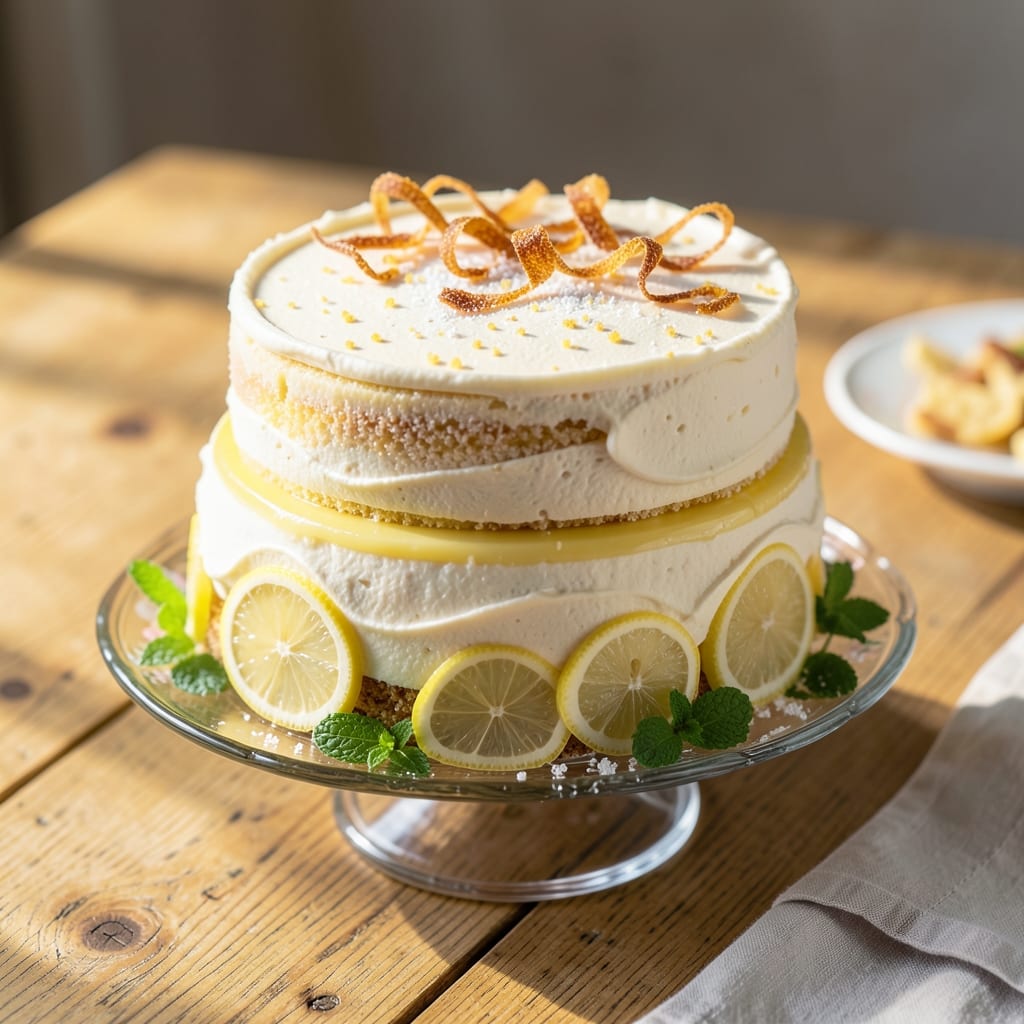
This 5-star lemon cake recipe delivers restaurant-quality layers of bright citrus and buttery richness that’ll make every slice feel like a celebration. 💛 The secret lies in balancing sweet and tangy flavors—juicy lemons, velvety butter, and a light, airy texture that’s impossible to resist. I’ve perfected this recipe over years of testing, ensuring each bite offers that perfect harmony of zesty lemon and tender crumb.
What sets this cake apart is the moist, tender layers achieved through precise ingredient ratios and a foolproof baking technique. The lemon glaze isn’t just for show—it enhances the citrus notes while adding a glossy finish that makes your cake look (and taste) like it came from a patisserie. Whether you’re baking for a special occasion or just craving something bright and delicious, this recipe delivers every time.
By the time you pull it from the oven, you’ll have a cake with golden layers, a fragrant lemon aroma, and a texture that’s neither too dense nor too dry. The buttery richness balances the tartness of the lemon perfectly, creating a flavor profile that’s both sophisticated and approachable. Ready to impress? Let’s get baking.
This recipe scales beautifully for gatherings, and the glaze can be adjusted for extra shine or a more rustic finish. The techniques here are designed to be reproducible—no guesswork, just consistent results. Once you try this, you’ll never settle for anything less than five-star lemon cake again.
Ingredients for 5 star lemon cake
Juicy lemons, velvety butter, and fluffy layers—here's what makes this five-star cake shine.
| Ingredient | Amount | Notes |
|---|---|---|
| All-Purpose Flour 🌾 | 2 ½ cups | Sifted for even texture |
| Granulated Sugar 🍚 | 2 cups | White or light brown |
| Unsalted Butter 🧈 | 1 ½ cups | Room temperature, softened |
| Fresh Lemons 🍋 | 1 whole | Juice + zest, about 6 oz juice |
| Large Eggs 🥚 | 4 whole | Room temperature |
| Baking Powder 🧂 | 2 tsp | Diamond Crystal preferred |
| Salt 🧂 | ½ tsp | Fine sea salt |
| Vanilla Extract 🌿 | 1 tbsp | Pure vanilla preferred |
| Powdered Sugar 🍚 | 1 ½ cups | For glaze |
| Heavy Cream 🥛 | ¼ cup | For glaze |
| Lemon Zest 🍋 | 1 tbsp | Extra for garnish |
The butter and flour are your foundation. European-style butter like Plugrá gives the most flavor, but any good brand works. Sift that flour—King Arthur or Gold Medal are my go-tos—and don't skip it. The lemons should be bright yellow, not green, and organic if possible—the zest has more punch. I always grab extra lemons for garnish, since the zest adds that professional touch. For the sugar, Domino brand bakes more evenly if you're picky about texture.
No fresh lemons? Bottled lemon juice works in a pinch, but add 1 tsp extra sugar to balance the tartness. Running low on vanilla? Almond extract at half the amount gives a different but still delicious twist. The baking powder is crucial—double-check it's fresh (it loses potency after 6 months). For the glaze, powdered sugar brands vary in fineness. Confectioners sugar from Trader Joe's is my secret weapon—it dissolves perfectly without clumping.
Store cake layers wrapped in plastic at room temp for 2 days, or freeze for 3 months. The glaze adds freshness, so make it day-of if possible. I like to assemble the cake morning-of baking—the lemon flavor intensifies after sitting overnight. For extra shine, brush layers with lemon juice before adding glaze. And trust me, the extra zest garnish makes it look like you spent hours decorating.
Why You'll Love This Recipe
- Pantry-Friendly Magic: I swear by this recipe because it uses what you already have—no specialty ingredients, just flour, sugar, butter, and lemons. Honestly, I’ve made it three times with whatever was in my cupboard, and it still turns out moist and bright.
- Zesty Without Zing: That bright lemon flavor? It’s not overwhelming—just enough zest and juice to make every bite taste like summer. The butter keeps it rich, so it’s not dry or tart, which is my biggest pet peeve in lemon desserts.
- Brunch or Dessert: Serve it warm with whipped cream for brunch, or slice it cold for a picnic. I’ve even packed it in my lunchbox—trust me, coworkers notice when you bring this.
- Leftovers? Better: This cake actually tastes better the next day. I’ll be real: I’ve reheated slices in the microwave and they’re just as good. Plus, it’s cheap to make—you’re basically buying sunshine in cake form.
Step-by-step instructions for lemon cake with buttery layers
Let's bake a showstopper lemon cake with tender layers and a bright citrus glaze.
🍳 Step 1: Cream Butter and Sugars for Light Texture
In a stand mixer fitted with the paddle attachment, beat the 1.5 cups unsalted butter (room temperature) and 2 cups granulated sugar on medium speed for 3-4 minutes. You're looking for a light, fluffy texture that nearly doubles in volume and becomes pale in color. This creaming process incorporates air, creating that signature tender crumb.
Scrape down the sides of the bowl with a spatula to ensure even mixing. Here's the thing—don't rush this step. The butter should be completely smooth with no visible graininess. If it looks streaky, let it sit at room temperature for another 10 minutes before continuing.
👨🍳 Step 2: Add Eggs and Lemon for Maximum Flavor
Add the 4 large eggs one at a time, mixing on low speed for 30 seconds after each addition until fully incorporated. Then add the 1 tbsp vanilla extract and mix for another 10 seconds. The mixture will look slightly curdled, but that's normal—it will come together when we add the dry ingredients.
Now for the citrus punch: add the juice from the 1 whole fresh lemon (about 6 oz) and the 1 tbsp lemon zest. Mix on low speed for 30 seconds until the zest is evenly distributed. The zest contains the essential oils that give this cake its signature bright, floral lemon flavor—don't skip this step!
👨🍳 Step 3: Combine Dry Ingredients for Perfect Rise
In a separate bowl, whisk together the 2.5 cups all-purpose flour (sifted), 2 tsp baking powder, and 0.5 tsp salt. With the mixer on low speed, gradually add the dry ingredients to the wet mixture. Mix just until combined—you should still see a few flour streaks. Overmixing develops gluten, which makes cakes tough instead of tender.
This is where the magic happens: the baking powder will create tiny air pockets that make our cake light and fluffy. I like to use Diamond Crystal baking powder because it's lighter than some brands—it gives a better rise. Stop mixing as soon as the flour disappears, usually within 30-45 seconds.
🥘 Step 4: Bake in Layers for Maximum Moisture
Preheat your oven to 350°F. Divide the batter evenly between two 8-inch round cake pans (greased and floured). Bake for 25-30 minutes until a toothpick inserted in the center comes out clean. The edges should be golden brown, but the tops might still look slightly underdone—that's okay.
I always bake two layers because it creates a beautiful presentation and prevents the cake from sinking in the middle. If your oven runs hot, start checking at the 20-minute mark. The cake is done when it springs back slightly when pressed in the center, not when it's fully set.
🍰 Step 5: Assemble with Lemon Glaze for Showstopping Finish
While the cakes cool, make the glaze by whisking together the 1.5 cups powdered sugar, 0.25 cup heavy cream, and 1 tbsp lemon zest. Add 1-2 tablespoons lemon juice as needed to reach a smooth, drizzling consistency. The glaze should be thick enough to coat the back of a spoon but still flow easily.
Once the cakes have cooled completely (about 1 hour at room temperature), level the tops if needed. Place one layer on a serving plate, spread with a thin layer of lemon curd or jam if desired, then top with the second layer. Drizzle the glaze generously over the top and sides, letting some drip down the edges for that restaurant-quality look. Garnish with extra lemon zest for a pop of color and fresh lemon slices for serving.
Pro Tips For Making 5 Star Lemon Cake
- Whisk Butter and Sugar: DESCRIPTION: Cream them for a solid 3-4 minutes until the mixture is pale yellow and ribbon-stage thick—like when you lift the whisk and the batter holds a smooth trail for 2-3 seconds. I used to rush this, and the cake turned out dense. This step guarantees lightness, especially with butter’s fat content.
- Zest Only the Outer Peel: DESCRIPTION: Skip the bitter white pith—it ruins the lemon flavor. Use a fine grater or zester and rub the outer yellow layer only (about 1 teaspoon per lemon). Overdoing it adds bitterness, and underdoing it means your cake lacks that bright, professional tang.
- Don’t Overmix the Batter: DESCRIPTION: Fold in the dry ingredients just until combined—lumps are fine. Overmixing develops gluten, which makes the cake tough. I’ve seen this turn a tender crumb into a sad, chewy brick. Stop when the flour disappears, even if it looks uneven.
- Bake Until the Center Springs: DESCRIPTION: Check doneness with a skewer—it should come out clean, but the cake should still have a slight give (not jiggly). My first few cakes were underbaked because I trusted the recipe’s time too much. Oven hotspots matter—rotate the pan halfway if yours runs hot.
Regional styles of this recipe
British Lemon Drizzle
In the UK, this cake transforms into a lemon drizzle with a caramelized sugar topping. Replace the glaze with 1 cup granulated sugar and ¼ cup water, simmered until golden brown. Drizzle over the cake while warm for a sticky, buttery finish. Many British bakers add 1 tbsp black treacle to the batter for depth. Serve with clotted cream for a true Cornish cream tea experience. 🍋
Southern U.S. Style
Southern bakers often add 1 tsp lemon extract for extra zing and fold in ½ cup sour cream to keep layers moist. The glaze gets a Southern twist with ½ cup whipped cream cheese frosting mixed with 1 tbsp lemon juice. Top with candied lemon slices for a festive touch. This version is especially popular at Georgia peach festivals. 🍑
Italian Lemon Cake
Italian bakers infuse the batter with 1 tsp lemon liqueur (like Limoncello) and fold in ½ cup ricotta cheese for a lighter texture. The glaze becomes a limoncello drizzle—mix 1 cup powdered sugar with 2 tbsp limoncello and 1 tbsp lemon juice. Garnish with fresh berries for a vibrant contrast. This version is a staple at Italian patisseries. 🍓
French Lemon Meringue
For a French-inspired twist, top the cake with Italian meringue—whipped egg whites with ½ cup sugar, baked until golden. Add a lemon curd filling between layers for extra richness. The meringue adds a delicate crunch, while the curd enhances the citrus flavor. This version is perfect for elegant dinner parties. 🍴
Scandinavian Cardamom Lemon
Nordic bakers incorporate ½ tsp ground cardamom into the batter for warmth, balancing the lemon’s tartness. The glaze is replaced with a cardamom-infused whipped cream—whisk ½ cup heavy cream with ½ tsp cardamom and a pinch of sugar. Garnish with edible flowers for a sophisticated touch. This version is a hit at Swedish bakeries. 🌸
Nutrition facts
Frequently asked questions
Can I make this lemon cake in a single layer instead of two?
Yes, but you'll need to adjust the baking time and pan size. Use a 9-inch round pan and bake for 35-40 minutes at 350°F. A single layer works well for small gatherings or if you prefer a simpler presentation. Just be sure to check for doneness with a toothpick—it should come out clean, even if the center looks slightly underdone.
How do I store leftover lemon cake?
Wrap the cake tightly in plastic wrap and store at room temperature for up to 3 days. For longer storage, freeze the fully assembled cake (without glaze) for up to 3 months. To serve, let it thaw at room temperature and add fresh glaze. The texture stays moist when properly stored, but the glaze is best made fresh for maximum shine.
What if my cake turns out too dry?
Dry cake usually means overbaking or insufficient moisture. Next time, reduce baking time by 2-3 minutes and check with a toothpick at 25 minutes. For extra moisture, brush warm layers with simple syrup (equal parts sugar and water, heated until dissolved) before assembling. Also ensure your butter is properly softened—it should be pliable but not melted.
Can I substitute bottled lemon juice for fresh?
You can, but fresh lemon juice gives the best flavor. If using bottled juice, add 1 extra teaspoon of sugar per 6 oz of juice to balance the tartness. For zest, fresh is non-negotiable—the bottled version lacks the aromatic oils that make this cake truly special. If you must use bottled zest, double the amount to 2 tablespoons.
How do I make this cake gluten-free?
Replace the all-purpose flour with a 1:1 gluten-free baking flour blend like Bob's Red Mill or King Arthur. Add ½ teaspoon xanthan gum to help bind the cake. Reduce the baking powder to 1½ teaspoons and increase baking time by 5 minutes. The texture will be slightly denser, but still delicious. Test the gluten-free blend first in small batches to find your preferred ratio.