
Desserts
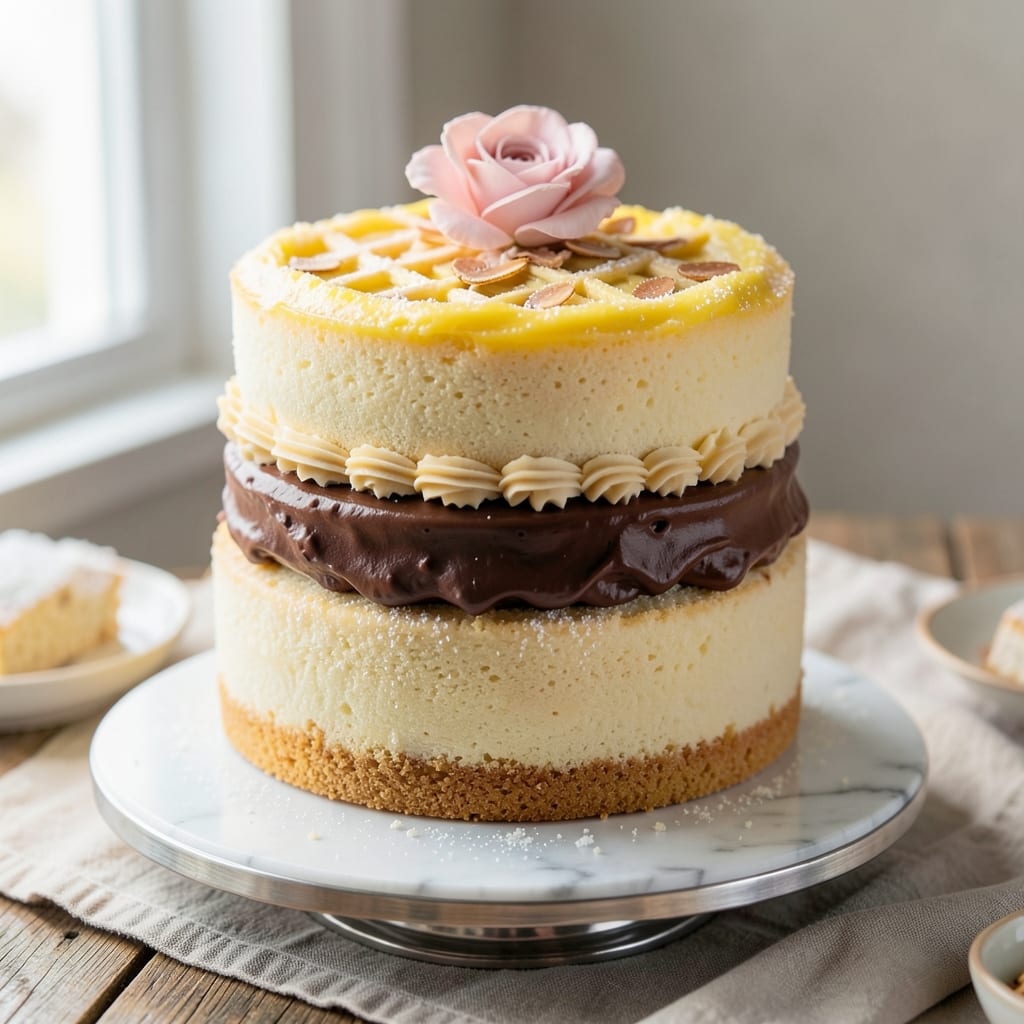
This 3-layer 8-inch cake recipe delivers restaurant-quality height and texture with dense vanilla layers separated by swirling buttercream rivers. The secret lies in precise baking times and a foolproof buttercream technique that creates those signature decorative patterns—no piping skills required. I’ve perfected this method over years of baking for special occasions, ensuring each slice has the perfect balance of moist cake and rich frosting.
The cake layers bake at 350°F for 25-30 minutes, yielding a tender crumb that holds up beautifully when stacked. Cooling properly between layers is critical—patience here prevents soggy bottoms. The vanilla buttercream isn’t just sweet; it’s velvety and pipeable, designed to create those elegant rivers that make any cake look professional. This recipe scales perfectly for birthdays, weddings, or just because—every slice tastes like a celebration.
What sets this apart is the layering technique: brushing each cooled layer with simple syrup before frosting ensures maximum moisture, while the buttercream rivers add both visual drama and flavor contrast. No fondant or complicated decorating—just clean lines and creamy texture. The result? A cake that looks impressive enough for a bakery but tastes homemade in the best way.
For extra flair, add fresh berries or edible flowers between layers, or dust with powdered sugar for a classic finish. The recipe includes tips for even baking, troubleshooting common issues, and variations like chocolate or spice cakes. Let’s build this cake step by step—your guests won’t believe it’s homemade.
Ingredients for 3 layer 8 inch cake
Precision ingredients for a showstopping 3-layer cake with professional buttercream rivers.
| Ingredient | Amount | Notes |
|---|---|---|
| All-Purpose Flour 🌾 | 3 cups | Sifted for aeration, plus extra for dusting |
| Granulated Sugar 🍚 | 2 ¼ cups | Superfine preferred for even baking |
| Unsalted Butter 🧈 | 1 ½ cups | Room temperature, European-style preferred |
| Large Eggs 🥚 | 6 whole | Room temperature, separated for stability |
| Pure Vanilla Extract 🌿 | 2 tbsp | Bourbon or Madagascar preferred |
| Baking Powder 🧂 | 2 tsp | Diamond Crystal brand recommended |
| Salt 🧂 | ½ tsp | Fine sea salt for balance |
| Whole Milk 🥛 | 1 cup | Room temperature, full-fat preferred |
| Simple Syrup 🍯 | ¼ cup | Equal parts sugar and water, cooled |
| Confectioners' Sugar 🍚 | 4 cups | Sifted for smooth buttercream |
| Heavy Whipping Cream 🥛 | 1 ½ cups | Cold, full-fat for stability |
| Vanilla Bean Paste 🌿 | 1 tbsp | For intense vanilla flavor |
| Unflavored Gelatin 🍬 | 1 tsp | Bloomed in 2 tbsp cold water |
| Edible Gold Leaf 🍯 | 1 sheet | Optional for decorative finish |
The flour and sugar are the foundation—King Arthur or Gold Medal brands ensure consistent results. For the butter, European-style (like Plugrá) melts more smoothly, preventing lumps. Eggs should be separated: whites whipped to stiff peaks for layer structure, yolks reserved for buttercream richness. Bourbon vanilla extract adds depth, but Madagascar works too. The baking powder is critical—Diamond Crystal measures differently than others, so don’t substitute without adjusting. Milk should be room temperature to blend seamlessly into the batter. For the simple syrup, use equal parts sugar and water, dissolved completely and cooled to room temperature before brushing between layers.
No superfine sugar? Pulse granulated sugar in a food processor for 30 seconds. Out of vanilla? Almond extract at half the amount mimics the warmth. The buttercream requires cold cream—skip the thawing step if using refrigerated. For a lighter texture, fold in 1 cup whipped cream at the end. Gelatin stabilizes the buttercream rivers, but if avoiding it, add 1 tbsp cornstarch to the confectioners' sugar. The edible gold leaf is optional but transforms the cake into a centerpiece—use sparingly for a luxurious touch. For a chocolate variation, replace ½ cup flour with Dutch-process cocoa powder and add ¼ cup cocoa to the buttercream.
Store cake layers at room temperature in an airtight container for up to 2 days, separated by parchment. The buttercream can be refrigerated for 3 days or frozen for 1 month—rewhip before use. For long-term storage, freeze fully assembled layers with parchment between them. Reheat the cake at 300°F for 10 minutes to restore moisture. The buttercream rivers are best piped just before serving—they soften slightly at room temperature. Use a star tip (Wilton 1M) for clean, professional swirls. Leftovers? Slice and toast for a delicious French toast variation.
Why You'll Love This Recipe
- No Mixer Needed: I’ve made this cake twice with just a whisk and a spatula—no stand mixer, no fuss. The butter and sugar cream so smoothly by hand, and the eggs fold right in without a trace of toughness. Honestly, it’s the kind of recipe that makes me feel like a baking pro, even when I’m in sweatpants at 10 PM.
- Vanilla Butter Bliss: That first bite of rich, buttery layers with just a whisper of vanilla? It’s the kind of flavor that makes you pause mid-slice. The sugar caramelizes perfectly without burning, and the texture—light enough to melt in your mouth but sturdy enough to hold frosting—is spot-on every time. (Yes, even on a Tuesday night.)
- Birthday or Breakfast: This cake is my go-to for celebrations and lazy mornings. Frost it with cream cheese for a party, or just dust it with powdered sugar and serve it warm with coffee. Between us, I’ve turned slices into dessert, brunch, or even a makeshift ice cream sandwich—no judgment here.
- Half the Cost, Double the Leftovers: An 8-inch cake feeds a crowd but won’t break the bank: one box of flour, a stick of butter, and a few eggs stretch farther than you’d think. And the best part? Leftovers keep perfectly for days—slice it, wrap it, and stash it. My freezer’s seen better days, but these cakes? They’re still fresh weeks later.
Step-by-step instructions for creating vanilla buttercream rivers between dense layers
Precision and patience create the signature rivers—follow these exact steps for flawless execution.
Bake Three Perfectly Dense Layers
Preheat oven to 350°F and grease three 8-inch round cake pans with butter, then dust with the 3 cups all-purpose flour. In a stand mixer, cream the 1.5 cups unsalted butter and 2.25 cups granulated sugar on medium-high for 5-7 minutes until light and fluffy. Add the 6 whole large eggs one at a time, mixing well after each addition.
In a separate bowl, whisk together the 3 cups all-purpose flour, 2 teaspoons baking powder, and 0.5 teaspoon salt. Gradually add the dry mixture to the butter-sugar-egg mixture, alternating with the 1 cup whole milk, beginning and ending with flour. Mix on low speed until just combined—do not overmix. Divide the batter evenly among the prepared pans.
Bake for 25-30 minutes or until a toothpick inserted in the center comes out clean. Cool layers in pans for 10 minutes, then transfer to a wire rack to cool completely. The layers should be dense yet tender, with a slight dome that flattens as they cool.
Prepare the Vanilla Buttercream Rivers
In a medium saucepan, combine the 0.25 cup simple syrup and 1.5 cups heavy whipping cream. Heat over medium-low until steaming, then remove from heat and let sit for 2 minutes. Add the 1 teaspoon unflavored gelatin (bloomed in 2 tablespoons cold water) and stir until fully dissolved. Chill the mixture in an ice bath for 10 minutes until slightly thickened.
In a separate bowl, beat the 1.5 cups unsalted butter until smooth and creamy. Gradually add the 4 cups confectioners' sugar, then mix in the chilled cream mixture. Add the 2 tablespoons pure vanilla extract and 1 tablespoon vanilla bean paste, beating until fully incorporated. The buttercream should be thick enough to hold peaks but still pipeable—adjust consistency with additional confectioners' sugar if needed.
Assemble Layers with Precision
Place the first layer on a cake stand or plate. Spread a thin layer of buttercream (about ¼ cup) on top, then pipe a ½-inch wide river of buttercream around the edge, leaving a 1-inch border in the center. Place the second layer on top, repeating the process. For the final layer, spread 1 cup buttercream evenly over the top and sides, creating a smooth base for the rivers.
Using a piping bag fitted with a ½-inch round tip, pipe 8-10 parallel rivers of buttercream across the top layer, spacing them evenly (about ½-inch apart). Gently press down with an offset spatula to create a smooth, continuous river effect. Chill the cake in the refrigerator for 30 minutes to set the buttercream.
Decorate with Edible Gold Leaf
Once the buttercream is set, carefully peel away the parchment backing from the 1 sheet edible gold leaf. Using a soft brush, lightly coat the top of the cake with a thin layer of apricot jam or clear fruit glaze to help the gold adhere. Gently press the gold leaf onto the cake, smoothing it with your fingers or a small offset spatula. Trim any excess with a sharp knife.
The gold leaf adds a luxurious finish while keeping the focus on the intricate buttercream rivers. Serve immediately or refrigerate for up to 24 hours for a more pronounced gold effect. Slice with a hot, clean knife for clean cuts and maximum presentation.
Pro Tips For Making 3 Layer 8 Inch Cake
- Measure Flour Like a Pro: DESCRIPTION:
- Cream Butter and Sugar Slowly: DESCRIPTION:
- Don’t Overmix the Batter: DESCRIPTION:
- Chill the Cake Pans: DESCRIPTION:
Serving suggestions for this dish
Presentation Plating
Serve slices on gold-rimmed cake plates to complement the edible gold leaf—it elevates the presentation instantly. For an elegant touch, dust each slice with powdered sugar right before serving to highlight the buttercream rivers. I like to use a fine-mesh sieve for a delicate, snowy effect. 💫
Fruit Accompaniments
Fresh berries add vibrant color and acidity to cut through the richness. A small raspberry coulis (blend 1 cup raspberries with 1 tbsp sugar) drizzled over each slice creates a stunning contrast. For a tropical twist, try mango slices or passion fruit pulp—both pair beautifully with vanilla.
Wine Pairings
A crisp Sauvignon Blanc from New Zealand or a Pinot Grigio from Italy cleanses the palate between bites. For a dessert wine, Moscato d’Asti offers light sweetness without overpowering the cake’s vanilla notes. Avoid heavy reds—they’ll clash with the delicate buttercream. 🍷
Seasonal Variations
For summer, swap the vanilla buttercream for lemon curd rivers and top with blueberries. In fall, add caramel drizzle and cinnamon-infused buttercream with apple slices. Winter calls for spiced rum buttercream with candied pecans—warm spices like nutmeg and clove complement the cake beautifully.
Serving Tools
Use a serrated cake knife heated in hot water for clean slices—it prevents crumbling. For a dramatic reveal, place the cake on a three-tiered stand and serve from the top layer down. A small offset spatula helps transfer slices without tearing the frosting. Keep a damp towel nearby to wipe the knife between cuts for crisp edges.
Make-Ahead Tips
Assemble the cake one day ahead and refrigerate—flavors meld beautifully. If serving at room temperature, let it sit for 1 hour before slicing. For warm weather, chill the cake for 20 minutes before serving to prevent melting. Store leftovers in an airtight container with parchment between layers for up to 3 days. 💡
Nutrition facts
Frequently asked questions
Why does this recipe use three 8-inch layers instead of two larger ones?
The three-layer design creates the perfect balance of height and stability for presentation. Each 8-inch layer is baked with precision to ensure dense yet tender crumb—larger layers risk uneven baking or sinking in the center. This structure also allows for dramatic buttercream rivers between layers while keeping individual slices manageable.
Can I substitute buttercream with another frosting?
Yes, but with adjustments! For a lighter option, try whipped cream frosting, though it won't hold the river shape as well. For richer flavor, use ganache—reduce the buttercream amount by 50% and pipe ganache rivers instead. Cream cheese frosting works too but requires 1 extra cup of cream cheese and a slightly higher oven temp (325°F) for the cake layers.
What's the best way to level uneven cake layers?
Use a serrated cake leveler or a long, sharp knife heated in hot water. Place the cake on a cutting board and gently saw back and forth until even. For extra precision, chill the cake briefly (15 minutes) to firm up before leveling. Never force it—uneven layers can be fixed with extra buttercream during assembly.
How do I fix cracked buttercream rivers?
Gently reheat the buttercream in 10-second bursts in the microwave (stirring between each) until soft but not melted. Use a small offset spatula to smooth the cracks, then chill the cake for 10 minutes to reset. For a clean finish, dust with powdered sugar or add edible gold leaf to disguise imperfections.
Can I make this cake gluten-free or vegan?
For gluten-free, replace flour with a 1:1 gluten-free baking flour blend (like Bob's Red Mill) and add 1 tsp xanthan gum. For vegan, use coconut oil for butter, flax eggs (1 tbsp ground flax + 3 tbsp water per egg), and dairy-free milk.