
Desserts
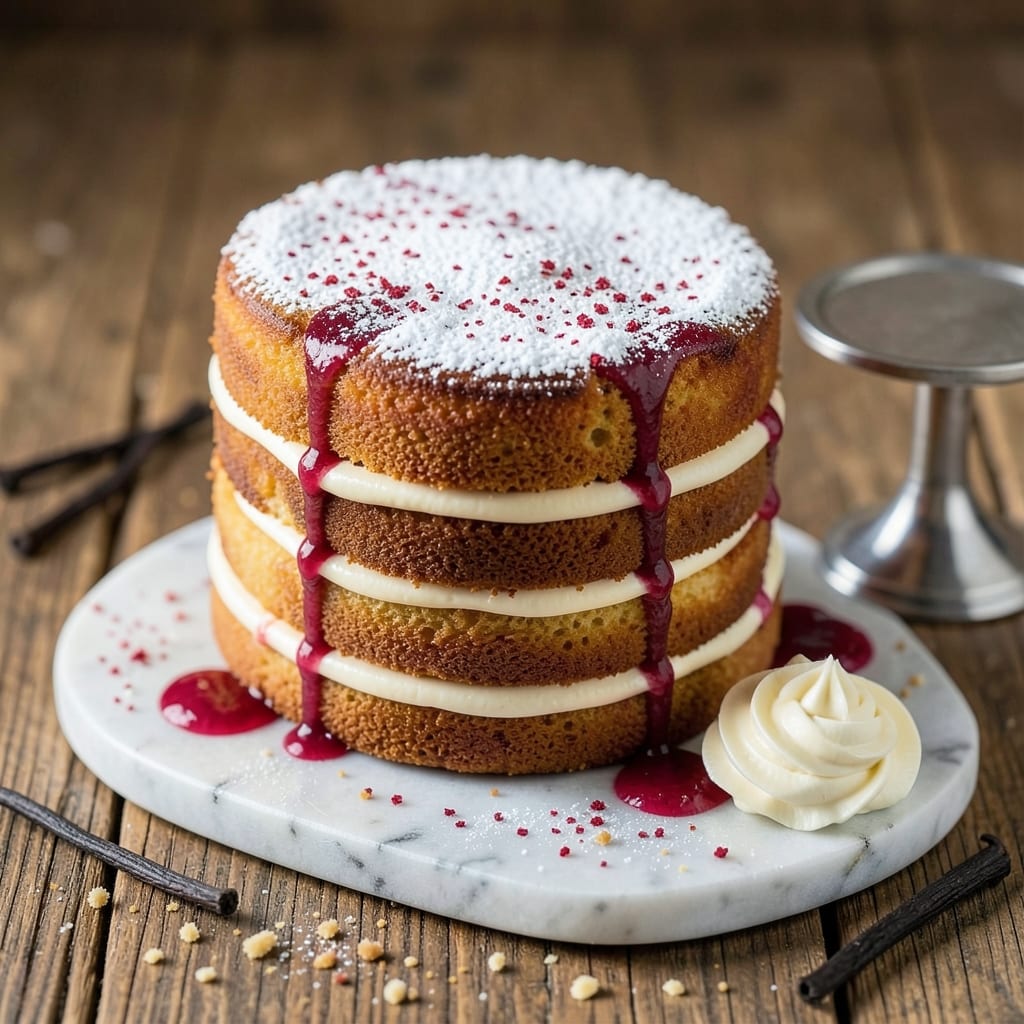
A 3-egg sponge cake delivers the perfect balance of lightness and stability—no heavy buttercream needed to achieve that signature tender crumb. The secret lies in properly whipped egg whites and a precise folding technique that creates an airy yet sturdy structure. This recipe transforms simple ingredients into a cake so delicate it practically melts in your mouth, yet sturdy enough to hold fillings or frosting without collapsing.
The magic happens in the egg whites, which must be whipped to stiff peaks before being gently folded into the batter. This method eliminates the need for excessive flour or butter, resulting in a cake that's naturally moist and rich. The 3-egg formula ensures a perfect medium between a fluffy chiffon and a dense pound cake—ideal for beginners yet impressive enough for special occasions.
What you'll end up with is a golden, domed cake with a fine, even crumb and just enough structure to support layers of jam, cream, or chocolate ganache. The texture is light yet resilient, proving that a simple sponge can rival much heavier cakes in both flavor and presentation.
Perfect for birthdays, afternoon tea, or even a sophisticated dessert course, this recipe scales easily for any occasion. Let's get started with the step-by-step instructions that guarantee foolproof results every time.
Ingredients for 3 egg sponge cake
Nine ingredients transform into a golden, domed cake that melts in your mouth yet holds fillings perfectly.
| Ingredient | Amount | Notes |
|---|---|---|
| Large Eggs 🥚 | 3 whole | Room temperature, separated |
| Granulated Sugar 🍚 | 1 cup | Superfine preferred for smoothness |
| All-Purpose Flour 🌾 | 1 cup | Sifted, light variety |
| Unsalted Butter 🧈 | ½ cup | Cold, cubed, European preferred |
| Vanilla Extract 🌿 | 1 tsp | Pure, high-quality extract |
| Baking Powder 🧂 | ½ tsp | Aluminum-free for tender crumb |
| Salt 🧂 | ¼ tsp | Fine sea salt |
| Lemon Zest 🍋 | 1 tbsp | Fresh, finely grated |
| Lemon Juice 🍋 | 1 tbsp | Freshly squeezed |
The eggs are the stars here—room temperature is non-negotiable for proper whipping. Grab large eggs from the store (they're more consistent than jumbo). For the butter, European-style brands like Plugrá or Miyoko's melt beautifully and add richness. Superfine sugar dissolves faster, but regular granulated works if you pulse it in a food processor. The lemon zest should be vibrant yellow—no green bits. Store-bought zest is fine, but fresh is brighter. Baking powder? Bob's Red Mill is my go-to—it's reliable and aluminum-free.
No superfine sugar? Pulse regular sugar in a blender for 30 seconds—it'll work in a pinch. Vanilla extract past its prime? Splurge on a small bottle of pure extract—it makes a difference. The butter can be softened in the microwave (30 seconds, 50% power) if you're in a hurry, but cold cubes create better texture. For the lemon, organic lemons have thicker zest, but conventional works too. Need to skip the lemon? Orange zest plus 1 tsp orange extract gives a similar brightness. The baking powder is critical—expired powder won't rise, so check the date on the can.
Egg whites last 3 days in the fridge if stored in an airtight container. The dry ingredients (flour, sugar, baking powder) keep 6 months in a cool pantry. For the butter, wrap it tightly in parchment to prevent absorbing odors. The cake itself? Best eaten fresh, but slices reheated for 10 seconds in the microwave restore that warm-from-the-oven magic. Portion into layers before adding fillings—plastic wrap between layers prevents sogginess. Freezes beautifully for 3 months if wrapped airtight.
Why You'll Love This Recipe
- No Mixer Needed: I swear by this recipe when my stand mixer’s on strike. Three eggs and a hand whisk—no electric help required—give you that light, airy crumb. The butter gets creamed with sugar until it’s just fluffy enough, and the flour folds in like a dream.
- Vanilla Butter Bliss: That vanilla extract isn’t just flavoring—it’s the star. The butter keeps it rich but never heavy, while the sugar caramelizes just enough to give every bite a subtle sweetness. Honestly, I’ve seen people skip the vanilla, but don’t. You’ll regret it.
- Layered Like a Pro: Between us, this cake is my go-to for birthdays, picnics, or just because. Split it into layers, fill with whipped cream or jam, and suddenly you’ve got a showstopper. Or keep it simple—slice it straight up and serve with tea. Either way, it’s foolproof.
- Pantry Staple Magic: Three eggs, a stick of butter, flour you already own—this recipe uses what’s already lurking in your cupboards. And the leftovers? They last days if you store them right. I’ve sent slices to work in a container, and no one’s ever guessed it wasn’t homemade fresh.
Step-by-step instructions for whipped egg foam cake
Let's create a light-as-air sponge cake with perfect structure—no collapsing, no dense crumb.
Separate Eggs and Whip Yolks with Sugar
Begin by separating the 3 whole Large Eggs into yolks and whites, ensuring no yolk fragments contaminate the whites. In a stand mixer fitted with the whisk attachment, combine the 1 cup Granulated Sugar with the egg yolks. Whip on medium speed for 2-3 minutes until the mixture becomes pale, thick, and ribbony—this indicates proper emulsification and volume.
Here's the thing—superfine sugar dissolves faster and creates a smoother texture, but regular granulated sugar works if that's what you have. The mixture should triple in volume and leave clean streaks when the whisk is lifted. Add the 1 tsp Vanilla Extract and 1 tbsp Lemon Juice now, mixing for another 30 seconds to fully incorporate. This yolk mixture forms the stable base of our cake.
Whip Egg Whites to Stiff Peaks
In a separate, spotlessly clean bowl, whip the egg whites on high speed until soft peaks form. Gradually add the 0.25 tsp Salt and 1 tbsp Lemon Zest while whipping. Continue whipping until the egg whites form stiff, glossy peaks that hold their shape when the whisk is lifted—this typically takes 3-5 minutes total.
Don't rush this step. The egg whites should be thick enough to leave a clean trail when you drag the whisk through them. The lemon zest adds brightness and helps stabilize the foam, while the salt enhances flavor and prevents flatness. If your kitchen is humid, you might need to whip slightly longer to achieve proper stiffness.
Combine Wet Ingredients Gently
Reduce the mixer speed to low and add one-third of the whipped egg whites to the yolk mixture. Gently fold with a spatula to lighten the yolks, then add another third and fold again. This gradual incorporation prevents deflating the egg whites. Finally, fold in the remaining egg whites using a spoon or rubber spatula, being careful not to overmix—just until no white streaks remain.
The reason we fold gently is that overmixing introduces air bubbles that can cause the cake to collapse later. You're looking for a smooth, uniform batter with a thick, glossy appearance. If you see any deflation, don't worry—just gently fold again until fully combined. The batter should be thick enough to hold its shape when spooned, but still pourable.
Fold in Dry Ingredients and Butter
In a separate bowl, sift together the 1 cup All-Purpose Flour and 0.5 tsp Baking Powder to aerate the dry ingredients. Gently fold this mixture into the egg batter in three additions, using a spatula to cut through the center and fold from the bottom up. This prevents dense pockets from forming.
Next, cut the 0.5 cup Unsalted Butter into small cubes and fold them into the batter using a folding motion (not stirring). The butter should be incorporated in small pieces—don't overwork it or you'll melt the butter and deflate the batter. The final batter should be thick, glossy, and hold its shape when spooned. If it looks too thin, let it rest for 5 minutes before proceeding—this allows the flour to fully hydrate.
Bake for Perfect Rise and Texture
Preheat your oven to 350°F and prepare two 8-inch round cake pans by greasing them thoroughly with butter and flouring the bottoms. Divide the batter evenly between the pans. Bake for 25-30 minutes until the tops spring back when gently touched and a toothpick inserted comes out clean.
Here's where precision matters: the cake should be golden on top but still tender inside. If the edges brown too quickly, tent the pans with foil. For an even bake, rotate the pans halfway through. Let the cakes cool in the pans for 10 minutes, then transfer to a wire rack to cool completely. This cooling period is crucial—rushing it can cause the cakes to collapse as they set.
Pro Tips For Making 3 Egg Sponge Cake
- Weigh Your Butter: I learned this the hard way—measuring butter by volume (that "packed cup" guesswork) throws off the whole structure. Use a kitchen scale for 100g (or 7 tablespoons by volume if you must), and don’t soften it too much. Room temp, yes, but not greasy—just pliable enough to press into the sugar.
- Fold Like a Layer Cake: Whisk the flour into the egg mixture in three additions, not one dump-and-stir. After each, do 10-12 gentle folds with a spatula—think "cut and lift," not "mix aggressively." Overmixing means dense, tough cake. (Yes, even if you’re impatient like me.)
- Check Doneness by Touch: The toothpick test is overrated for sponge cake. Press the center lightly—it should spring back immediately, not slowly. If it’s golden but wobbly, tent with foil for 5 minutes. Overbaking dries it out; underbaking leaves it gummy.
- Use Cold Eggs: I was skeptical until I tried it: pull the eggs straight from the fridge, crack them into a bowl, and let them sit for 10 minutes before beating. The slower warm-up gives you more control over the meringue, and the whites hold their volume better. (Your future self will thank you.)
Best sauces and condiments for 3 egg sponge cake
Classic Lemon Curd
This bright, tangy curd is the perfect match for your sponge cake's delicate texture. Use ½ cup lemon juice, ½ cup sugar, 2 egg yolks, and ¼ cup butter cooked together until thickened. Spread a thin layer between cake layers or drizzle over the top. The acidity cuts through the cake's richness while enhancing its natural sweetness. 🍋
Whipped Mascarpone
For a lighter alternative to heavy frosting, whip 1 cup mascarpone cheese with ¼ cup powdered sugar and 1 tsp vanilla extract until smooth. This Italian cream adds luxurious texture without overpowering the cake's delicate flavor. Pipe between layers or spread over the top for an elegant finish.
Chocolate Ganache
Melt ½ cup dark chocolate chips with ¼ cup heavy cream and let cool slightly before using. This rich ganache pairs beautifully with the cake's citrus notes, creating a sophisticated flavor contrast. Drizzle over the top or fill between layers for a decadent treat. Use 60% cocoa chocolate for balance.
Berry Compote
Simmer 1 cup mixed berries (strawberries, raspberries, or blueberries) with 2 tbsp sugar and 1 tsp lemon juice until thickened. This vibrant topping adds freshness and natural sweetness. Spread between layers or serve on the side for a lighter presentation.
Honey Buttercream
Cream ½ cup softened butter with 1 cup powdered sugar and 2 tbsp honey until fluffy. This lighter frosting complements the cake's delicate flavor while adding a subtle floral note. Pipe swirls on top or fill between layers for a professional finish. 🍯
Citrus Glaze
Mix ½ cup powdered sugar with 2 tbsp orange juice and 1 tsp lemon zest until smooth. Drizzle over the cake before serving for a glossy, citrusy finish that enhances the sponge's natural brightness. This glaze adds moisture without heaviness, perfect for warm weather.
Nutrition facts
Frequently asked questions about 3 egg sponge cake
Why use 3 eggs instead of 4 or 2?
The 3-egg formula creates the perfect balance of structure and lightness. Three eggs provide enough protein to stabilize the whipped foam while keeping the texture airy rather than dense. Fewer eggs risk a fragile cake that collapses, while more eggs can make it slightly heavier. This ratio works for both beginner bakers and experienced ones looking for a reliable base.
Can I make this cake without a stand mixer?
Use a hand mixer or even whisk your egg whites by hand in a spotlessly clean bowl. For the yolks, whisk them vigorously with sugar until pale and thick—it'll take about 5-7 minutes. The key is patience: fold gently to maintain air pockets. A balloon whisk works well for egg whites if you're going the manual route.
What's the secret to preventing a collapsed cake?
Three critical factors: properly whipped egg whites (stiff peaks), gentle folding (no overmixing), and cooling properly. Never open the oven early—wait until the top springs back. Let the cake cool 10 minutes in pan, then transfer to a rack. Humidity can cause collapse, so whip whites longer in damp climates.
How do I store or freeze this sponge cake?
Keep it fresh for 3 days at room temperature in an airtight container. For longer storage, wrap layers in plastic wrap and freeze for up to 3 months. Thaw overnight in the fridge. Reheat slices for 10 seconds in the microwave to restore freshness. Never freeze with fillings—add them fresh before serving.
Can I substitute butter with oil?
Not recommended for this recipe—the butter adds richness and tenderness that oil can't replicate. However, if you must, use ¼ cup melted coconut oil (cooled) and reduce flour by 1 tbsp. The texture will be slightly denser, but still edible. For best results, stick with the butter—it's what creates that signature melt-in-your-mouth quality.