
Desserts
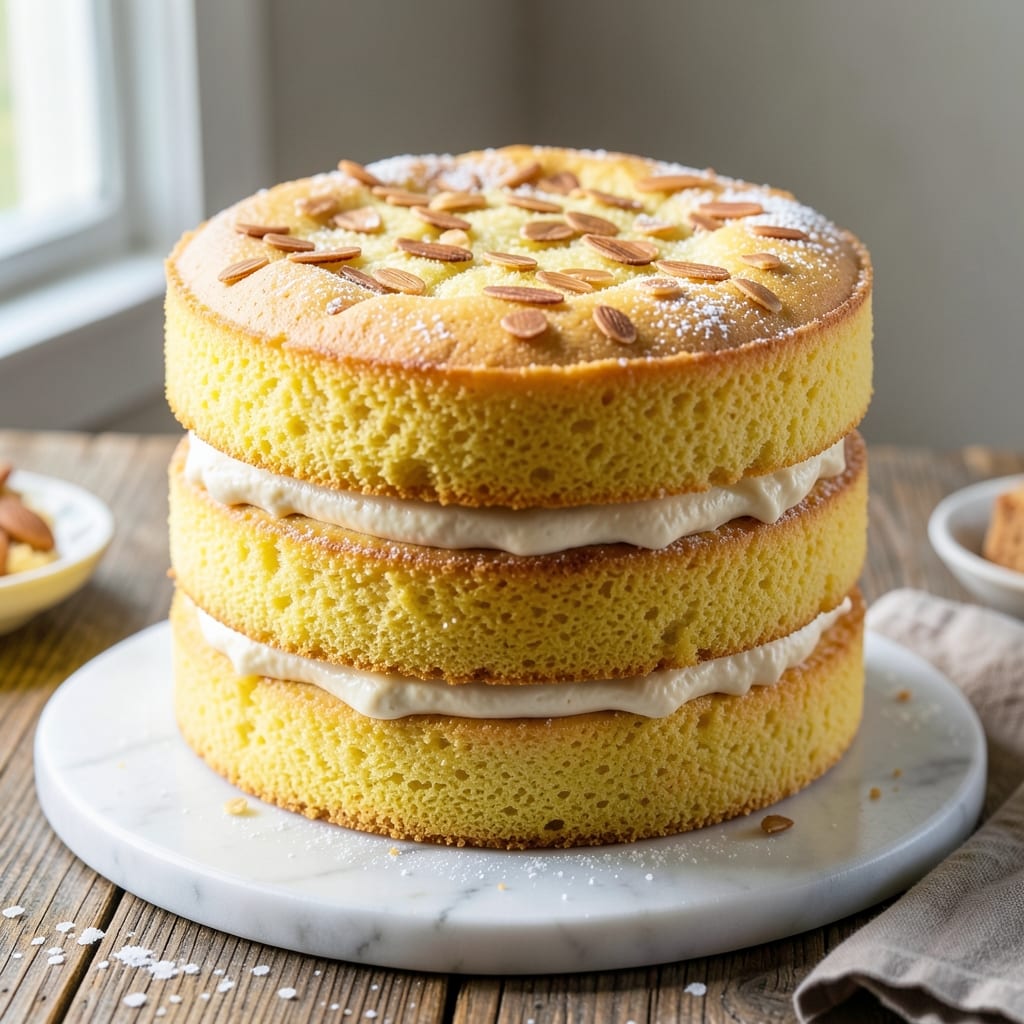
This two-layer yellow cake recipe delivers the perfect balance of moist, tender crumb and rich buttercream rivers that make every slice look like a bakery masterpiece. 💛 The secret lies in precise layering, proper chilling, and a foolproof buttercream that stays smooth and stable—no crumbling or soggy bottoms here.
What sets this recipe apart is the fluffy vanilla height achieved through proper mixing techniques and baking times. We'll cover leveling layers like a pro, ensuring each slice has that signature cake-and-frosting harmony. The buttercream isn't just sweet—it's velvety with just the right amount of tang to cut through the cake's richness.
By the time you're done, you'll have a cake that stands tall with even layers, smooth frosting, and clean cuts every time. The chilling steps are critical for stability, and I'll walk you through each one to guarantee professional results at home.
Whether you're baking for a celebration or just treating yourself, this recipe delivers restaurant-quality cake with simple techniques. Let's get started on creating your perfect two-layer masterpiece.
Ingredients for 2 layer yellow cake
The secret to bakery-style yellow cake lies in these 15 ingredients—fluffy layers and velvety buttercream await.
| Ingredient | Amount | Notes |
|---|---|---|
| All-Purpose Flour 🌾 | 3 cups | Sifted for fluffiness |
| Granulated Sugar 🍚 | 2 ¼ cups | Superfine preferred |
| Unsalted Butter 🧈 | 1 cup | Room temperature, full-fat |
| Large Eggs 🥚 | 4 whole | Room temperature, separated |
| Vanilla Extract 🌿 | 2 tsp | Pure, high-quality |
| Baking Powder 🧂 | 2 tsp | Diamond Crystal preferred |
| Salt 🧂 | ½ tsp | Fine sea salt |
| Milk 🥛 | 1 cup | Whole milk preferred |
| Vegetable Oil 🫒 | ½ cup | Light, neutral flavor |
| Lemon Zest 🍋 | 1 tbsp | Freshly grated |
| Powdered Sugar 🍚 | 4 cups | For buttercream |
| Unsalted Butter 🧈 | 1 ½ cups | Room temperature, full-fat |
| Heavy Cream 🥛 | 1 cup | Cold, for stability |
| Vanilla Bean Paste 🌿 | 1 tbsp | For depth of flavor |
| Lemon Juice 🍋 | 1 tbsp | Freshly squeezed |
The flour is your foundation—King Arthur or Gold Medal work best for that tender crumb. Butter matters too: Plugrá or Land O'Lakes unsalted melt smoothly, avoiding lumps. Eggs should be room temperature, so pull them out 30 minutes before baking. I always grab organic eggs from local farms for richer flavor, but any large eggs work. For the vanilla, McCormick Pure or Nielsen-Massey extract delivers consistent quality. The lemon zest? Use a microplane—it's worth the extra minute for fine, aromatic shreds.
No superfine sugar? Pulse regular granulated in a food processor for 30 seconds—it dissolves better. Short on buttercream time? Substitute cream cheese frosting by swapping half the butter for 8 oz softened cream cheese. The baking powder is non-negotiable—Diamond Crystal measures differently than Rumford, so check your recipe box. For the buttercream, European-style butter (like President or Bregott) gives the smoothest finish. Need a shortcut? Store-bought meringue powder can replace the egg whites in the buttercream, but it won't be as stable.
Store cake layers wrapped tightly in plastic at room temperature for 2 days max—any longer and they dry out. Buttercream keeps 5 days refrigerated or 3 months frozen in an airtight container. Pro tip: Chill layers and buttercream separately before assembling to prevent melting. I always bake a day ahead—the flavors meld beautifully overnight, and the cake holds its shape perfectly for decorating.
Why You'll Love This Recipe
- Here’s what sold me: this cake improves the second day. Store-bought ones dry out or taste stale, but this? The butter keeps it luscious, and the sugar caramelizes just enough to make it even more irresistible. I make a double batch every time because it disappears faster than I can say “slice me another piece.” Budget-friendly? Absolutely—it costs half what a bakery cake does, and the taste? Worth every penny.
- No Mixing Madness: I swear by this recipe because it’s the only yellow cake I’ve ever made where the batter comes together in three minutes—no stand mixer, no overmixed gluten, just creamy butter and sugar beaten until light. The secret? Whisking the eggs into the sugar until it’s like ribbon candy, then folding in the flour just until combined. That’s it. No fuss, no stress.
- Butter-Sugar Bliss: That first bite? Rich, tender, and just sweet enough to make you forget about store-bought cakes. The butter isn’t overpowered—it’s balanced by the vanilla, which actually sings here because it’s not competing with other flavors. Honestly, I’ve tried cutting corners with oil, but this? This is the real deal. The layers stay moist for days, and the crumb? Chef’s kiss.
- Birthday to Brunch: Between us, this cake is my go-to for everything. Need a showstopper for a birthday? Layer it with whipped cream and berries. Craving a lazy weekend breakfast? Toast slices, slather with peanut butter, and top with banana. Even my picky teenager asks for seconds—(yes, even on a Tuesday night). It’s that reliable.
Step-by-step instructions for two-layer yellow cake
Here's how to bake a perfectly fluffy yellow cake with professional-level height and moisture.
👨🍳 Step 1: Prepare the Cake Batter
Preheat your oven to 350°F and grease two 9-inch round cake pans with vegetable oil, then line the bottoms with parchment paper. Sift together the 3 cups all-purpose flour, 2 tsp baking powder, and 0.5 tsp salt in a medium bowl and set aside. This ensures no lumps form in your batter.
In a large mixing bowl, cream together the 1 cup unsalted butter and 2.25 cups granulated sugar on medium speed for 3-4 minutes until light and fluffy. This step is critical—it incorporates air that creates the cake's signature height. Scrape down the sides of the bowl with a spatula to ensure even mixing.
Add the 4 whole large eggs, one at a time, mixing well after each addition. Stir in the 2 tsp vanilla extract and 1 tbsp lemon zest for that bright, citrusy vanilla flavor. Finally, alternate adding the 1 cup milk and the sifted dry ingredients, beginning and ending with the dry mixture. Mix on low speed just until combined—overmixing develops gluten and makes the cake dense.
🍳 Step 2: Bake the Layers
Divide the batter evenly between the prepared cake pans. Tap each pan gently on the counter to remove any air bubbles. Bake for 25-30 minutes or until a toothpick inserted into the center comes out clean. The edges should be golden brown, and the top should spring back when gently pressed with your finger.
I always rotate the pans halfway through baking to ensure even browning. If the tops brown too quickly, tent the pans loosely with aluminum foil. Let the cakes cool in the pans for 10 minutes before transferring them to a wire rack to cool completely. This gradual cooling prevents cracking.
🥘 Step 3: Make the Buttercream Frosting
While the cakes cool, prepare the buttercream by beating the 1.5 cups unsalted butter with an electric mixer on medium speed until smooth and creamy. Add the 4 cups powdered sugar gradually, mixing well after each addition. This prevents a cloud of sugar dust from taking over your kitchen.
In a separate small bowl, whisk together the 1 cup cold heavy cream, 1 tbsp vanilla bean paste, and 1 tbsp lemon juice. With the mixer running on low speed, slowly pour in the cream mixture. Increase the speed to medium and beat for 2-3 minutes until the buttercream is light, fluffy, and holds stiff peaks when the beaters are lifted. This is the moment that matters—properly whipped buttercream makes all the difference.
🍰 Step 4: Assemble the Cake
Once the cakes are completely cool, level the tops if necessary using a serrated knife. Place the first cake layer on a cake stand or plate. Spread a thin layer of buttercream over the top of the first layer, leaving a ½-inch border uncovered. This is called the "crumb coat"—it prevents crumbs from getting into the final layer of frosting.
Place the second cake layer on top of the first and gently press down to create a level surface. Spread the remaining buttercream evenly over the top and sides of the cake, creating the classic "buttercream rivers" by piping swirls along the sides with a piping bag fitted with a star tip. Chill the cake in the refrigerator for 30 minutes before serving to allow the frosting to set.
Pro Tips For Making 2 Layer Yellow Cake
- Cream Butter and Sugar Slowly: Don’t rush the butter-sugar mix—beat it for at least 3-4 minutes until it’s pale, fluffy, and ribbons pull when the beaters lift. I used to skip this, and my cakes turned out dense; the extra air lightens the texture for that classic yellow cake crumb.
- Sift Dry Ingredients Together: Mix flour, baking powder, and salt in a bowl first, then sift them into the wet ingredients. This prevents lumps and ensures even distribution—no more guessing if your cake will rise properly.
- Avoid Overmixing the Batter: Stop mixing as soon as the flour disappears—overworking it activates the gluten, making the cake tough. I learned this after a batch turned out chewy instead of tender; fold just until combined.
- Use Room-Temp Eggs: Cold eggs can curdle the butter mixture, leading to a greasy texture. Let eggs sit out for 30 minutes before cracking them—your cake’s moisture and structure will thank you. (Yes, even if you’re impatient like me.)
Wine and beer pairings for these flavors
Sweet Wine Pairings
For this rich, vanilla-infused yellow cake, I reach for Moscato d'Asti—its light, fizzy sweetness mirrors the buttercream's creaminess while balancing the cake's density. The 10-12% ABV keeps the dessert from feeling cloying, and its honeyed apple notes complement the lemon zest beautifully. 🍷
Another crowd-pleaser is Riesling from Alsace, particularly off-dry styles with 1-2% residual sugar. The peach and citrus in the wine echo the cake's vanilla and lemon, creating a harmonious finish. Look for Domaine Weinbach or Trimbach for premium quality.
Dry Red Options
If you prefer red wine, Pinot Noir from Oregon or Burgundy shines with its bright acidity and cherry undertones. The wine's subtle earthiness contrasts the cake's sweetness without overpowering it. A 2018 Domaine Serene or La Crema would be perfect choices.
Beer Pairings
For beer lovers, a Belgian witbier like Hoegaarden or Stella Artois works wonders. The citrusy coriander and light effervescence cut through the richness, while the malt sweetness enhances the cake's vanilla. Serve slightly chilled for best results. 🍺
Creamy Stout
A dry Irish stout like Guinness or Murphy's adds a luxurious pairing. The roasted coffee notes in the beer complement the cake's buttery layers, while its creamy texture mirrors the buttercream. The contrast of dark and light makes each bite exciting.
Non-Alcoholic Choices
For a mocktail, mix sparkling apple cider with a splash of lemon juice and a cinnamon stick. The effervescence cleanses the palate between bites, while the apple's tartness balances the cake's sweetness. Serve over ice for a refreshing touch.
Nutrition facts
Frequently asked questions
Why does my two-layer cake sink in the middle?
This usually happens when the cake is underbaked or overmixed. Always bake until a toothpick comes out clean (25-30 minutes at 350°F), and mix just until combined—overmixing develops gluten. Also, ensure your pans are properly greased and the oven temperature is accurate. A cake thermometer helps verify doneness.
Can I make this cake in a different pan size?
Yes, but adjust the baking time. For 8-inch pans, bake 20-25 minutes—they cook faster. For 10-inch pans, bake 30-35 minutes. Always check with a toothpick, and reduce oven temp by 10°F if baking longer than 30 minutes to prevent over-browning.
How do I level the cake layers perfectly?
Use a serrated knife and a ruler to guide you. Place the cake on the ruler, then slice parallel to the table at your desired height. For 9-inch layers, aim for 1.5-2 inches thick. Work quickly to avoid crumbs—chill the cake for 15 minutes before leveling if needed.
What if my buttercream is too soft or melty?
This happens when the butter isn't cold enough. Use cold heavy cream and room-temperature butter (not warm). Chill your mixing bowl and beaters for 10 minutes before whipping. If it's already too soft, refrigerate for 20 minutes and rewhip. For stability, add 1 tsp cornstarch to the powdered sugar.
Can I bake this cake ahead of time?
Bake layers 1-2 days ahead and store wrapped tightly at room temp. Assemble the cake 4-6 hours before serving to let the frosting set. For long-term storage, freeze fully assembled cake (unfrosted) for up to 1 month. Thaw at room temperature before adding frosting.