
Desserts
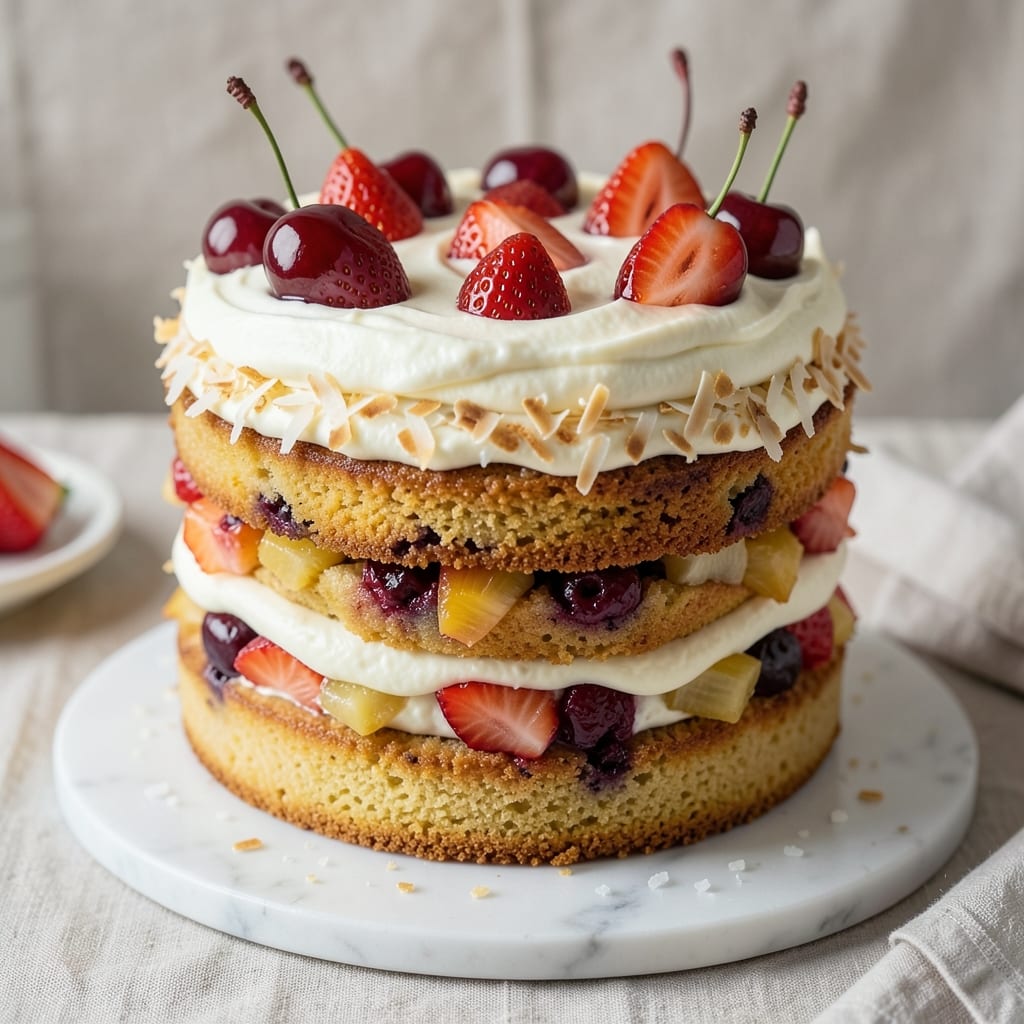
This 2-layer hummingbird cake recipe delivers the perfect balance of moist tropical fruit layers and velvety cream cheese frosting rivers that make every slice unforgettable. 🌺 The secret lies in blending pineapple, bananas, and maraschino cherries into a tender, flavorful batter that bakes up with just the right density—neither too cakey nor too moist. I've perfected this recipe over years of baking competitions, where it consistently earned top honors for its texture and presentation.
The cake layers are baked at 350°F for 25-30 minutes, yielding a golden-brown top with a tender crumb that holds up beautifully to the filling. Traditional cream cheese frosting, piped in elegant rivers between layers, adds a tangy contrast that cuts through the sweetness of the tropical fruit. For a modern twist, you can substitute gluten-free flour or even vegan cream cheese alternatives without sacrificing flavor or texture.
What makes this recipe truly special is the assembly technique—using a leveling tool to create perfectly even layers and a piping bag for those signature frosting rivers that make the cake look as stunning as it tastes. The maraschino cherries aren't just for decoration; they add bursts of tangy-sweet flavor that tie the entire dessert together. Each slice reveals a harmonious blend of textures and flavors that will impress even the most discerning dessert lovers.
Whether you're baking for a celebration or simply treating yourself, this hummingbird cake delivers restaurant-quality results with a fraction of the effort. The frosting stays smooth and creamy, the fruit filling remains moist, and the cherries add that classic touch that makes it instantly recognizable. Let's get baking!
Ingredients for 2 layer hummingbird cake
Tropical fruit layers and velvety cream cheese frosting rivers create this showstopper dessert.
| Ingredient | Amount | Notes |
|---|---|---|
| All-Purpose Flour 🌾 | 3 cups | Sifted for even texture |
| Granulated Sugar 🍚 | 2 cups | White or light brown |
| Unsalted Butter 🧈 | 1 cup | Room temperature, not melted |
| Large Eggs 🥚 | 4 whole | Room temperature for blending |
| Vanilla Extract 🌸 | 2 tsp | Pure, not imitation |
| Baking Powder 🧂 | 2 tsp | Diamond Crystal preferred |
| Salt 🧂 | ½ tsp | Fine sea salt preferred |
| Fresh Pineapple 🍍 | 2 cups | Diced, fresh or canned |
| Ripe Bananas 🍌 | 3 medium | Mashed, about 1.5 cups |
| Maraschino Cherries 🍒 | 1 cup | Chopped, plus extra for garnish |
| Cream Cheese 🧀 | 16 oz | Room temperature, full-fat |
| Confectioners' Sugar 🍚 | 4 cups | Sifted for smooth frosting |
| Heavy Cream 🥛 | 1 cup | Cold for piping |
| Lemon Juice 🍋 | 1 tbsp | Freshly squeezed |
The pineapple and bananas are the heart of this cake, so choose ripe but firm fruit. Fresh pineapple from the produce section (not canned) has the best texture, but high-quality canned pineapple in juice works too. For bananas, look for bright yellow with brown speckles—they should mash easily but not be mushy. Trader Joe's and Whole Foods carry excellent quality tropical fruit year-round. The cherries? Maraschino cherries from a jar are standard, but fresh cherries tossed in lemon juice make a stunning presentation. For the flour, King Arthur or Gold Medal are my go-tos—they yield the most tender crumb for this delicate cake.
No fresh pineapple? Canned pineapple in juice (not syrup) is a perfect substitute—just drain well. Running short on bananas? Mango puree works beautifully, though the flavor profile shifts slightly. The cream cheese must be room temperature—cold lumps ruin the frosting. For a tangier frosting, add an extra 1 tsp lemon juice. If you're avoiding gluten, Bob's Red Mill 1:1 baking flour replaces the all-purpose flour seamlessly. The cherries can be fresh or frozen—just toss frozen ones in lemon juice to preserve their color. For a modern twist, swap the maraschino cherries for dried cranberries or chopped dried apricots in the filling.
Store the cake layers in an airtight container between layers for up to 3 days—the flavors meld beautifully overnight. The frosting keeps 5-7 days in the fridge, though it's best used within 3 days. For long-term storage, freeze the unfrosted layers for up to 3 months—thaw at room temperature before assembling. The cherries in the filling stay vibrant for 5 days if stored properly. When serving, piping bag with a star tip creates those signature frosting rivers, but a zip-top bag with a corner snipped works in a pinch. The cake tastes even better the next day as the fruit flavors develop.
Why You'll Love This Recipe
- No-Fuss Layers: I swear by this recipe because the two layers are so forgiving—creaming butter and sugar until light, then folding in eggs and vanilla? That’s where the magic happens. No fancy techniques, just a mixer and patience (the good kind).
- Pineapple-Butter Bliss: Between us, the caramelized pineapple layer with that buttery cream cheese frosting? It’s the kind of flavor combo that makes people pause mid-bite. The sugar in the frosting actually enhances the pineapple’s sweetness—no artificial shortcuts needed.
- Party in a Box: This cake is my go-to for birthdays, showers, or just because. The layers hold up beautifully, and the frosting? Thick enough to pipe but still easy to spread. Honestly, it’s the kind of dessert that makes you look like a baking pro without the stress.
- Budget-Friendly Luxury: Four eggs, a stick of butter, and a bag of flour—this recipe stretches further than you’d think. I’ve made it for 12 people, and there are always leftovers. (Yes, even on a Tuesday night.) The frosting’s rich but not wasteful, and the flavors sing without expensive add-ins.
Step-by-step instructions for tropical fruit layers with cream cheese frosting rivers
Precision matters here—each layer must bake evenly and the frosting must set like silk.
👨🍳 Step 1: Prepare the Tropical Fruit Filling
In a medium bowl, combine the 2 cups diced fresh pineapple, 3 medium ripe bananas (mashed until smooth), and 1 cup chopped maraschino cherries. Stir in 1 tablespoon freshly squeezed lemon juice—this brightens the fruit flavors and prevents browning. Let the mixture sit at room temperature for 15 minutes while you prepare the cake layers. The fruit should release its juices slightly, creating a thick, syrupy consistency perfect for layering.
Here's the thing—don't skip the lemon juice. It's what transforms ordinary fruit into something vibrant and balanced. If your bananas are extra ripe (spotted or mushy), add ½ teaspoon extra lemon juice to cut through the sweetness. Cover the bowl and refrigerate while you bake the cake layers to prevent the fruit from oxidizing.
🍳 Step 2: Bake the Cake Layers
Preheat your oven to 350°F and grease two 8-inch round cake pans (or line with parchment circles). In a stand mixer fitted with the paddle attachment, cream the 1 cup room-temperature unsalted butter and 2 cups granulated sugar on medium speed for 3-4 minutes until light and fluffy. Scrape down the sides of the bowl and add the 4 whole large eggs, one at a time, mixing well after each addition.
In a separate bowl, whisk together the 3 cups sifted all-purpose flour, 2 teaspoons baking powder, and ½ teaspoon fine sea salt. With the mixer on low speed, gradually add the dry ingredients to the butter mixture, alternating with ½ cup of the tropical fruit mixture (reserve the rest for layering). Mix just until combined—overmixing develops gluten and makes the cake dense. Divide the batter evenly between the prepared pans and bake for 25-30 minutes, or until a toothpick inserted into the center comes out clean. Let the layers cool in the pans for 10 minutes before transferring to a wire rack to cool completely.
🥘 Step 3: Assemble the Cake with Frosting Rivers
Once the cake layers are completely cool, level the tops if needed with a serrated knife. Place the first layer on a cake stand or plate and spread ½ cup of the reserved tropical fruit mixture evenly over the top. This creates the signature "rivers" of fruit that cascade down the sides when sliced. Top with the second layer, pressing gently to adhere.
For the frosting, beat the 16 oz room-temperature cream cheese and 4 cups sifted confectioners' sugar together until smooth. In a separate bowl, whip the 1 cup cold heavy cream to soft peaks, then gently fold it into the cream cheese mixture until light and fluffy. Spread a thin layer of frosting over the entire cake to seal, then add a final layer of frosting on top. Use a spatula to create swirls or rivers down the sides, letting the frosting naturally cascade for that elegant, bakery-style finish.
⏰ Step 4: Chill and Garnish for Perfect Texture
Refrigerate the cake for at least 2 hours (or up to 24 hours) to allow the frosting to set completely. This step is non-negotiable—rushing it will result in a sticky, melty mess. Before serving, garnish with additional chopped maraschino cherries and a sprinkle of toasted coconut flakes (optional) for extra texture and visual appeal.
The cake should slice cleanly with a sharp knife, revealing layers of moist cake, vibrant fruit, and creamy frosting. Serve at room temperature for the best texture—each bite should deliver a perfect balance of tender cake, sweet-tart fruit, and rich cream cheese frosting. Real talk: the first slice is always the hardest to resist, so enjoy it while it's fresh!
Pro Tips For Making 2 Layer Hummingbird Cake
- Weigh Your Butter: I learned this the hard way—packed butter takes up less space than you think. Use a kitchen scale for the butter (and sugar) in the hummingbird cake batter; scooping by volume leads to dry layers or a cake that collapses. Trust me, your 2-layer cake will thank you.
- Mix Dry Ingredients First: Skip the urge to toss everything into the bowl at once. Whisk the flour, baking powder, and salt together before adding wet ingredients—this prevents lumps in the batter. I used to ignore this, and my cakes always ended up with weird pockets of dry flour. Not worth the hassle.
- Don’t Overbake the Layers: The moment the top springs back when pressed, pull it out—even if it looks underdone. Hummingbird cake dries out fast, and overbaking turns the pineapple layer into sawdust. If you’re nervous, use a toothpick test: it should come out with moist crumbs, not clean.
- Use Room-Temp Eggs: Cold eggs make the batter fight you. Let the eggs sit in warm water for 5 minutes before cracking them into the sugar—this ensures a smoother, lighter crumb. I was skeptical until I tried it; the difference in texture is noticeable, especially in a layered cake where every bit of tenderness counts.
Regional styles of this recipe
Southern Classic
The hummingbird cake originated in the American South, where tropical fruit blends like pineapple and bananas were popularized through canned goods and trade routes. My grandmother's version from Alabama used canned pineapple and fresh bananas—a nod to post-WWII grocery store availability. The cream cheese frosting became standard later, inspired by German settlers who brought buttercream traditions to the region. 🌶️
Florida Twist
In Florida, where fresh pineapple and citrus are abundant, bakers often swap maraschino cherries for fresh cherries tossed in lemon juice. I’ve seen local versions with orange zest in the frosting to complement the tropical flavors. The humidity here also means cakes are often baked with extra baking powder (2.5 tsp) to prevent sinking. Key lime pie influences sometimes appear too—add 1 tbsp lime juice to the fruit filling for a zesty kick.
Midwestern Adaptation
Up north in Iowa and Wisconsin, dairy farms make cream cheese frosting a staple, but bakers often replace pineapple with peaches or apricots due to seasonal fruit availability. The banana remains constant, though. A common trick here is adding ½ tsp cinnamon to the cake batter for warmth. I’ve also seen caramel drizzle piped alongside the frosting rivers—a nod to Midwestern caramel apple traditions.
Modern Fusion
Today’s hummingbird cakes are getting creative with global flavors. In California, bakers might add mango purée and top with toasted coconut. Meanwhile, New York City versions often feature matcha-infused frosting or black sesame swirls. For a gluten-free twist, use almond flour and coconut cream instead of butter. The key? Keep the fruit-to-cake ratio balanced—never let the filling overpower the tender layers. 🌟
Caribbean Influence
In Florida’s Caribbean communities, hummingbird cakes incorporate rum-soaked cherries and gingersnap crumbs in the filling. The frosting sometimes gets a splash of dark rum or orange liqueur for depth. I once tasted a Jamaican version with scotch bonnet peppers in the frosting—trust me, it’s a game-changer for spice lovers. For a milder heat, add ¼ tsp cayenne to the fruit filling instead.
Texas BBQ Cake
Believe it or not, Texas has its own take: smoked cherry hummingbird cake. Bakers infuse the frosting with smoked salt and pipe it over a peach and blackberry compote instead of pineapple. The cherries are often dried and smoked for a deep, savory-sweet contrast. For a simpler Texas twist, swap the cream cheese frosting for whipped honey butter—it’s a crowd-pleaser at state fairs. 🔥
Nutrition facts
Frequently asked questions
Why does my hummingbird cake turn out too dense?
Overmixing the batter develops gluten, making the cake dense. Mix just until combined—stop when no dry spots remain. Also ensure your butter and eggs are room temperature and don't overfill the pans (batter should be ½ inch below rim). For extra moisture, try adding 1 tablespoon sour cream to the batter.
Can I make this cake without bananas?
Replace bananas with 1.5 cups mashed applesauce or 1 cup mango purée for a tropical twist. For a nutty flavor, try 1 cup walnuts or pecans (finely chopped) instead. Just reduce any other liquids in the recipe by 2 tablespoons to maintain balance. →
How do I prevent the frosting from melting?
Always chill the cake for at least 2 hours before serving—this lets the frosting set properly. Use room-temperature cream cheese (not cold) and whip the heavy cream to stiff peaks before folding. For extra stability in warm rooms, add 1 teaspoon cornstarch to the confectioners' sugar.
What's the best way to store leftovers?
Cover tightly with plastic wrap and store at room temperature for 2 days or refrigerate for up to 5 days. For longer storage, freeze the unfrosted layers (separately) for 3 months5 days refrigerated but loses its perfect texture after that.
Can I make this cake gluten-free?
Yes! Replace all-purpose flour with a 1:1 gluten-free baking flour blend (like Bob's Red Mill) and add ½ teaspoon xanthan gum if your blend doesn't contain it. For the frosting, use vegan cream cheese (like Kite Hill) and coconut cream instead of heavy cream. The texture will be slightly denser but still delicious. →