
Desserts
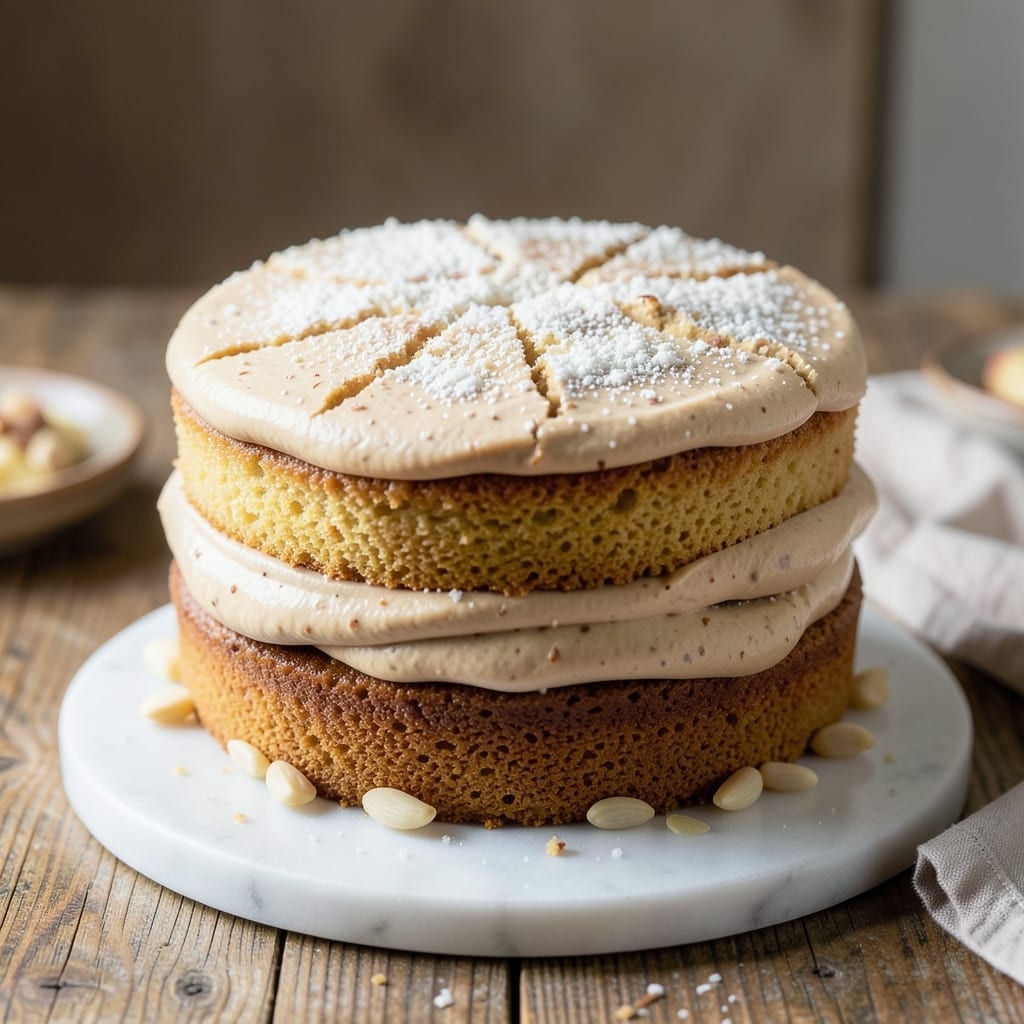
This 2-layer almond cake recipe delivers the perfect balance of nutty richness and delicate vanilla sweetness, creating a dessert that feels both elegant and approachable. The secret lies in finely ground almond flour for texture and depth, paired with a touch of almond extract to enhance the natural flavor profile. I've perfected this recipe over years of baking, ensuring each slice offers that satisfying contrast between moist layers and velvety frosting.
The cake itself bakes up tender yet sturdy enough to hold its shape, with a subtle almond aroma that lingers with every bite. What sets this apart is the vanilla harmony—a light vanilla bean paste in the batter complements the almond flavor without overpowering it. The layers are generously filled with a simple yet luxurious almond buttercream that ties everything together in perfect harmony.
What you'll end up with is a restaurant-quality almond cake that's impressive enough for special occasions but simple enough for weeknight treats. The golden-brown crust gives way to a moist interior, while the almond buttercream adds a creamy finish that makes each slice irresistible. This recipe is designed to be adaptable—whether you prefer a classic look or want to add decorative touches like toasted almonds or chocolate shavings.
The best part? It comes together in under an hour with just a few key techniques—no fancy equipment required. Let's get started on a dessert that's sure to become a crowd favorite.
Ingredients for 2 layer almond cake
Here's what you need to create a restaurant-quality almond cake with nutty depth and velvety layers.
| Ingredient | Amount | Notes |
|---|---|---|
| Almond Flour 🌰 | 2 ½ cups | Finely ground for texture |
| All-Purpose Flour 🌾 | ½ cup | For structural balance |
| Granulated Sugar 🍚 | 1 ½ cups | Superfine preferred for smoothness |
| Unsalted Butter 🧈 | 1 cup | Room temperature, full-fat |
| Large Eggs 🥚 | 4 whole | Room temperature for even baking |
| Vanilla Bean Paste 🌿 | 2 tbsp | For authentic vanilla harmony |
| Almond Extract 🌰 | 1 tsp | Pure, high-quality extract |
| Baking Powder 🍞 | 1 tsp | Aluminum-free preferred |
| Salt 🧂 | ½ tsp | Fine sea salt preferred |
| Almond Butter 🥜 | 1 cup | Creamy, no sugar added |
| Powdered Sugar 🍚 | 2 cups | For buttercream smoothness |
| Heavy Cream 🥛 | ½ cup | Cold for stable buttercream |
| Toasted Sliced Almonds 🌰 | ½ cup | For garnish (optional) |
The almond flour is the star here—Bob's Red Mill or Anthony's Goods are my go-tos for that ultra-fine grind. If you can't find it, pulse regular almonds in a food processor until they're powdery, but don't overdo it. The butter needs to be room temperature (press a finger into it—it should dent but not be greasy). For the vanilla, Madagascar bourbon beans in paste form add that restaurant-quality depth. Toast your sliced almonds for 5 minutes at 350°F before using—they'll taste like a million bucks on top.
No almond flour? Substitute with 2 cups finely ground walnuts or hazelnuts—just know the texture will be denser. Running short on almond extract? Vanilla bean seeds scraped from a pod work in a pinch (use about 1/2 tsp). For the buttercream, if you don't have heavy cream, whipped coconut cream gives a similar texture. The powdered sugar should be sifted before mixing—lumps make for a grainy buttercream. Pro tip: Add a pinch of salt to the buttercream to enhance all the flavors. And if you're feeling fancy, infuse the buttercream with a splash of orange liqueur for a sophisticated twist.
This cake keeps beautifully—3 days at room temperature covered with parchment, or 5 days in the fridge wrapped tightly. For freezing, slice first and store layers separately for up to 3 months. The buttercream can be made a day ahead and stored in the fridge—just re-whip it briefly before assembling. If you're prepping for a party, assemble the cake 4 hours ahead and refrigerate. Bring to room temperature before serving for that perfect slice.
Why You'll Love This Recipe
- I’ll be real: almond flour can be pricey, but this recipe stretches it. The all-purpose flour balances the cost, and the butter and eggs are pantry staples. Plus, leftovers? They last forever in the fridge—moist enough to reheat or eat cold. It’s fancy enough for company but cheap enough for Tuesday nights.
- No-Fuss Layers: I swear by this recipe because it’s two cakes in one bowl—no fussing with separate batters or tricky layering. Just mix, bake, and stack. The almond flour gives it that velvety texture without the dryness, and the buttercream (made from the same butter you already have) ties it all together like a hug.
- Rich Without Guilt: Here’s what sold me—the almond flour keeps it moist but not heavy, while the sugar caramelizes just enough to give every bite that just-baked warmth. And honestly? The eggs add this insane structure, so it doesn’t crumble like some dry almond cakes I’ve tried. It’s decadent but doesn’t leave me regretting it.
- Party or Snack: Between us, this cake is my secret weapon for anything. Need a last-minute dessert? Done. Bringing something to a potluck? Check. Even my kiddo who hates cake sneaks slices. The layers hold up perfectly, so you can slice it ahead—no soggy middle here.
Step-by-step instructions for 2-Layer almond cake
This cake delivers rich almond flavor in every bite—moist layers, velvety buttercream, and perfect texture every time.
Prepare the Cake Layers
Preheat your oven to 350°F and grease two 8-inch round cake pans with nonstick spray, then line the bottoms with parchment paper. In a stand mixer fitted with the paddle attachment, cream together the 1 cup unsalted butter and 1.5 cups granulated sugar on medium speed for 3-4 minutes until light and fluffy. This step is crucial—it incorporates air for that signature tender crumb.
Add the 4 whole large eggs, one at a time, mixing well after each addition. Stir in the 2 tbsp vanilla bean paste and 1 tsp almond extract until fully combined. In a separate bowl, whisk together the 2.5 cups almond flour, 0.5 cup all-purpose flour, 1 tsp baking powder, and 0.5 tsp salt. Gradually add the dry ingredients to the wet mixture, mixing on low speed just until combined—overmixing develops gluten and makes the cake dense.
Bake the Layers to Perfection
Divide the batter evenly between the prepared cake pans. Tap the pans gently on the counter to remove any air bubbles, then bake for 25-30 minutes or until a toothpick inserted into the center comes out clean. The cakes should spring back when gently pressed in the center. Here's the thing—almond flour cakes can dry out quickly, so don't overbake. Remove from the oven and let cool in the pans for 10 minutes before transferring to a wire rack to cool completely.
While the cakes cool, prepare the almond butter filling. In a small saucepan over low heat, gently warm the 1 cup almond butter until it's smooth and creamy, stirring occasionally. Remove from heat and let it cool slightly—it should be thick enough to spread but still pourable.
Assemble the Cake Layers
Once the cakes are completely cool, place one layer on a cake stand or plate. Spread an even layer of the almond butter filling over the top, leaving a ½-inch border around the edges. Place the second cake layer on top and gently press down to create a seamless sandwich. This is where the magic happens—the almond butter soaks into the cake, infusing every bite with nutty richness.
For extra flair, dust the top and sides of the cake with a thin layer of powdered sugar using a fine-mesh sieve. This creates a delicate, elegant finish that complements the natural almond flavor. Finally, decorate the top with the 0.5 cup toasted sliced almonds, pressing them gently into the sides and top for a beautiful, textured presentation.
Create the Vanilla Buttercream
In a large mixing bowl, beat the 1 cup unsalted butter (softened but not melted) with the 2 cups powdered sugar on medium speed until light and fluffy, about 3-4 minutes. Add the 0.5 cup heavy cream and mix until smooth. Finally, stir in the 2 tbsp vanilla bean paste and 1 tsp almond extract for a harmonious blend of flavors. The buttercream should be thick but spreadable—if it's too stiff, add a splash more heavy cream.
Spread the buttercream evenly over the top and sides of the cake, creating a smooth, professional finish. Use a long spatula or offset spatula to smooth out any imperfections. For a polished look, drag the spatula over the surface a few times to create a clean, even layer. Chill the cake in the refrigerator for 30 minutes before slicing to allow the buttercream to set slightly, making it easier to serve.
Pro Tips For Making 2 Layer Almond Cake
- Whisk Eggs Cold: Crack eggs straight from the fridge into a chilled bowl—room temperature eggs add air but can make your almond layers gummy. I learned this the hard way when my cake turned dense and rubbery after baking. A quick 10-minute ice bath for the bowl helps too, especially in warm kitchens.
- Sift Almond Flour Twice: Almond flour clumps like a stubborn guest at a dinner party. Sift it once through a fine-mesh sieve, then sift the leftover clumps again. This keeps your batter light and prevents a gritty texture in the final layers. Yes, it’s tedious, but your cake will thank you.
- Butter Must Be Soft: Unsalted butter straight from the fridge? Nope. Pat it into a block and let it sit at room temp until you can dent it with a finger—about 1 hour. Cold butter won’t cream properly with sugar, and your cake will end up dry and crumbly. I used to rush this, and the difference is night and day.
- Don’t Overmix the Batter: Once you fold in the dry ingredients, stop after 10-12 strokes. Overmixing develops gluten in the all-purpose flour, turning your delicate almond layers into dense bread. The batter will look slightly streaky—that’s normal. Trust the process.
Dietary considerations for this dish
Gluten-Free Adaptations
This recipe is naturally gluten-free thanks to the almond flour base, but I always recommend checking your almond flour label—some brands add wheat flour as an anti-caking agent. For extra insurance, use certified gluten-free almond flour like Anthony's Goods or King Arthur. The all-purpose flour in the recipe can be swapped for gluten-free 1:1 baking flour like Bob's Red Mill or Cup4Cup. Just be sure to let the batter rest for 10 minutes before baking to hydrate the gluten-free flours properly.
Nut-Free Substitutions
While almonds are the star, I know some folks have nut allergies. Replace the almond flour with 2.5 cups oat flour (blend rolled oats into a fine powder) for a neutral flavor. For the almond extract, use vanilla bean paste or orange zest (1 tsp) to maintain depth. The almond butter filling can be swapped for smooth sunflower seed butter (like SunButter), though the flavor will be more neutral. Always check labels on sunflower seed butter for cross-contamination warnings.
Dairy-Free Options
This cake can easily go dairy-free with a few swaps. Use vegan butter (like Miyoko's or Earth Balance) and ensure it's room temperature before creaming. For the buttercream, replace the heavy cream with full-fat coconut cream (chilled overnight) and use vegan powdered sugar (like Wholesome Sweeteners). The almond butter filling stays the same—just confirm your brand is dairy-free. For extra richness, add 1 tbsp coconut oil to the batter to improve moisture.
Refined Sugar Reduction
To cut back on refined sugar, reduce the granulated sugar to 1 cup and add ¼ cup unsweetened applesauce to the batter for moisture. For the buttercream, use ½ cup coconut sugar (it has a lower glycemic index) mixed with 1.5 cups powdered sugar. The cake will still taste delicious but with a slightly caramelized depth. If you're using monk fruit sweetener, start with ½ the recommended amount—it's much sweeter than sugar and can overpower the almond flavor.
Egg-Free Binding
For an egg-free version, replace the 4 eggs with 4 tbsp ground flaxseed mixed with 10 tbsp water (let sit for 10 minutes to thicken). Alternatively, use ½ cup unsweetened applesauce or ½ cup aquafaba (chickpea brine) for a lighter texture. The aquafaba needs to be whipped to stiff peaks before folding into the batter. Keep in mind that egg-free cakes may have a slightly denser crumb, but the almond flavor will still shine through beautifully.
Allergen-Friendly Assembly
When assembling, use separate utensils for each layer to avoid cross-contamination. For a nut-free cake, prepare the almond-free batter first, then clean all tools thoroughly before handling the nut-containing filling or buttercream. If serving to guests with allergies, consider labeling individual slices with their dietary modifications. The toasted almonds on top can be omitted entirely for a completely nut-free presentation, or swap them for crushed freeze-dried raspberries or toasted coconut flakes for a sweet contrast.
Nutrition facts
Frequently asked questions
Why does this almond cake recipe use both almond flour and all-purpose flour?
The combination creates the perfect balance—almond flour delivers that signature nutty flavor and tender crumb, while the all-purpose flour adds structural support. Without the all-purpose flour, the cake might crumble more easily when slicing. Think of it as the almond flour providing the flavor soul and the all-purpose flour giving it the backbone!
Can I make this cake in a different pan size?
Yes! For an 8-inch round pan, this recipe is perfect. For a 9-inch pan, reduce baking time by about 2-3 minutes (check at 23 minutes). For a 6-inch pan, increase baking time to 30-35 minutes—just monitor closely since almond cakes dry out faster. The key is always using a toothpick test to check doneness.
What's the best way to store leftovers?
Wrap the cake tightly in plastic wrap or store in an airtight container. It stays fresh for 3 days at room temperature or 5 days in the fridge. For longer storage, slice the cake and freeze individual portions for up to 3 months. The buttercream may soften when thawed—just let it sit at room temperature for 10 minutes before serving.
How do I prevent the cake from cracking?
Cracking usually happens when the cake cools too quickly or the buttercream is too warm. Let the cakes cool completely in the pans for 10 minutes before removing, then cool on a wire rack. When frosting, work in a cool room (around 68°F) and chill the cake for 30 minutes after assembling. This helps the buttercream set properly without causing stress cracks.
Can I make this cake ahead of time?
Assemble the cake layers 1 day ahead and refrigerate. The flavors actually improve overnight as the almond butter soaks in. Just bring it to room temperature before serving. For the buttercream, you can make it 2 days ahead—just store it in the fridge and re-whip briefly before using. The cake itself can be baked 1 day ahead and stored at room temperature.