
Desserts
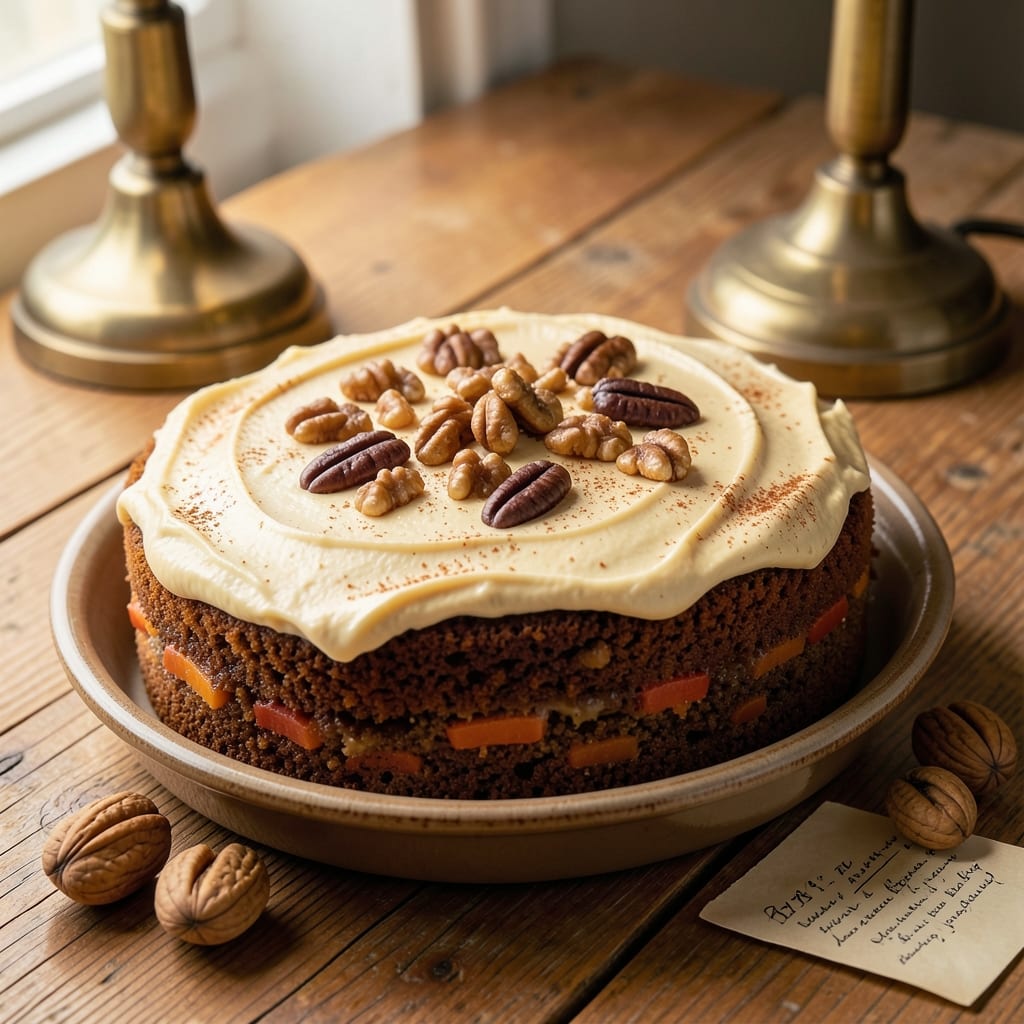
This 1940s carrot cake recipe transports you to mid-century America with its warm spices, tender walnut-studded cake, and velvety cream cheese frosting. 💛 The original version relied on pantry staples like pineapple, cinnamon, and nutmeg—flavors that defined Depression-era baking but still feel nostalgically comforting today. What makes this recipe special is its balance of simplicity and rich texture, achieved through careful layering and a moist crumb that holds up to the creamy frosting.
The cake itself is a spiced masterpiece, with grated carrots and chopped walnuts adding natural sweetness and crunch. Cream cheese frosting—thick, tangy, and perfectly sweet—ties everything together, creating a dessert that's both hearty and elegant. Unlike modern versions, this recipe uses less sugar (a nod to wartime rationing) but delivers maximum flavor through spices and fresh ingredients. The result is a cake that tastes like a slice of history, yet remains approachable for home bakers.
What you’ll end up with is a walnut-studded spice cake with a tender crumb and a frosting so rich it’ll disappear in seconds. The walnuts add a satisfying bite, while the cream cheese frosting—lightened just enough to spread smoothly—balances the cake’s natural sweetness. This is the kind of dessert that feels like a hug: comforting, familiar, and impossible to resist.
Perfect for vintage-themed gatherings, holiday menus, or simply indulging in a taste of the past. The recipe scales easily, so you can make it for a crowd or save leftovers for days. Let’s bring this classic back to life—one layer at a time.
Ingredients for 1940 carrot cake
Pantry staples meet vintage charm in this walnut-studded spice cake with velvety cream cheese frosting.
| Ingredient | Amount | Notes |
|---|---|---|
| All-Purpose Flour 🌾 | 2 ½ cups | Sifted for light texture |
| Granulated Sugar 🍚 | 1 ½ cups | Light brown preferred |
| Walnuts 🌰 | 1 ½ cups | Chopped, toasted lightly |
| Organic Carrots 🥕 | 3 cups | Grated, medium-fine |
| Unsalted Butter 🧈 | 1 cup | Room temperature for creaming |
| Large Eggs 🥚 | 4 whole | Room temperature for even baking |
| Vanilla Extract 🌿 | 2 tsp | Pure Madagascar preferred |
| Ground Cinnamon 🌶️ | 2 tsp | Freshly ground for warmth |
| Ground Nutmeg 🌶️ | ½ tsp | Freshly grated for depth |
| Ground Ginger 🌿 | 1 ½ tsp | Freshly ground preferred |
| Baking Soda 🧂 | 1 tsp | Pure, not baking powder |
| Salt 🧂 | ½ tsp | Diamond Crystal preferred |
| Cream Cheese 🧀 | 16 oz | Full-fat, room temperature |
| Powdered Sugar 🍚 | 3 cups | Confectioners' sugar preferred |
| Lemon Juice 🍋 | 1 tbsp | Freshly squeezed for brightness |
The walnuts are non-negotiable here—they provide both texture and a nostalgic crunch reminiscent of mid-century baking. Look for high-quality walnuts at specialty grocers like Whole Foods or Trader Joe's, where the nuts are often toasted in-house for enhanced flavor. If you're feeling ambitious, toast them yourself in a dry pan until fragrant—it makes all the difference. The carrots should be organic when possible, as conventional varieties can sometimes be waxed, which affects moisture in the cake. Grating them by hand ensures a finer texture, though a box grater works perfectly fine. For the spices, Penzeys or Spicewalla offer the freshest ground cinnamon and nutmeg, but the bulk bins at most grocery stores are a budget-friendly alternative if you're not picky about age.
No walnuts? Pecans or hazelnuts work in a pinch, though the flavor will differ slightly. Substituting the carrots isn't recommended—they're the heart of this cake—but if you're desperate, zucchini or butternut squash can mimic the moisture content (though the flavor won't be the same). For the cream cheese frosting, Philadelphia brand is the gold standard, but any full-fat cream cheese will do. If you're avoiding dairy, Kite Hill almond-based cream cheese is a surprisingly good substitute. The powdered sugar should be sifted before mixing to avoid lumps—a fine-mesh sieve works best. And if you're making this ahead, the cake actually improves overnight as the flavors meld.
This cake keeps beautifully for up to 5 days at room temperature, wrapped tightly in plastic wrap. For longer storage, freeze the unfrosted layers for up to 3 months—just thaw at room temperature before frosting. The frosting, once mixed, stays fresh for 3 days in the fridge, though it's best used immediately for peak texture. To make ahead, bake the cake a day in advance, then frost right before serving. The flavors deepen over time, making this an ideal make-ahead dessert for gatherings. And if you have leftovers? Toasted walnut crumble on top turns it into a delicious breakfast cake the next morning.
Why You'll Love This Recipe
- No Mixer Needed: I’ll be real—this cake thrives on a good old-fashioned stir. No stand mixer, no fancy equipment, just a bowl and a wooden spoon. The butter and sugar get creamed by hand (or a fork in a pinch), and the carrots? Just grate them—no peeling required if you’re in a hurry.
- Walnuts Win Big: Between us, the walnuts are the star. They’re toasted right in the batter, so you get that nutty crunch in every bite—not just on top. Plus, they cut through the sweetness like a cool breeze on a summer day. (Yes, even on a Tuesday night.)
- Crowd-Pleaser for Pennies: This recipe stretches further than you’d think. A single batch feeds six, but the leftovers? They’re even better the next day—moist, not dry, thanks to the carrots and butter. Honestly, it’s my go-to for potlucks or when I need to impress someone without breaking the bank.
- Bake Once, Enjoy Twice: Here’s what sold me—this cake freezes like a dream. Wrap a slice in foil, and it’s a grab-and-go breakfast or snack for weeks. No sad, stale cake here; the walnuts keep it fresh, and the frosting (if you add it) stays creamy. My secret weapon for lazy mornings.
Step-by-step instructions for 1940s carrot cake
Here's how to recreate this nostalgic classic with perfect moist crumb and velvety frosting.
👨🍳 Step 1: Prepare the Walnut-Carrot Base
Preheat your oven to 350°F and grease two 9-inch round pans with butter. Sift together the 2.5 cups all-purpose flour, 1 tsp baking soda, 0.5 tsp salt, 2 tsp ground cinnamon, 0.5 tsp ground nutmeg, and 1.5 tsp ground ginger in a large bowl. This dry mix ensures even distribution of spices throughout the cake.
In a separate bowl, cream together the 1 cup unsalted butter and 1.5 cups granulated sugar until light and fluffy—about 3-4 minutes with an electric mixer. The mixture should nearly double in volume and become pale. This creaming process incorporates air, creating that classic tender crumb we're after.
Add the 4 whole large eggs, one at a time, mixing well after each addition. Then stir in the 2 tsp vanilla extract and 1 tbsp freshly squeezed lemon juice. The lemon juice brightens the warm spices and balances the sweetness. Fold in the 3 cups grated organic carrots using a rubber spatula until just combined—don't overmix or the cake will be dense.
🥘 Step 2: Combine and Bake the Cake Layers
Gently fold the dry ingredients into the wet mixture until just combined—you should still see some flour streaks. This prevents overdevelopment of gluten. Fold in the 1.5 cups chopped toasted walnuts last, reserving a few for garnish. The walnuts add wonderful texture contrast to the moist cake.
Divide the batter evenly between the prepared pans. Tap each pan gently on the counter to release any air bubbles. Bake for 25-30 minutes or until a toothpick inserted in the center comes out clean. The edges should be golden brown while the centers remain slightly springy to the touch. Rotate the pans halfway through baking for even browning.
Remove from the oven and let cool in the pans for 10 minutes. Then transfer to a wire rack to cool completely. This gradual cooling prevents cracking and ensures even layers for frosting. I find the cakes develop even more flavor as they cool completely.
🍳 Step 3: Prepare the Cream Cheese Frosting
While the cakes cool, prepare the frosting by beating the 16 oz cream cheese and 1 cup unsalted butter together until smooth and creamy. I use the paddle attachment on my mixer for this step—it creates a lighter texture than hand-whipping. Scrape down the sides of the bowl occasionally to ensure even mixing.
Gradually add the 3 cups powdered sugar, mixing on low speed until combined. Then increase to medium speed and beat for 2-3 minutes until light and fluffy. The frosting should be thick enough to hold peaks but still spreadable. If it's too thick, add 1 tsp lemon juice at a time until you reach the perfect consistency.
Spread a thin layer of frosting between the cooled cake layers to act as a "glue." Then frost the entire cake with the remaining frosting. I like to use a bench scraper for smooth sides. Sprinkle the reserved chopped walnuts over the top for decoration and added crunch. Chill the cake in the refrigerator for 1 hour before serving to let the frosting set.
Pro Tips For Making 1940 Carrot Cake
- GRATE THOSE CARROTS FINE: Skip the food processor—hand-grate them on the smallest holes of a box grater. You want the texture to mimic a fine, wet sand, not chunks. I learned this the hard way when my first batch had chewy bits that made me question my life choices.
- TOAST THE WALNUTS FIRST: Toss those walnuts in a dry skillet over medium heat for 3-4 minutes until they’re fragrant and just starting to brown. This cuts through their bitterness and adds depth that raw walnuts can’t match. (Yes, even if you’re impatient like me.)
- DON’T OVERMIX THE BATTER: Stir the flour, sugar, and wet ingredients just until combined—maybe 15-20 strokes with a spatula. Overmixing develops gluten, and your cake will turn out dense instead of tender. I’ve ruined batches this way, and it’s a sad, gummy mess.
- BAKE UNTIL THE CENTER CRACKS: The cake’s done when the edges pull away from the pan and a toothpick comes out with a few moist crumbs—but the center cracks slightly when you press it. This recipe’s old-school, so trust the crack over the toothpick test. (Your future self will thank you.)
Best sauces and condiments for 1940 carrot cake
Classic Cream Cheese
The cream cheese frosting in this 1940s recipe is the star—rich, tangy, and perfectly sweetened with powdered sugar. I use 16 oz full-fat cream cheese (like Philadelphia) and 3 cups powdered sugar for that signature velvety texture. The 1 tbsp lemon juice brightens the flavors and prevents the frosting from tasting too heavy. For extra stability, chill the cake for 1 hour before serving—this lets the frosting set just right. 🧀
Spiced Caramel Glaze
For a vintage twist, drizzle the top with a warm spiced caramel glaze made from ½ cup brown sugar, ¼ cup butter, 2 tbsp cream, and 1 tsp cinnamon. Simmer until thickened, then drizzle over the cake while still warm. This adds a glossy finish and enhances the carrot and walnut flavors. The glaze sets beautifully after chilling, creating a stunning presentation. 🍯
Whipped Cream Cheese
For a lighter option, try a whipped cream cheese frosting by adding 1 cup whipped cream to the cream cheese mixture. This version is airier and pairs wonderfully with the dense cake. I like to fold in 1 tsp vanilla extract and a pinch of salt to balance the sweetness. It’s perfect for those who prefer a less heavy frosting but still want that classic cream cheese taste. 🌬️
Honey Walnut Drizzle
A honey-walnut drizzle elevates the cake’s texture and adds natural sweetness. Warm ½ cup honey with 1 tbsp butter and 1 tsp lemon juice, then drizzle over the cake. Sprinkle with toasted walnut pieces for crunch. This combo adds a subtle floral note that complements the warm spices. The honey also helps the frosting adhere better to the cake layers. 🍯
Chocolate Ganache Swirl
For a decadent variation, add a dark chocolate ganache swirl to the frosting. Melt ½ cup dark chocolate with ¼ cup heavy cream, let it cool slightly, then swirl into the cream cheese frosting before spreading. The chocolate deepens the cake’s richness while keeping the classic carrot flavor intact. This twist feels indulgent but stays true to the 1940s spirit of layering flavors. 🍫
Nutrition facts
Frequently asked questions
Why does this 1940s recipe use less sugar than modern carrot cakes?
This vintage recipe reflects wartime rationing—sugar was scarce in the 1940s, so bakers relied on spices like cinnamon and nutmeg to enhance sweetness naturally. The carrots and walnuts also contribute moisture and flavor without needing extra sugar. The result is a cake that's rich in spice character but not overly sweet.
Can I make this cake without walnuts?
Yes, but you'll lose the classic 1940s texture! Substitute with pecans or hazelnuts (toasted and chopped) for a similar crunch. If you're nut-free, omit them entirely—the cake will still be moist and flavorful, but the crunch will be missing. The walnuts were a Depression-era staple for adding protein and texture to baked goods.
How do I prevent the cake from being too dry?
Overmixing is the #1 cause of dryness! Fold the dry ingredients just until combined—you should still see flour streaks. Also, don't overbake: the cake is done when a toothpick comes out clean (not dry). For extra moisture, brush the cooled layers with simple syrup (equal parts sugar and water, heated until dissolved) before frosting.
What's the best way to store leftovers?
Wrap the frosted cake tightly in plastic wrap and store at room temperature for up to 3 days. For longer storage, freeze the unfrosted layers (wrapped individually) for 3 months. Thaw overnight in the fridge before frosting. The frosting stays fresh for 3 days in the fridge if separated from the cake.
Can I use this recipe for a wedding cake?
This recipe scales beautifully for larger cakes. For a 3-layer wedding cake, bake three 8-inch layers and use 24 oz cream cheese plus 4 cups powdered sugar for the frosting. Add a piping border with extra frosting and fresh walnut halves for decoration. The vintage flavors pair perfectly with wedding themes!