
Desserts
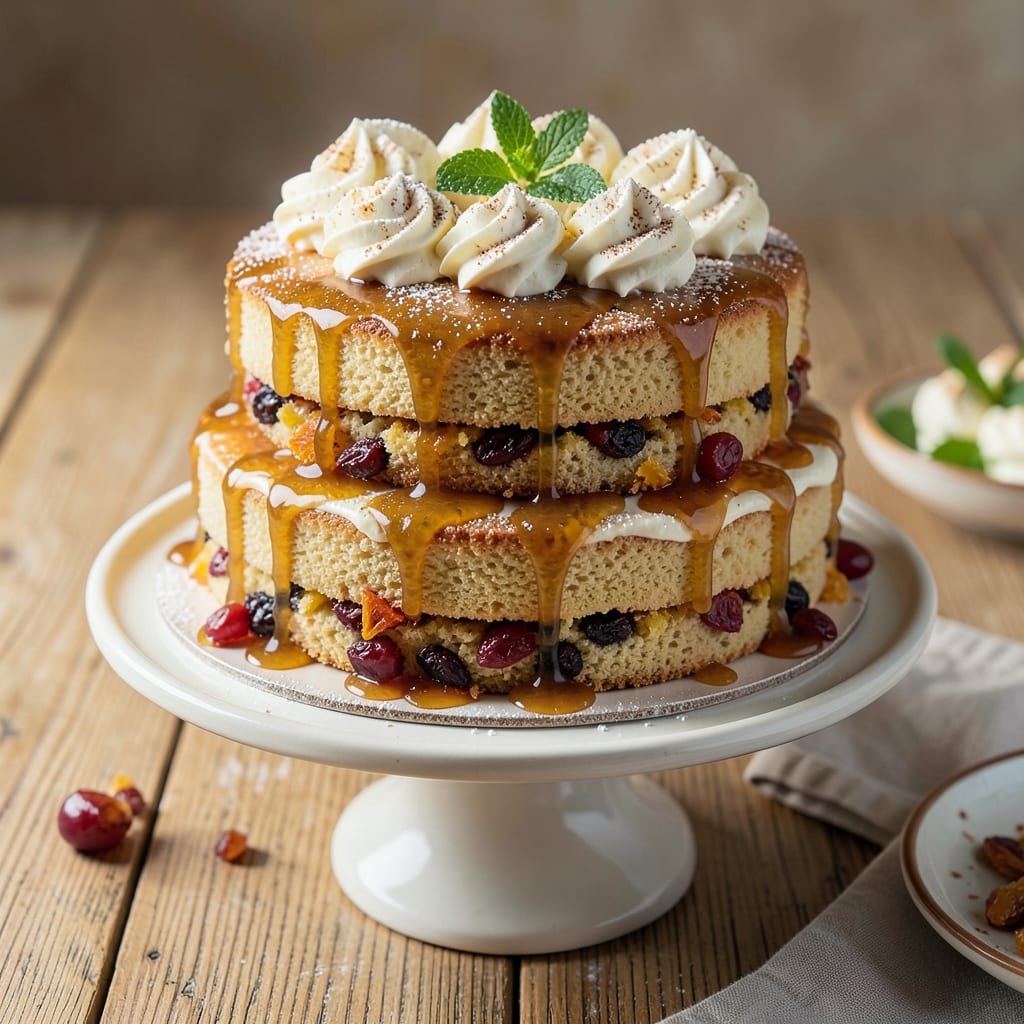
This 12th Night Cake brings centuries of British tradition to your kitchen with its spiced rum-infused layers and delicate edible fondant bridges. 💛 A centerpiece for Epiphany celebrations, this cake combines rich fruitcake texture with warm spices and a touch of brandy, creating a dessert that’s both nostalgic and sophisticated.
The recipe balances tradition and modern technique—dried fruits steep in rum for depth, while the fondant bridges add an elegant surprise. Unlike simpler fruitcakes, this version layers moist, spiced cake with a rum-soaked filling, then connects the tiers with delicate sugar structures that dissolve into the first bite.
Perfect for holiday gatherings or a special occasion, this cake delivers the perfect combination of warmth and indulgence. The spices—cinnamon, nutmeg, and cloves—create an aromatic experience, while the rum adds a subtle complexity that elevates every slice.
Whether you’re celebrating Epiphany or simply craving a dessert with history, this recipe transforms a classic into something extraordinary. Ready to bake tradition with a modern twist?
Ingredients for 12th cake
Twelve ingredients for a cake steeped in tradition and spiced with rum-infused warmth.
| Ingredient | Amount | Notes |
|---|---|---|
| All-Purpose Flour 🌾 | 4 cups | Sifted for light texture |
| Granulated Sugar 🍚 | 2 cups | Divided for layers and rum infusion |
| Unsalted Butter 🧈 | 2 cups | Cold, cubed for layering |
| Large Eggs 🥚 | 6 whole | Room temperature for even baking |
| Spiced Rum 🍷 | 1 cup | High-quality, aged variety |
| Dried Mixed Fruit 🍇 | 1 ½ cups | Chopped, soaked in rum overnight |
| Ground Cinnamon 🌿 | 2 tsp | Freshly ground for warmth |
| Ground Nutmeg 🌿 | 1 tsp | Freshly grated preferred |
| Ground Cloves 🌶️ | ½ tsp | Whole cloves crushed for intensity |
| Salt 🧂 | 1 tsp | Fine sea salt for balance |
| Vanilla Extract 🌸 | 1 tbsp | Pure Madagascar preferred |
| White Chocolate Fondant 🍫 | 16 oz | Store-bought or homemade |
| Powdered Sugar 🍚 | 2 cups | For dusting fondant bridges |
| Almond Extract 🌿 | ½ tsp | For subtle almond notes |
The spiced rum is the heart of this cake—look for aged varieties at specialty liquor stores like BevMo or Total Wine. The dried fruit should be plump and moist after soaking; check bulk bins at Whole Foods for organic options. For the fondant bridges, Wilton or homemade white chocolate fondant works best—store-bought versions can be overly sweet. The butter should be cold when creamed with sugar to create that signature tender crumb. If you're in a hurry, Land O'Lakes European-style butter from the freezer section stays cold longer.
No spiced rum? Substitute apple cider or bourbon—both add depth, though rum's caramel notes are irreplaceable. For the fondant, dark chocolate or marzipan bridges offer visual contrast. The mixed fruit can be swapped for dried apricots or figs if you prefer a single flavor profile. If you're avoiding gluten, King Arthur gluten-free flour blend works well, though texture will differ slightly. The nutmeg and cloves should be freshly ground—Penzeys Spices sells pre-ground blends if you're short on time, but whole spices toasted in a dry pan elevate the flavor dramatically.
The fondant bridges keep best wrapped in parchment for 3 days at room temperature, while the cake layers freeze beautifully for up to 2 months in airtight containers. Assemble the cake just before serving—the fondant softens at room temperature, so plan accordingly. For a showstopper, dust the bridges with powdered sugar and a pinch of cinnamon. Leftovers? Toast slices lightly to revive the texture—perfect for afternoon tea the next day.
Why You'll Love This Recipe
- No-Fuss Mix-In: I swear by this recipe because it’s just flour, sugar, butter, eggs, and a splash of spiced rum—no fancy techniques, no measuring cups that make you question your life choices. Honestly, I’ve made it while scrolling through my phone, and it still turns out moist and golden.
- Rum Glow-Up: That tiny splash of spiced rum? It’s the secret weapon. The warmth of cinnamon and clove lingers in every bite, and it’s not too boozy—just enough to make you feel like you’re baking something special without the effort. (Yes, even on a Tuesday night.)
- Leftovers That Shine: This cake stays fresh for days, and the flavor only gets better. I’ve had it for breakfast with butter, as a snack with coffee, and even reheated slices with a sprinkle of powdered sugar—it’s that adaptable. My kids fight over the pieces, and I don’t even bake for them.
- Budget Baking Win: With just five basic ingredients, this is my go-to when I need a cake but don’t want to break the bank. The butter and eggs make it rich, but the flour and sugar keep it affordable. Plus, the rum adds a gourmet touch without costing a fortune—win, win.
Step-by-step instructions for spiced rum-infused layer cake
This elegant 12th Night cake delivers rich rum-infused layers and delicate white chocolate bridges.
👨🍳 Step 1: Prepare the Rum-Infused Fruit and Dry Ingredients
In a small bowl, combine the 1.5 cups dried mixed fruit with the 1 cup spiced rum. Let this mixture steep overnight in the refrigerator—this infusion intensifies the fruit's flavor and adds depth to the cake layers. The rum should be fully absorbed by the fruit, creating a syrupy consistency perfect for soaking into the cake.
Meanwhile, in a medium bowl, whisk together the 4 cups all-purpose flour, 2 tsp ground cinnamon, 1 tsp ground nutmeg, 0.5 tsp ground cloves, and 1 tsp salt. Sift this mixture through a fine-mesh sieve directly into another bowl to aerate the flour. This step ensures a light, tender crumb in your cake layers. Keep this dry ingredient blend ready for the next step—it's the foundation of your cake's structure.
🍳 Step 2: Cream Butter and Sugar for Light Layers
In a stand mixer fitted with the paddle attachment, beat the 2 cups unsalted butter and 1 cup granulated sugar on medium speed for 3-4 minutes until light and fluffy. You're looking for a pale, airy mixture that nearly doubles in volume—this incorporates air that will create a tender cake texture. Scrape down the sides of the bowl with a spatula to ensure even mixing and prevent any dry ingredients from settling at the bottom.
Gradually add the remaining 1 cup granulated sugar while continuing to mix on medium speed. Once fully combined, add the 6 whole large eggs, one at a time, mixing just until each egg is fully incorporated. After the last egg, add the 1 tbsp vanilla extract and 0.5 tsp almond extract, mixing briefly to combine. The mixture should be smooth and slightly thickened—this is your cake batter base, ready for the dry ingredients.
🥘 Step 3: Combine Wet and Dry Ingredients for Perfect Layers
With the mixer on low speed, gradually add the sifted dry ingredients to the wet mixture. Mix just until combined—you should still see small streaks of flour remaining. This prevents overmixing, which can develop gluten and result in a tough cake. Once combined, fold in the rum-soaked dried fruit using a silicone spatula, ensuring even distribution throughout the batter.
Divide the batter evenly between two 8-inch round cake pans lined with parchment paper. The batter should fill each pan about two-thirds full—this accounts for rising during baking. Smooth the tops with a spatula for even layers. Here's the thing—don't overfill the pans or your cake might overflow, creating a messy presentation.
🔥 Step 4: Bake the Layers to Golden Perfection
Preheat your oven to 350°F. Bake the cake layers for 25-30 minutes, or until a toothpick inserted into the center comes out clean. The edges should be golden brown, and the top should spring back when gently pressed. Rotate the pans halfway through baking for even cooking. Real talk: your oven might run hot, so start checking at the 20-minute mark—better to pull them out slightly underdone than risk overbaking.
Once baked, remove the cakes from the oven and let them cool in the pans for 10 minutes. Then transfer them to a wire rack to cool completely. This gradual cooling prevents cracking and ensures clean layers for assembly. While the cakes cool, prepare your white chocolate fondant bridges—this is where the magic happens.
🍽️ Step 5: Assemble with Edible Fondant Bridges
Roll out the 16 oz white chocolate fondant on a lightly floured surface to about 1/8-inch thickness. Using a sharp knife or cookie cutter, cut strips about 1/2-inch wide and 6-inches long—these will form your bridges between layers. Dust a clean work surface with 2 cups powdered sugar to prevent sticking when assembling.
Place one cake layer on your serving plate, then arrange two fondant bridges on top, spacing them evenly. Add the second cake layer, then top with another two bridges. Repeat this layering process until all components are used, finishing with a final layer on top. Gently press down to secure the bridges—this creates that signature 12th Night cake structure with elegant white chocolate connectors.
Pro Tips For Making 12th Cake
- Cream Butter Slowly: If you dump cold butter into sugar and start mixing, you’ll end up with a grainy mess. Let that butter sit out for 30 minutes first—just until it’s soft enough to press with a finger. Then, mix it into the sugar in batches, scraping the bowl every 30 seconds. This isn’t just about texture; it’s how you get that signature smooth, velvety crumb in 12th cake.
- Weigh Your Flour: Scooping flour from the bag packs it down, and packed flour means a dense, heavy cake. Use a kitchen scale and measure by weight—12th cake recipes typically call for about 250g. If you’re old-school, spoon it into the measuring cup and level it off, but don’t tap the cup. Trust me, your cake will thank you.
- Don’t Overmix the Rum: Spiced rum is the soul of this cake, but drown it in it and you’ll end up with a boozy puddle. Add just 1-2 tablespoons—enough to soak the flour but not turn the batter into a drink. Mix it in at the very end, folding it gently with a spatula. You want flavor, not a rum-soaked sponge.
- Bake Until Golden: The cake’s done when the edges pull away from the pan and a skewer comes out clean—or, more importantly, when the top is a deep, even golden brown. Skip the toothpick test if you’re impatient, but don’t take it out too soon. A 12th cake needs time to set; 20-25 minutes in a 350°F oven is usually the sweet spot. Let it cool in the pan for 10 minutes first, or it’ll collapse like a sad soufflé.
Essential equipment for this recipe
Must-Have Mixer
Invest in a stand mixer with a paddle attachment—this is non-negotiable for creaming the butter and sugar properly. I swear by my KitchenAid Artisan Series (about $300) for its power and durability. If you're on a budget, the Cuisinart SM-50BC (around $150) delivers similar results. Avoid hand mixers for this recipe—they can't incorporate enough air for that signature tender crumb. 💛
Precision Pans
Use two 8-inch round cake pans with removable bottoms for perfect layers. I recommend Wilton Perfect Results pans (around $10 each)—they conduct heat evenly and release cleanly. Line them with parchment paper to prevent sticking. Never grease the pans with butter alone; use a thin layer of flour mixed with oil for even release. Pro tip: Place the pans on a baking sheet to catch any potential overflow.
Fondant Tools
For the edible bridges, you'll need a rolling pin (I love the OXO Good Grips model) and a sharp knife or cookie cutter for clean cuts. A powdered sugar duster (like the Norpro brand) makes dusting the bridges effortless. If you're making homemade fondant, a digital kitchen scale (I use the OXO Good Grips one) ensures precise measurements—fondant is forgiving but benefits from accuracy. Store-bought fondant can be tricky; I recommend Wilton White Chocolate Fondant for its smooth texture.
Rum Infusion Setup
A small glass bowl with a lid is perfect for steeping the dried fruit in rum overnight. I use a quart-sized Pyrex dish from my kitchen—it's sturdy and easy to clean. If you're short on time, a mason jar works too. The key is using a fine-mesh sieve (like the OXO Good Grips strainer) to aerate the flour later—this makes all the difference in the cake's texture. For measuring the rum, a liquid measuring cup with spout ensures accuracy.
Cooling Essentials
Let your baked layers cool gradually on a wire rack—I prefer the OXO Good Grips adjustable one for even airflow. A spatula with a flexible edge (like the Baker's Joy silicone one) helps transfer hot cakes without breaking them. For assembly, a clean marble slab (or large cutting board) provides a stable surface. Keep a small bowl of powdered sugar nearby to dust the fondant bridges before assembly—this prevents sticking and adds that professional finish. 💡
Nutrition facts
Frequently asked questions
Why is this called a 12th Night Cake?
This cake celebrates Epiphany (January 6th), the 12th night after Christmas in the Christian calendar. Traditionally, it marked the end of the Christmas season and included a hidden bean or pea in the cake—whoever found it would be crowned "king" for the day. The modern version keeps the festive spirit with its rich flavors and elegant presentation.
Can I make this cake without rum?
Yes! Substitute 1 cup apple cider or bourbon for the rum—both add depth. For a non-alcoholic version, use extra vanilla extract (2 tbsp) and 1 tbsp orange juice to mimic the rum's warmth. The dried fruit will still absorb moisture, so don't skip the overnight soaking.
How do I store the fondant bridges?
Wrap the bridges tightly in parchment paper and store them at room temperature for up to 3 days. For longer storage, place them in an airtight container with a damp paper towel to prevent drying. Refrigerate for up to 1 week—let them soften at room temperature before assembling the cake.
What if my cake layers crack?
Cracking usually happens when layers cool too quickly or the oven runs hot. To fix it: Brush the cracked areas with simple syrup (equal parts sugar and water) and let it soak in for 5 minutes. Then reassemble with extra fondant bridges. For prevention, avoid opening the oven door during baking and let layers cool gradually on a wire rack.
Can I make this cake gluten-free?
Yes, but texture will differ. Replace the 4 cups all-purpose flour with a 1:1 gluten-free baking flour blend (like Bob's Red Mill or King Arthur). Add 1 tsp xanthan gum to improve structure. Reduce baking time by 2-3 minutes—gluten-free cakes brown faster and may dry out more quickly.