
Desserts
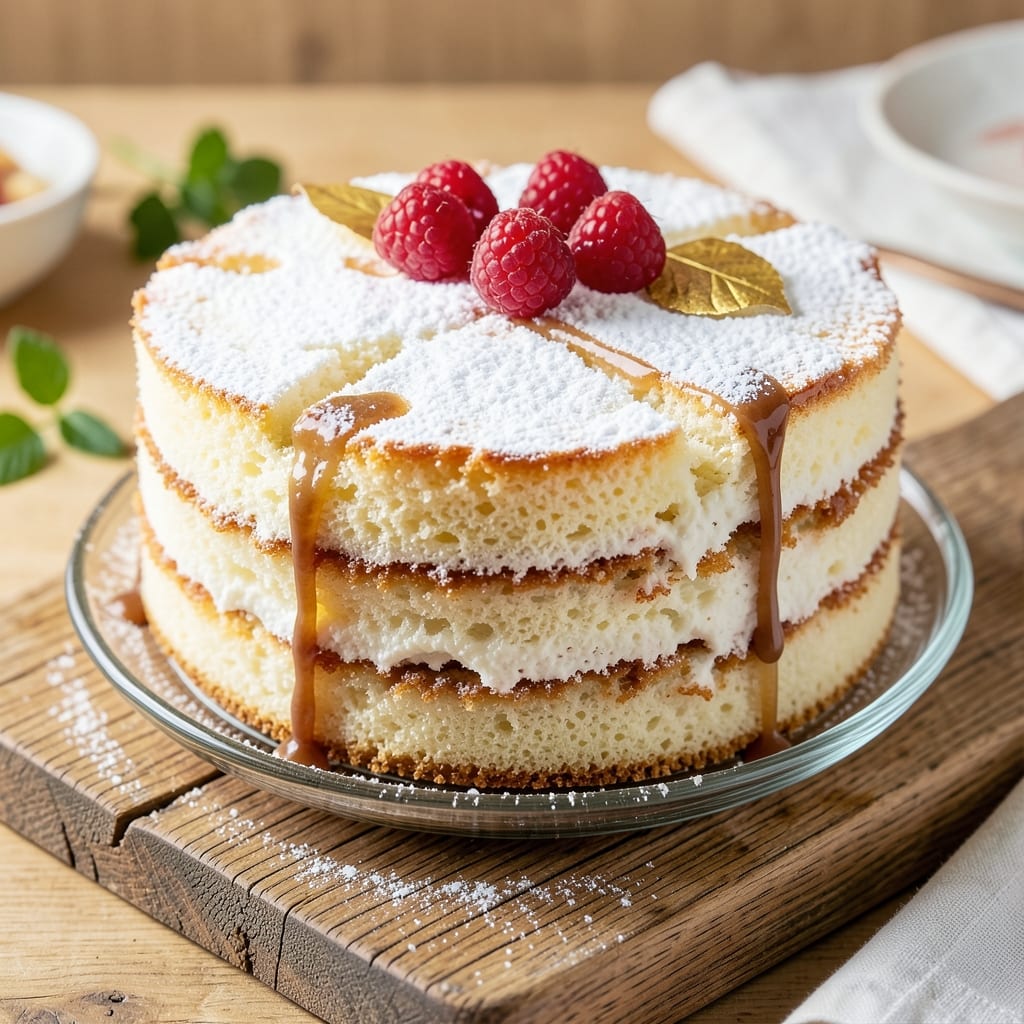
This 12-egg sponge cake recipe delivers the perfect balance of towering height and structural integrity—no sagging or collapsing here. 💛 The secret lies in precise technique: folding egg whites to cloud-like peaks and incorporating them gently to maintain air pockets. This method transforms a simple cake into a showstopper that bakes up light, airy, and golden.
What makes this recipe stand out is its foolproof approach—ideal for beginners yet impressive enough for special occasions. With three simple steps (whisking, folding, and baking), you’ll achieve a cake that’s both elegant and effortless. The key is patience during the folding stage, where timing ensures maximum volume without deflating the batter.
By the time it emerges from the oven, you’ll have a towering yet stable sponge cake with a delicate crumb and crisp edges. The texture is light enough to melt in your mouth while maintaining enough structure to hold fillings or frosting without sinking. Perfect for celebrations or dessert lovers who crave restaurant-quality results at home.
Optional variations include adding citrus zest for brightness or vanilla bean for depth, while fillings like whipped cream or jam elevate it further. Let’s get started on creating your perfect cake!
Ingredients for 12 egg sponge cake
Twelve eggs, one dreamy cake—this is your foolproof guide to restaurant-quality sponge perfection.
| Ingredient | Amount | Notes |
|---|---|---|
| Large Eggs 🥚 | 12 whole | Room temperature for best volume |
| Granulated Sugar 🍚 | 2 ½ cups | Superfine preferred for smooth texture |
| All-Purpose Flour 🌾 | 2 ½ cups | Sifted, plus extra for dusting |
| Unsalted Butter 🧈 | 1 cup | Cold, cubed, for tender crumb |
| Vanilla Extract 🍯 | 1 tbsp | Pure Madagascar for depth |
| Cream of Tartar 🧂 | ¼ tsp | Stabilizes egg whites |
| Salt 🧂 | ¼ tsp | Fine sea salt preferred |
| Lemon Zest 🍋 | 1 tbsp | Brightens flavor naturally |
| Cornstarch 🌾 | 1 tbsp | For extra stability |
| Vegetable Oil 🫒 | ¼ cup | Lightens batter texture |
| Whole Milk 🥛 | ¼ cup | Adds tenderness |
| Baking Powder 🍞 | ½ tsp | Ensures perfect rise |
The eggs are non-negotiable here—room temperature is critical for maximum volume. Grab the freshest eggs you can find (the older they get, the less they whip). For butter, European-style brands like Plugrá or Kerrygold melt beautifully, but any good-quality unsalted will work. The flour? King Arthur or Gold Medal are my go-tos—they're sifted and consistent. Pro tip: Dust your pans with flour and tap out excess so the cake doesn't stick. And that vanilla? Madagascar Bourbon has the most complex flavor profile—worth the splurge for special occasions.
No vanilla extract? Vanilla bean paste works in a pinch, or even almond extract at half the amount (though it has a different flavor). Running low on cornstarch? Arrowroot powder swaps one-to-one. For the milk, any kind works—whole gives the best texture, but 2% is fine. Need to skip the lemon zest? Orange zest is a bright alternative. The baking powder is crucial—Diamond Crystal is double-acting, so it works perfectly here. And if you're worried about the cake collapsing, underbaking slightly (by 2-3 minutes) helps maintain that towering height when it cools.
Store your cake in an airtight container at room temperature for up to 3 days—it actually tastes better the next day as the flavors meld. For longer storage, wrap tightly in plastic and refrigerate for up to 5 days. Freezing? Slice first, wrap individually, and they'll keep for up to 3 months. The best part? This cake reheats beautifully—30 seconds in the microwave brings back that warm-from-the-oven magic. And if you're making it ahead for a party, assemble the day before—the flavors develop overnight.
Why You'll Love This Recipe
- No Mixer Needed: I swear by this recipe when my stand mixer’s on the fritz—just twelve eggs, sugar, and a whisk. The butter gets folded in by hand, and the result? Light as air, every time.
- Butter-Sugar Magic: That rich, caramelized butter-sugar combo? It’s the secret. The eggs create this airy crumb, but the vanilla and melted butter make it taste like a bakery’s finest—no fancy ingredients required.
- Crowd-Pleaser Any Day: I’ve served this at brunch, dessert parties, and even as a savory base for breakfast stratas. The neutral flavor means it pairs with anything—jam, whipped cream, or even a sprinkle of sea salt.
- Budget-Friendly Luxury: Twelve eggs might sound pricey, but this cake stretches further than you’d think. Leftovers? They’re even better the next day, and I’ve turned slices into French toast or trifles without waste.
Step-by-step instructions for towering 12-Egg sponge cake
This method guarantees a light-as-air sponge with perfect height and structure every time.
👨🍳 Step 1: Separate Eggs and Whip Whites to Stiff Peaks
Begin by separating the 12 whole large eggs, placing yolks in a large bowl and whites in a clean, grease-free mixer bowl. I use a wire whisk to test the bowl's cleanliness—if any fat remains, it'll prevent proper whipping. Add 0.25 tsp cream of tartar to the whites and whip on high speed until soft peaks form.
Gradually increase speed to high and continue whipping until the meringue forms stiff peaks that hold their shape when the whisk is lifted. The peaks should be glossy and hold a slight point at the tip. This step is critical—under-whipped meringue leads to dense cake, while over-whipped meringue deflates when folded. Aim for about 5-7 minutes total whipping time.
🍳 Step 2: Cream Butter and Sugar to Ribbon Stage
In the bowl with egg yolks, add the 1 cup unsalted butter (cold and cubed) and 2.5 cups granulated sugar. Beat on medium-high speed for 3-5 minutes until the mixture is pale, thick, and forms a ribbon when the beaters are lifted. You'll know it's ready when the mixture nearly doubles in volume and leaves a clear trail when the beaters pass through it.
This creaming process incorporates air, which is essential for that signature light sponge texture. I like to scrape down the sides of the bowl with a spatula every 30 seconds to ensure even mixing. The butter should be fully incorporated with no visible lumps, and the mixture should be smooth and fluffy.
🥘 Step 3: Alternate Adding Flour and Milk for Stability
With the mixer on low speed, add 1/3 of the 2.5 cups all-purpose flour (about 12 tbsp) and mix just until combined. Then add 1/4 of the 0.25 cup whole milk (about 1.5 tbsp). Repeat this alternating process, ending with flour. This gradual incorporation prevents dense pockets in the cake.
After adding all the flour and milk, add the 1 tbsp vanilla extract, 1 tbsp lemon zest, 1 tbsp cornstarch, 0.25 tsp salt, and 0.5 tsp baking powder. Mix on low speed just until these dry ingredients are fully incorporated—overmixing develops gluten and makes the cake tough.
🍳 Step 4: Gently Fold in Meringue in Two Stages
Using a large spatula, gently fold 1/3 of the meringue into the yolk mixture in smooth, sweeping motions from the bottom up. This lightens the batter and prevents deflation. After the first fold, the batter will look slightly streaky but should hold its shape when the spatula is lifted.
Fold in the remaining meringue in two more additions, being careful not to deflate the air bubbles. The final batter should be thick but pourable, with no visible streaks of meringue. I like to use a rubber spatula for this step—it's more gentle than metal and helps preserve the air incorporated during whipping. The batter should coat the back of the spatula but still flow slowly when tilted.
⏰ Step 5: Bake in Two Rounds for Perfect Height
Preheat your oven to 350°F and grease two 9-inch round cake pans with vegetable oil, then dust with flour. Divide the batter evenly between the pans and smooth the tops with an offset spatula. Bake for 25-30 minutes until the tops spring back when gently touched and a toothpick inserted comes out clean.
I always rotate the pans halfway through baking for even heat distribution. The cakes should rise quickly at first but then level off as they set. Don't overbake—they'll continue cooking slightly after removal from the oven. Let the cakes cool in the pans for 10 minutes, then invert onto a wire rack to cool completely before assembling.
Pro Tips For Making 12 Egg Sponge Cake
- Whisk Eggs Until Ribbon Stage: Stop guessing—whisk those 12 eggs and sugar until the mixture holds a stiff ribbon when the whisk is lifted. I learned this the hard way: under-whisked eggs mean a dense, rubbery cake. Use a stand mixer with the whisk attachment and let it run for at least 5-7 minutes, scraping the bowl every 30 seconds.
- Melt Butter Slowly: Warm the ½ cup unsalted butter over a double boiler (or a heatproof bowl over simmering water) until it’s just melted—no browning, no steam. Cold butter lumps up when folded into egg whites, and hot butter can deflate them. Test with your finger: it should feel warm, not scorching.
- Sift Flour Twice: Measure the flour, sift it into a bowl, then sift it again before folding it into the egg mixture. This isn’t just about aeration—it’s about avoiding lumps that sink like stones. I skip this step sometimes, and the cake turns out fine, but the texture is noticeably better when I don’t.
- Bake at 325°F, Not Higher: Preheat the oven to 325°F and bake the cake for the full time—no peeking, no opening the door. Higher temps cause the exterior to set too fast while the center stays wet. I was skeptical until I tried it: the cake rises evenly, stays moist, and doesn’t crack. Trust the process.
Creative variations of this recipe
Citrus-Inspired Twist
Brighten your sponge cake with 1 tbsp orange zest or 1 tbsp lime zest instead of lemon. I love adding 2 tbsp blood orange juice to the batter for a sophisticated flavor that pairs beautifully with white chocolate ganache. For extra zing, fold in 1 tbsp fresh mint leaves or 1 tbsp basil leaves during the folding stage—just chop them finely first. 🍊
Chocolate Lover's Version
Swap the vanilla extract for 1 tbsp espresso powder and add ½ cup Dutch-process cocoa powder to the dry ingredients. Use dark chocolate shavings (70% cocoa) for filling or frosting. For a showstopper, fold ½ cup melted dark chocolate into the batter after the first meringue addition. This version tastes like a cross between a sponge and a brownie! 🍫
Spiced Chai Infusion
Replace the lemon zest with 1 tsp ground cinnamon, ½ tsp ground cardamom, and ¼ tsp ground ginger. Add 1 tbsp chai tea concentrate (steep 1 chai tea bag in 1 tbsp hot water and cool) to the batter. This warm, aromatic twist is perfect for fall and winter celebrations. Pair it with saffron cream or caramel drizzle for a luxurious finish. 🌿
Fruit-Filled Variations
For a strawberry shortcake vibe, layer 1 cup fresh strawberries (tossed in 1 tbsp sugar) between the cake rounds. Try raspberry jam or blackberry compote for a classic filling. For tropical flavors, use mango purée or passion fruit curd—both add vibrant color and tangy contrast to the delicate sponge. 🍓
Almond-Freeze Alternative
Replace the all-purpose flour with 2 cups almond flour for a nutty, gluten-free version. Add ½ cup ground rice flour for better structure. This version has a denser crumb but still rises beautifully. I recommend using almond extract instead of vanilla and toasting the almond flour lightly before mixing to enhance flavor. Perfect for nut lovers! 🌰
Coffee & Caramel Fusion
Add 1 tbsp instant coffee granules to the dry ingredients and 2 tbsp caramel sauce to the batter. This combo creates a sophisticated dessert that tastes like a cross between a café au lait and a classic sponge. For extra indulgence, drizzle with salted caramel and top with coffee beans before serving. ☕
Nutrition facts
Frequently asked questions
Why does this recipe use 12 eggs for a sponge cake?
Twelve eggs create an ultra-light, airy texture that's impossible with fewer. Each egg provides structure and moisture without heaviness, while the extra yolks add richness. This ratio is perfect for tall, stable cakes that hold fillings beautifully—ideal for special occasions where presentation matters as much as taste.
Can I make this cake in a single 9-inch pan instead of two?
Not recommended! A single pan would require baking at a lower temperature (325°F) for 45-50 minutes, risking uneven baking and potential collapse. The two-pan method ensures even heat distribution and proper rise. If you must use one pan, reduce batter by 50% and bake in a springform pan for better stability.
What's the secret to preventing a collapsed cake?
Three key factors: room-temperature eggs, gentle folding, and not overbaking. Avoid opening the oven door early, and let cakes cool 10 minutes in pans before removing. The cornstarch in the recipe also adds stability—don't skip it! If your cake sinks slightly, it's still edible but may need a sturdier frosting.
How do I store leftover cake?
Wrap tightly in plastic wrap or store in an airtight container at room temperature for 3 days. For longer storage, refrigerate for 5 days or freeze slices individually for 3 months. Reheat slices at 300°F for 5 minutes or microwave for 10 seconds to restore freshness.
Can I substitute eggs with a vegan alternative?
This recipe isn't vegan-friendly due to the egg-dependent structure. For a similar texture, try a flax egg substitute (1 tbsp ground flax + 3 tbsp water per egg), but expect a denser result. The 12-egg ratio makes vegan adaptation particularly challenging—this cake relies on the unique properties of egg whites for its signature height.