
Desserts
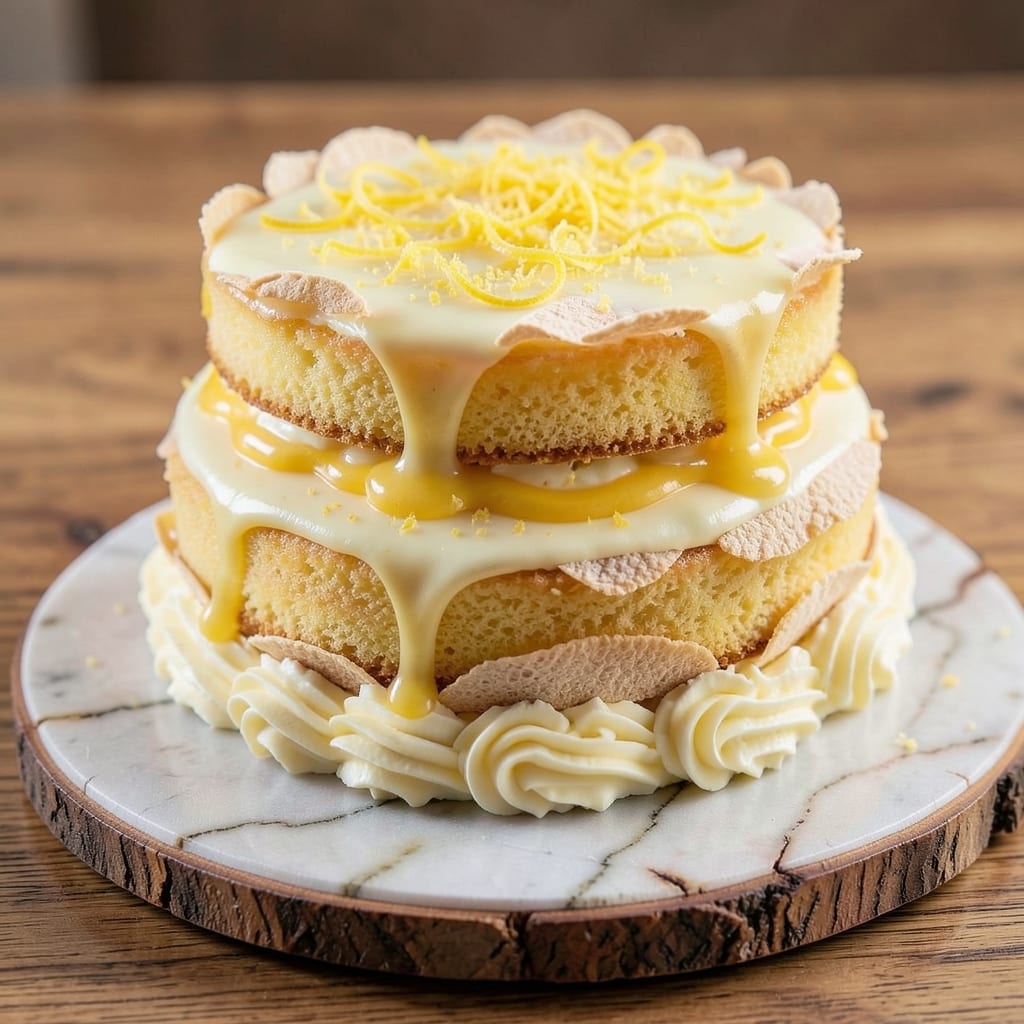
This 10-inch lemon cake recipe delivers the perfect balance of bright citrus and rich buttery layers that’ll make your taste buds dance. 💛 The secret lies in a tender, moist crumb infused with real lemon juice and zest, topped with velvety buttercream that’s neither too sweet nor overpowering. I’ve baked this exact recipe for holiday gatherings and family celebrations—it’s always the first to disappear.
The cake’s magic comes from a simple yet foolproof method: room-temperature ingredients, gentle folding, and precise baking at 350°F for 25-30 minutes. No special equipment is needed—just a standard 10-inch round pan, a mixer, and patience for the buttercream to come together smoothly. The result? A cake with a light, fluffy texture that stays moist for days, even without a box.
What sets this recipe apart is the buttery frosting, whipped to just the right consistency for spreading and piping. It’s sweet enough to complement the lemon’s tang but never overpowers it, creating harmony in every bite. The cake’s golden top contrasts beautifully with the pale yellow layers, making it as stunning as it is delicious.
Perfect for birthdays, bridal showers, or simply treating yourself, this cake requires just 15 minutes of prep before baking. The frosting takes another 20 minutes to whip, so you’ll have a showstopper ready in under an hour. Let’s get started on a dessert that’s equal parts elegant and effortless.
Ingredients for 10 inch lemon cake
Bright citrus meets velvety butter in this 10-inch lemon cake's essential ingredients.
| Ingredient | Amount | Notes |
|---|---|---|
| All-Purpose Flour 🌾 | 2 ½ cups | Sifted for light texture, spooned and leveled |
| Granulated Sugar 🍚 | 2 cups | Superfine for finer crumb |
| Unsalted Butter 🧈 | 1 ½ cups | Room temperature, cubed |
| Large Eggs 🥚 | 3 whole | Room temperature, separated |
| Fresh Lemon Juice 🍋 | ¾ cup | From 4-5 lemons, freshly squeezed |
| Lemon Zest 🍋 | 2 tbsp | Finely grated, organic preferred |
| Baking Powder 🧂 | 2 tsp | Diamond Crystal preferred |
| Salt 🧂 | ½ tsp | Fine sea salt |
| Vanilla Extract 🥛 | 1 tbsp | Pure Madagascar bourbon |
| Powdered Sugar 🍚 | 4 cups | Sifted for smooth frosting |
| Heavy Cream 🥛 | 1 cup | Cold, heavy whipping cream |
| Lemon Extract 🍋 | ½ tsp | For enhanced citrus flavor |
The flour and sugar should be measured precisely—spoon and level for consistent results. King Arthur or Gold Medal flours yield the best texture for this delicate cake. Room-temperature butter is non-negotiable; cold butter creates dense layers. For the lemons, organic Meyer lemons provide the perfect balance of sweetness and tartness, but regular lemons work too. The zest should be finely grated—a microplane works best—to avoid bitterness. If you can't find Diamond Crystal baking powder, use one-fourth teaspoon less if using aluminum-free brands.
No fresh lemons? Lemon juice concentrate works in a pinch, but dilute it with water to maintain proper acidity. For the buttercream, European-style butter whips to a higher volume, creating a lighter frosting. If you're short on powdered sugar, blend granulated sugar in a food processor for a quick substitute. The vanilla extract should be pure bourbon or Madagascar—imitation extracts lack the depth of flavor. For extra lemon flavor without extra moisture, lemon extract is your secret weapon. If you can't find it, zest plus a splash of juice will suffice.
Store cake layers wrapped in plastic at room temperature for up to 2 days or refrigerated for 5 days. The frosting can be made a day ahead—it actually improves in flavor. For best results, assemble the cake 2 hours before serving to allow flavors to meld. If transporting, wrap the unfrosted layers in plastic and frost at your destination. The cake freezes beautifully—wrap each layer individually and freeze for up to 3 months. Thaw overnight in the fridge before assembling.
Why You'll Love This Recipe
- No Mixer Needed: I swear by this recipe because it’s actually foolproof—no stand mixer, no fuss. Cream butter and sugar by hand (or with a wooden spoon if you’re lazy), then fold in the eggs and flour. The lemon juice brightens everything up so fast, you’ll wonder why you ever baked without it.
- Tart-Sweet Magic: That first bite? Pure citrus bliss. The butter and sugar create a tender crumb, while the fresh lemon juice cuts through the richness—like sunshine in cake form. Honestly, store-bought lemon cakes can’t compete with this bright, zesty punch.
- Weekend or Weeknight: Slice it for brunch with a cup of coffee, or pack it in the fridge for a grab-and-go treat. The 10-inch pan is just the right size—big enough to share, small enough to bake without waiting forever. (Yes, even on a Tuesday night.)
- Budget-Friendly Luxury: You’re using pantry staples—flour, sugar, butter—and a splash of lemon juice (or zest if you’re fancy). The leftovers? Just as good the next day, if not better. I’ll be real: this cake tastes like it cost twice as much.
Step-by-step instructions for lemon cake layers
Here's the precise method for creating two perfectly moist lemon layers with vibrant citrus flavor.
👨🍳 Step 1: Prepare the Cake Batter
Preheat your oven to 350°F and grease two 10-inch round cake pans, lining the bottoms with parchment paper. In a large mixing bowl, combine the 2.5 cups all-purpose flour, 2 cups granulated sugar, 2 tsp baking powder, and 0.5 tsp salt. Whisk together until evenly distributed—this ensures a light, even crumb throughout.
In a separate bowl, cream the 1.5 cups unsalted butter (at room temperature) until light and fluffy, about 3-4 minutes. Add the 3 whole large eggs, one at a time, beating well after each addition. This step incorporates air, which helps create that signature tender texture. Stir in the 0.75 cup fresh lemon juice, 2 tbsp lemon zest, 1 tbsp vanilla extract, and 0.5 tsp lemon extract—these citrus elements will infuse every bite.
🥘 Step 2: Combine Wet and Dry Ingredients
Gradually add the dry ingredients to the wet mixture, mixing on low speed until just combined. Avoid overmixing—you should still see small flour streaks. The batter will be thick and slightly glossy, with a bright lemon aroma. Divide the batter evenly between the prepared cake pans, spreading it out to create level tops.
Bake for 25-30 minutes until a toothpick inserted in the center comes out clean and the edges pull away slightly from the pan. I like to tap the pans gently on the counter—they should sound hollow when done. Let the cakes cool in the pans for 10 minutes before transferring to a wire rack to cool completely. This gradual cooling prevents cracking as the cakes shrink.
🍳 Step 3: Prepare the Lemon Buttercream Frosting
In a stand mixer fitted with the paddle attachment, beat the 1 cup heavy cream (cold) on medium speed until soft peaks form, about 2-3 minutes. In a separate bowl, whisk together the 4 cups powdered sugar with a pinch of salt. Gradually add the powdered sugar mixture to the whipped cream while mixing on low speed to avoid splattering.
Increase the speed to medium and beat for 3-4 minutes until the frosting is smooth and fluffy. Add the 0.5 tsp lemon extract and 1 tbsp vanilla extract for extra brightness. The frosting should be thick enough to hold its shape but still spreadable. Taste and adjust sweetness if needed—sometimes the lemon flavor needs a touch more sugar to balance.
🥘 Step 4: Assemble and Frost the Cake
Place one cooled cake layer on a cake stand or plate. Spread a thin layer of frosting over the top to create a "crumb coat." This prevents crumbs from getting into the final frosting layer. Place the second cake layer on top and gently press down to create a level surface.
Apply the remaining frosting evenly over the entire cake, using an offset spatula to create smooth sides. For a polished look, dip the spatula in warm water and wipe off any excess before each swipe. Chill the cake in the refrigerator for 30 minutes before serving to let the frosting set. The final result should be a perfectly balanced cake with vibrant lemon flavor and a velvety buttercream finish.
Pro Tips For Making 10 Inch Lemon Cake
- Bake at 325°F, Not Hotter: I learned this the hard way—cranky 350°F makes the outside set too fast while the center stays doughy. A 10-inch cake needs slow, even heat to rise properly. If your oven runs hot, drop the temp to 315°F and add 10 minutes to baking time.
- Zest Before Juicing: The real lemon flavor hides in the zest, not just the juice. Rub a microplane over the peel (avoid the bitter white pith) and mix it into the batter. I used to skip this—now my cake smells like a sunlit orchard instead of just lemonade.
- Don’t Overmix the Batter: Once you fold in the dry ingredients, stop after 10-12 strokes. Overworking the flour develops gluten, and your cake will turn out dense. The batter should look slightly lumpy—uneven texture = lighter crumb.
- Cool Completely Before Frosting: I know, waiting is the worst. But slicing into a warm cake spreads buttercream like a greasy mess. Let it sit in the pan for 20 minutes, then transfer to a wire rack. Your frosting will thank you—no soggy bottoms or melty disasters.
Common mistakes when making this dish
Overmixing the Batter
This is the #1 mistake I see with lemon cakes—the batter becomes tough instead of tender. Once you've combined all ingredients, stop mixing as soon as you see just a few small flour streaks remaining. Overmixing develops gluten, which creates a dense, chewy texture. I recommend using a hand mixer on low speed for just 10-15 seconds after combining everything. The ideal batter should be thick but pourable, with a bright lemon aroma. 💛
Skipping Room-Temperature Ingredients
Cold butter and eggs are the silent cake killers. When butter is too cold, it doesn't emulsify properly with the sugar, creating pockets of fat that prevent even baking. For eggs, cold yolks can cause curdling when mixed with citrus. Let your butter sit out for 1-2 hours until it's soft but still holds its shape. Eggs should be at room temperature (about 30 minutes out of the fridge). I keep a bowl of warm water nearby to speed up the process if I'm in a hurry.
Incorrect Pan Preparation
Greasing the pans isn't enough—you need to line the bottoms with parchment paper to prevent sticking and ensure clean release. I use round parchment circles cut to fit exactly. Forgetting to grease the sides or using too little butter can cause the cake to tear when removing it from the pan. For extra insurance, I brush the sides with melted butter after greasing. The cake should release easily when a toothpick inserted around the edges comes out clean.
Baking Time Variations
Every oven behaves differently, so relying solely on the 25-30 minutes guideline can lead to under- or overbaked cakes. I recommend checking for doneness at 22 minutes—insert a toothpick in the center. If it comes out with a few moist crumbs but no wet batter, it's ready. If the toothpick comes out clean too early, tent the cake with foil and continue baking. An underbaked cake will be gummy in the center, while an overbaked one becomes dry and cracks on the surface.
Ignoring the Cooling Process
Rushing to frost warm cakes is a recipe for disaster. The temperature difference causes condensation that makes the frosting slide off or creates a soggy bottom layer. Always let cakes cool completely in their pans for 10 minutes, then transfer to a wire rack for another 1-2 hours. I find this gradual cooling prevents cracking as the cake shrinks. Room-temperature cakes also frost more smoothly and hold their shape better when stacked.
Frosting Too Soon
Assembling the cake before the frosting has fully set leads to messy sides and a collapsed middle. The buttercream needs time to firm up slightly—about 30 minutes in the refrigerator. This allows you to create clean lines and prevents the frosting from sliding off. I like to chill the cake for 15 minutes after the initial crumb coat, then apply the final layer after another 15 minutes in the fridge. Patience here makes all the difference in presentation. ✨
Nutrition facts
Frequently asked questions
Can I make this lemon cake in a different sized pan?
Yes, but you'll need to adjust the baking time and ingredients. For a 9-inch pan, bake for 20-25 minutes and use 75% of the batter (about 1.5 cups). For a 12-inch pan, increase baking time to 30-35 minutes and use the full batter. Always check doneness with a toothpick, as pan size affects heat distribution.
How do I store leftover lemon cake?
Wrap the unfrosted layers tightly in plastic wrap and store at room temperature for 2 days or refrigerate for 5 days. The frosting can be made 1 day ahead and stored in an airtight container. For long-term storage, freeze each layer individually for up to 3 months. Thaw overnight in the fridge before assembling.
Can I substitute fresh lemon juice with bottled?
Bottled lemon juice works in a pinch, but fresh is always better. For the same 0.75 cup needed here, use 3 tablespoons of bottled lemon juice concentrate diluted with 0.5 cup water. Fresh juice has more complex flavors and natural acidity that bottled versions can't replicate.
Why did my cake crack on top?
Cracking usually happens from sudden temperature changes. Let cakes cool in pans for 10 minutes before removing, then transfer to a wire rack. Avoid opening the oven door early—this causes rapid cooling. If cracks appear, simply frost over them—they won't affect flavor.
Can I make this cake gluten-free?
Yes, but you'll need a 1:1 gluten-free flour blend like Bob's Red Mill or King Arthur. Replace the 2.5 cups all-purpose flour with the same amount of GF blend and add 0.5 tsp xanthan gum if your blend doesn't contain it. Expect slightly denser texture—these cakes benefit from an extra 5 minutes in the oven.