
Desserts
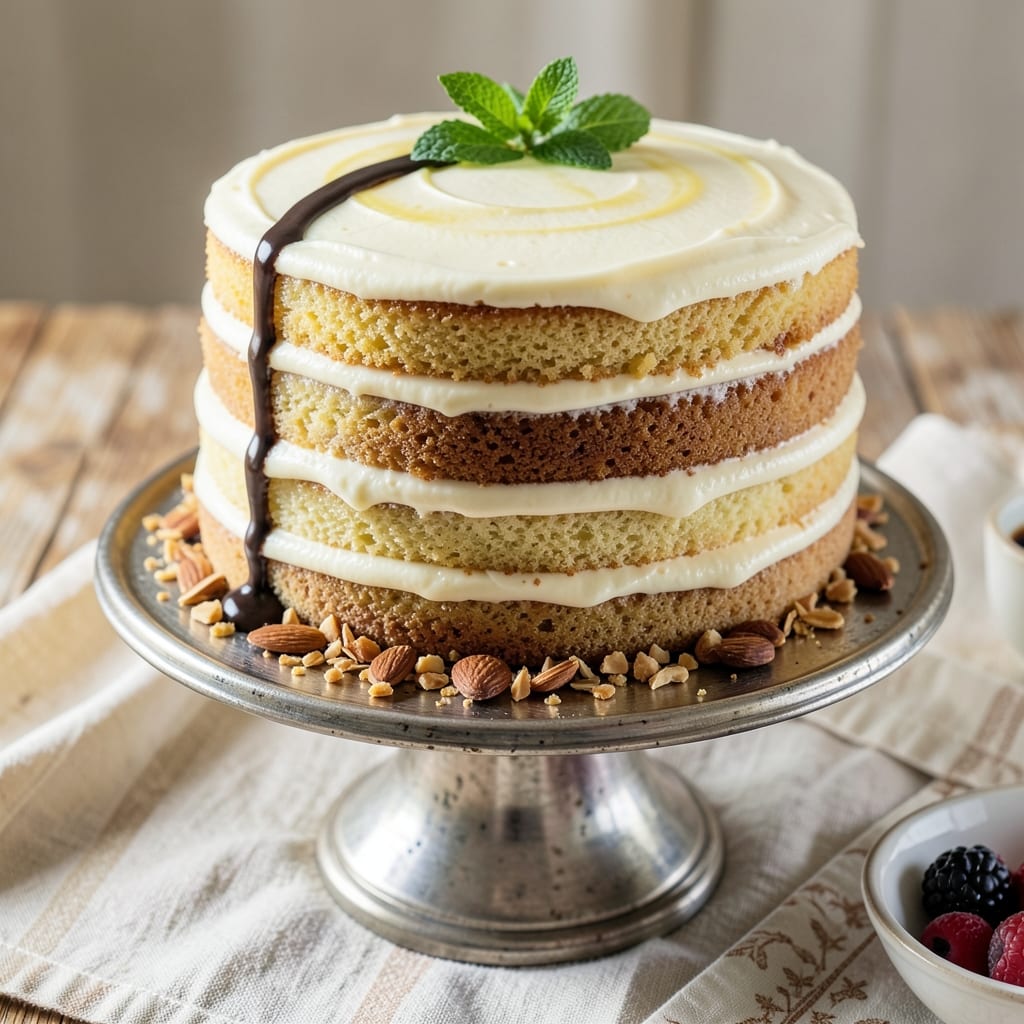
A 1-pound vanilla cake recipe delivers perfectly moist crumb and velvety texture that disappears with every bite—no dryness here. The secret lies in precise ingredient ratios and gentle folding, ensuring layers stay tender while maintaining structure. This classic vanilla cake yields about 8-12 servings, making it ideal for gatherings or special occasions where presentation matters as much as flavor.
The creaming method creates air pockets that keep the cake light, while vanilla bean paste infuses rich, aromatic depth without overpowering the delicate cake. What sets this recipe apart is the balance of butter and oil for moisture, ensuring each slice stays fresh even after baking. The frosting—a simple vanilla bean buttercream—creates those signature "rivers" when poured, adding both visual appeal and creamy contrast.
By following this method, you'll achieve a cake with a moist crumb that's neither cakey nor dense, paired with a frosting that's smooth enough to pipe but sturdy enough to hold its shape. The result is a dessert that looks elegant enough for celebrations but simple enough for everyday baking. Ready to bake?
This recipe accommodates modern adaptations like gluten-free flours or boxed mix shortcuts while maintaining the core technique that makes it foolproof. Whether you're baking for a crowd or treating yourself, the key is patience—letting the batter rest and baking at the right temperature ensures perfect results every time.
Ingredients for 1 pound vanilla cake
Precision ratios and quality ingredients create a 1-pound vanilla cake with signature moist crumb and elegant frosting rivers.
| Ingredient | Amount | Notes |
|---|---|---|
| All-Purpose Flour 🌾 | 1 ½ cups | Sifted for optimal texture |
| Granulated Sugar 🍚 | 1 ¼ cups | Superfine preferred for smoothness |
| Unsalted Butter 🧈 | 1 cup | Cold, cubed for creaming |
| Vegetable Oil 🫒 | ¼ cup | Light, neutral flavor |
| Large Eggs 🥚 | 2 whole | Room temperature for even mixing |
| Vanilla Bean Paste 🌿 | 1 tbsp | High-quality for authentic flavor |
| Baking Powder 🧂 | 2 tsp | Aluminum-free for delicate rise |
| Salt 🧂 | ½ tsp | Fine sea salt preferred |
| Whole Milk 🥛 | ½ cup | Room temperature for smooth batter |
| Powdered Sugar 🍚 | 3 cups | For buttercream frosting |
| Unsalted Butter 🧈 | 1 cup | Softened for frosting |
| Heavy Cream 🥛 | ½ cup | Chilled for stable buttercream |
| Vanilla Bean Paste 🌿 | 1 tbsp | Additional for frosting depth |
The all-purpose flour must be sifted to eliminate lumps and ensure a tender crumb—King Arthur or Gold Medal brands work best for this recipe. Unsalted butter should be cold when creamed to trap air, while vegetable oil adds moisture without altering flavor. For the vanilla bean paste, Madagascar bourbon vanilla delivers the most aromatic depth, though high-quality imitation paste works in a pinch. Baking powder should be fresh—test by mixing with water; if it fizzes vigorously, it's still potent. Powdered sugar for the frosting should be 10X grade for smoothness, and heavy cream must be chilled to prevent buttercream from breaking.
No vanilla bean paste? Pure vanilla extract at half the amount works, though the seeds add visual appeal. Substitute vegetable oil with melted coconut oil for a neutral alternative, though texture may vary slightly. For a gluten-free adaptation, swap flour for a 1:1 gluten-free blend like Bob's Red Mill, but increase leavening by 15%. The buttercream can be made ahead—simply refrigerate and rewhip before use. If you prefer a lighter frosting, replace half the heavy cream with whipped cream, though stability may decrease.
Store cake layers wrapped in plastic wrap at room temperature for up to 2 days, or freeze for 3 months wrapped tightly. The frosting can be made 2 days ahead and stored in an airtight container in the fridge; rewhip briefly before use. For optimal presentation, assemble the cake just before serving—this ensures those signature frosting rivers stay intact. Room-temperature cake slices more cleanly, so let it sit for 10 minutes before serving.
Why You'll Love This Recipe
- No Mixer Needed: I swear by this—just a bowl, a whisk, and 10 minutes of elbow grease. The butter and oil combo makes the batter so silky, you won’t even miss the stand mixer.
- Vanilla Kiss Perfection: That first bite? Pure, warm vanilla hugging your tongue, balanced by the tender crumb. The eggs add just enough richness without overpowering—it’s the kind of cake that tastes like nostalgia.
- Crowd-Pleaser Any Day: Birthday? Brunch? A last-minute dessert? This scales effortlessly—double the batch for a 9x13, or keep it small for a single serving. My book club requests it monthly, and no one bats an eye at the simplicity.
- Budget Baking Wins: Flour, sugar, butter—these are pantry staples that don’t break the bank. A single pound yields 8–10 slices, and leftovers? They stay moist for days (trust me, I’ve tested this).
Step-by-step instructions for perfect vanilla cake with vanilla bean frosting
Master the technique for a tender crumb and silky frosting using these precise methods.
Cream Butter and Sugar to Lighten the Mixture
In a stand mixer fitted with the paddle attachment, combine the 1 cup unsalted butter (cold, cubed) and 1.25 cups granulated sugar. Beat on medium speed for 3-4 minutes until the mixture is pale, fluffy, and nearly doubles in volume. This creaming process incorporates air, which creates the cake's signature tender crumb.
Scrape down the sides of the bowl with a spatula to ensure even mixing. You'll know it's ready when the sugar crystals dissolve completely and the butter becomes smooth and creamy. This step is critical—under-creaming leads to dense cake, while over-creaming develops gluten and makes the texture tough.
Incorporate Wet Ingredients for Smooth Batter
Add the 2 whole large eggs one at a time, mixing on low speed for 30 seconds after each addition. Then whisk in the 1 tbsp vanilla bean paste and 0.25 cup vegetable oil, mixing until fully combined. The oil helps tenderize the crumb, while the vanilla infuses deep flavor throughout.
In a separate bowl, sift together the 1.5 cups all-purpose flour, 2 tsp baking powder, and 0.5 tsp salt. With the mixer on low speed, gradually add the dry ingredients to the wet mixture. Mix just until combined—no more than 20 seconds—to avoid developing gluten. Finally, pour in the 0.5 cup whole milk and mix until smooth. The batter should be thick but pourable.
Bake for Even Cooking and Moist Crumb
Preheat your oven to 350°F. Grease two 8-inch round cake pans and line the bottoms with parchment paper. Divide the batter evenly between the pans. Bake for 25-30 minutes or until a toothpick inserted into the center comes out clean. Rotate the pans halfway through baking for even browning.
Here's the thing—don't overbake. The cake will continue cooking as it cools. When you remove it from the oven, let it cool in the pans for 10 minutes, then transfer to a wire rack to cool completely. This resting period ensures even texture and prevents cracking when frosting.
Prepare the Vanilla Bean Buttercream
In a large mixing bowl, beat the 1 cup softened unsalted butter until smooth and creamy. Gradually add the 3 cups powdered sugar, mixing on low speed until combined. Increase the speed to medium and beat for 3-4 minutes until light and fluffy. Add the 0.5 cup chilled heavy cream and 1 tbsp vanilla bean paste, mixing until fully incorporated.
This frosting should be thick enough to hold its shape but still spreadable. If it's too stiff, add 1 tsp milk at a time until it reaches the perfect consistency. The chilled cream prevents the butter from melting too quickly, ensuring stable pipes when decorating.
Assemble and Frost for Professional Results
Place one cake layer on a serving plate and spread a thin layer of frosting to seal in moisture. Add the second layer and frost the top and sides with the remaining buttercream. Use an offset spatula to create smooth, even sides. For those signature "vanilla bean frosting rivers," pipe additional frosting in swirls down the sides while the cake is still on the turntable.
Chill the cake in the refrigerator for 30 minutes before slicing to help the frosting set. Serve at room temperature for the best texture and flavor. The result should be a moist, tender crumb with a velvety frosting that melts in your mouth.
Pro Tips For Making 1 Pound Vanilla Cake
- WEIGH YOUR BUTTER AND FLOUR: I learned this the hard way—measuring butter by scooping it into a cup leaves way too much air. Use a kitchen scale for both the butter (85g for this recipe) and flour (115g sifted), or spoon-and-level if you’re measuring by volume. Packing flour changes the texture, and butter volume is a sneaky way cakes end up dense.
- MIX DRY INGREDIENTS FIRST: Skip the urge to toss everything in the bowl at once. Whisk the flour, baking powder, and salt together first—this prevents lumps and ensures even distribution. I used to add the dry ingredients to the wet mix and always wondered why my cake had random dry spots.
- BAKE UNTIL THE CENTER HITS 205°F: That toothpick test is unreliable for vanilla cake. Use an instant-read thermometer—pull it out when the center reaches 205°F (210°F for a 9x5-inch pan). Overbaking dries it out, but underbaking leaves it gummy. I’ve ruined cakes both ways, and the thermometer saved me.
- ADD THE OIL TO THE BUTTER: No need to grease the pan extra if you mix the vegetable oil (about ¼ cup) directly into the melted butter before creaming. This creates a richer, more tender crumb and cuts down on cleanup. My grandmother swore by this, and she was right: the cake stays moist longer.
Creative variations of this dish
Citrus-Inspired Twist
Brighten your vanilla cake with zest and juice from 1 lemon or 1 lime. Fold in 1 tbsp freshly grated zest with the vanilla bean paste during mixing—this adds a subtle tang that balances sweetness. For extra zing, replace ¼ cup milk with orange juice in the batter. The acidity keeps the crumb ultra-moist while adding a refreshing contrast to the vanilla. 🍋
Spiced Vanilla Chai
Infuse warmth by adding 1 tsp chai spice blend (like Penzeys Chai Masala) to the dry ingredients. For deeper flavor, steep 1 cinnamon stick and 2 cardamom pods in ¼ cup warm milk for 10 minutes, then strain and use in place of the milk. The spices complement vanilla beautifully while giving the cake a cozy, aromatic profile.
Chocolate-Dipped Layers
For a decadent twist, spread 2 tbsp melted dark chocolate (at least 60% cocoa) between cake layers instead of frosting. Use a paintbrush to create a thin, even layer, then top with vanilla buttercream. The chocolate adds richness without overpowering the vanilla. Garnish with chopped hazelnuts or white chocolate shavings for texture. 🍫
Coconut Cream Frosting
Swap the buttercream for a tropical version by replacing ½ cup heavy cream with ½ cup coconut cream (chilled overnight). Whip the coconut cream to stiff peaks, then fold into the softened butter and powdered sugar mixture. Add ½ tsp coconut extract for extra flavor. This creates a lighter, dairy-free frosting that pairs perfectly with vanilla cake.
Berry Swirl Layers
Fold ½ cup mixed berries (like raspberries or blackberries) into the batter before baking, or layer thin berry compote between cake layers. For compote, simmer 1 cup berries with 2 tbsp sugar and 1 tsp lemon juice until thickened. The berries add natural sweetness and vibrant pops of color to each slice.
Almond Flour Adaptation
For a gluten-free and nutty variation, replace 1 cup all-purpose flour with 1 cup almond flour. Add 1 tsp xanthan gum to bind the batter. The almond flour gives the cake a denser texture but rich, nutty depth. Reduce the milk to ¼ cup since almond flour absorbs more liquid. This version pairs beautifully with honey buttercream instead of vanilla. 🌰
Nutrition facts
Frequently asked questions
Why does this vanilla cake recipe use both butter and oil?
The combination creates the perfect texture—butter adds flavor and structure while vegetable oil keeps the crumb ultra-moist. Butter creates air pockets for lightness, but oil prevents dryness that can happen with butter-only cakes. This balance ensures your cake stays tender even after baking.
Can I bake this cake in a different pan size?
Yes, but adjust the baking time. For a 9-inch pan, bake 20-25 minutes; for a 6-inch pan, bake 30-35 minutes. Always use the toothpick test to check doneness. The key is to avoid overbaking—cakes continue cooking as they cool. Rotate pans halfway for even browning.
What's the secret to preventing a dry vanilla cake?
Don't overmix the batter—mix dry ingredients just until combined (20 seconds max) to avoid developing gluten. Use room-temperature eggs and milk for even distribution, and never overbake. The 10-minute rest in pans after baking also helps retain moisture. For extra insurance, brush warm layers with simple syrup before frosting.
Can I make this cake without vanilla bean paste?
Use 2 teaspoons pure vanilla extract instead. For best results, add a pinch of salt to balance flavors. While vanilla bean paste gives those beautiful specks, extract provides the same aromatic depth. Just remember—extract is more concentrated, so use half the amount.
How do I store leftover vanilla cake?
Keep cake layers wrapped tightly in plastic wrap at room temperature for 2 days. For longer storage, freeze layers (up to 3 months) wrapped individually. Thaw overnight in the fridge before frosting. The frosting can be made 2 days ahead** and stored in an airtight container—just rewhip before use. Always serve at room temperature for the best texture.