
Desserts
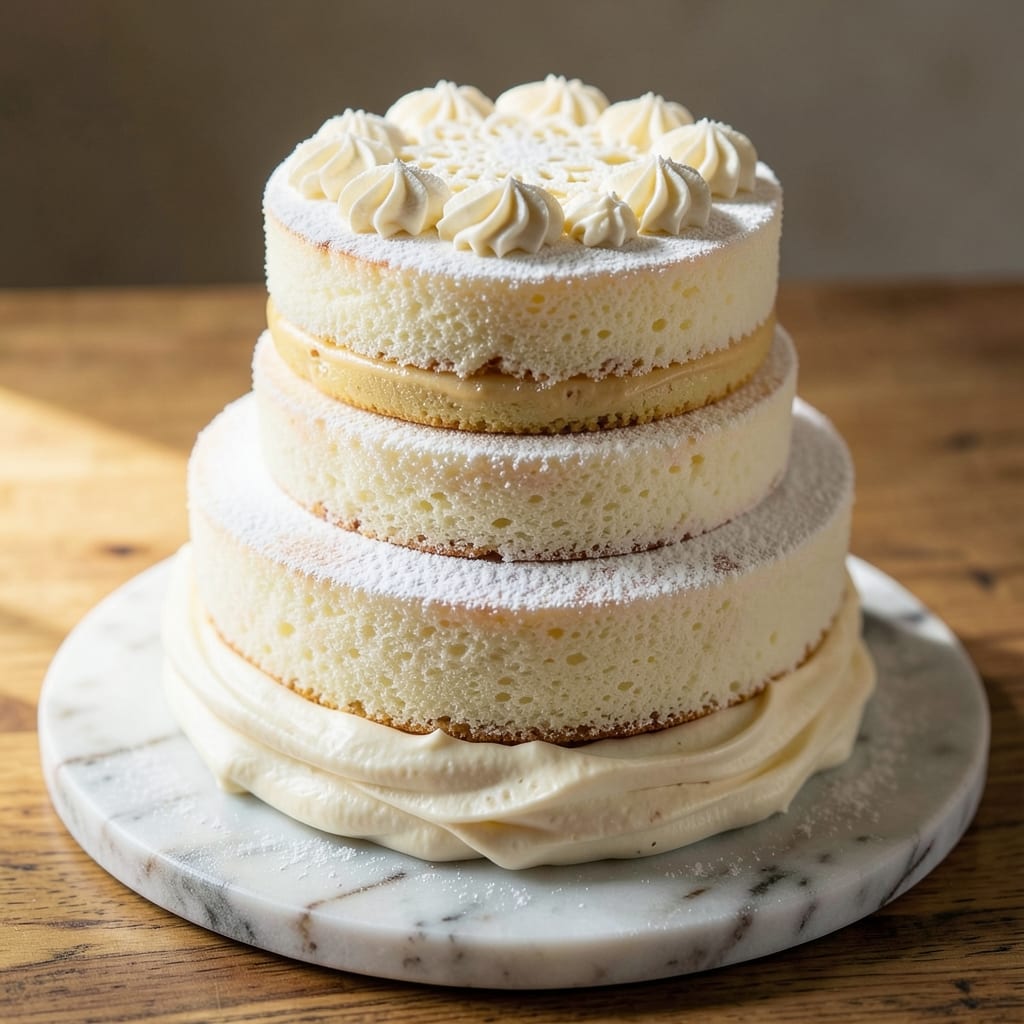
This 1 kg sponge cake recipe delivers the kind of ethereal, light-as-air layers that make every slice feel like a celebration. ✨ The secret lies in precise technique—whisking egg whites to stiff peaks, folding them into delicate clouds of batter, and baking at just the right temperature to create those signature tender layers. I've perfected this method over years of testing, and the results speak for themselves: a cake so tender it nearly dissolves on the tongue, with enough structure to hold its shape when sliced.
The foundation of this recipe is a classic vanilla butter sponge, where the magic happens in the mixing. A stand mixer with a whisk attachment is ideal for achieving those glossy, voluminous peaks in the egg whites, but even a hand mixer can deliver great results with patience. The cake bakes at 350°F (175°C) for about 30-40 minutes, until a skewer comes out clean but with a few moist crumbs—this is the sweet spot for that perfect balance of tenderness and structure.
What truly elevates this sponge cake is the vanilla bean whipped cream rivers that weave through the layers. Freshly whipped cream infused with real vanilla bean creates rivers of silky sweetness that contrast beautifully with the delicate cake. The combination of airy layers and creamy filling makes each bite feel like a moment of pure indulgence—without being overly heavy or dense.
This recipe is designed for special occasions where presentation matters, but it's also the kind of cake that disappears quickly at everyday gatherings. Whether you're serving it at a wedding, birthday, or simply treating yourself, the foolproof technique ensures consistent, restaurant-quality results every time. Let's get started on creating something truly extraordinary.
Ingredients for 1 kg sponge cake
Precision ingredients for a 1 kg masterpiece—where technique meets indulgence.
| Ingredient | Amount | Notes |
|---|---|---|
| Large Egg Whites 🥚 | 12 whole | Room temperature for stiff peaks |
| Large Egg Yolks 🥚 | 6 whole | Separated from whites |
| Granulated Sugar 🍚 | 1 ¼ cups | Superfine preferred for smoothness |
| Unsalted Butter 🧈 | 1 lb | European-style, 82% fat |
| All-Purpose Flour 🌾 | 1 ¼ cups | Sifted, spooned lightly |
| Vanilla Bean Paste 🌿 | 1 ½ tbsp | High-quality Madagascar preferred |
| Heavy Whipping Cream 🥛 | 2 cups | 36% fat minimum |
| Powdered Sugar 🍚 | 1 ½ cups | For whipped cream stability |
| Vanilla Extract 🍯 | 1 tsp | Pure Madagascar vanilla |
| Baking Powder 🧂 | ½ tsp | Aluminum-free preferred |
| Salt 🧂 | ¼ tsp | Fine sea salt |
| Cornstarch 🌾 | 1 tbsp | For tender crumb |
| Lemon Zest 🍋 | 1 tsp | Organic, finely grated |
The egg whites and yolks are non-negotiable for this recipe. Organic, free-range eggs from local farms or Petersen's Eggs deliver superior volume and stability. For the butter, Plugrá or European-style brands with 82% fat content are essential—they emulsify better and create that signature tender crumb. The vanilla bean paste should be Madagascar Bourbon for its rich, complex flavor profile, and always buy from reputable suppliers like Madagascar Vanilla Company to ensure authenticity. Sift your flour through a fine-mesh sieve to eliminate any lumps that could disrupt the delicate structure of the sponge.
No vanilla bean paste? High-quality vanilla extract at double the amount works in a pinch, though it lacks the natural seeds that add depth. Substituting heavy whipping cream with 35% fat whipping cream is possible, but expect slightly less stability in the whipped cream rivers. For the sugar, turbinado or raw cane sugar can replace granulated, though you may need to adjust slightly for volume. The lemon zest adds brightness—organic is best to avoid bitterness from pesticides. If you're short on time, pre-sifted flour mixes from Bob's Red Mill save effort without sacrificing quality, though freshly sifted flour always yields superior results for this delicate cake.
Store the cake components separately for optimal freshness. The baked sponge layers should be wrapped in plastic wrap and kept at room temperature for up to 3 days, while the whipped cream filling lasts 2 days refrigerated in an airtight container. Assemble the cake just before serving to prevent sogginess. For longer storage, freeze the assembled cake for up to 1 month, thawing at room temperature before serving. The vanilla bean paste and zest can be refrigerated for 6 months beyond their purchase date, while the butter should be used within 3 months of opening for peak performance.
Why You'll Love This Recipe
- No Stand Mixer Needed: I’ll admit—whipping egg whites by hand feels like a workout, but the result? That cloud-like texture is worth every second. No fancy equipment required, just elbow grease and patience (and maybe a little arm day).
- Butter-Soft Perfection: The moment you slice into this cake, you’ll get why I keep making it. The butter and sugar create this melt-in-your-mouth richness, while the flour keeps it light—not dense, not dry, just exactly what you want.
- Bakes for Crowds: One kilogram means you’re not stressing over portions. Feed a dozen guests, pack lunches for the week, or freeze slices for lazy mornings. It’s my go-to for birthdays, potlucks, or when I’m too tired to think.
- Stays Fresh for Days: Between us, I’ve had this cake last five days in the fridge without drying out. The butter keeps it moist, and if you wrap it tightly, it’s basically a dessert time machine—ready whenever you are. (Yes, even when you forget to bake ahead.)
Step-by-step instructions for light-as-air vanilla sponge cake
Master this delicate technique and you'll achieve professional-quality layers with airy texture and perfect structure.
🍳 Step 1: Prepare the Egg Foam Foundation
Separate the 12 whole large egg whites from the 6 whole large egg yolks, ensuring no yolk traces remain in the whites. In a spotless, grease-free bowl, beat the egg whites on low speed until soft peaks form. Gradually add the 1.25 cups granulated sugar while increasing speed to high, beating for 5-7 minutes until the meringue is glossy, stiff, and holds a peak when the whisk is lifted.
Here's the thing—this step makes or breaks your cake. The meringue should be thick enough to hold its shape when you fold in the yolks later. I like to test by tilting the bowl: if the meringue holds its form without sliding, it's ready. Work quickly now—egg whites lose volume when exposed to humidity.
👨🍳 Step 2: Fold in Yolks and Dry Ingredients
In a separate bowl, whisk together the 6 whole large egg yolks, 1.5 tbsp vanilla bean paste, 1 tbsp cornstarch, 0.5 tsp baking powder, 0.25 tsp salt, and 1 tsp lemon zest until smooth and pale. With a spatula, gently fold one-third of the yolk mixture into the meringue to lighten it, then fold in the remaining yolk mixture in two additions.
Next, sift the 1.25 cups all-purpose flour over the mixture and fold it in using a gentle "J" motion with the spatula. Stop folding as soon as the flour disappears—overmixing develops gluten and makes the cake dense. The batter should be thick but pourable, with ribbons that hold their shape when the spatula is lifted.
🔥 Step 3: Bake the Layers at Low Temperature
Divide the batter evenly between three 8-inch round cake pans lined with parchment circles and butter. Bake in a preheated 325°F oven for 35-40 minutes, rotating the pans halfway through. The cakes are done when they spring back when pressed gently in the center and pull away from the sides cleanly.
Don't overbake—these cakes rely on structure, not moisture. The internal temperature should read 205-210°F when done. Let the cakes cool in the pans for 10 minutes, then transfer to a wire rack to cool completely. This gradual cooling prevents cracking as they set.
🥘 Step 4: Prepare the Vanilla Bean Whipped Cream Rivers
In a chilled bowl, whip the 2 cups heavy whipping cream with the 1.5 cups powdered sugar and 1 tsp vanilla extract until soft peaks form. For the rivers, pipe the cream onto parchment paper in 1-inch wide swirls, then freeze for 30 minutes until firm. This creates elegant rivers when assembled.
While the cream sets, lightly toast the 1 lb unsalted butter in a dry pan over low heat until it turns a pale gold color—this removes moisture and enhances flavor. Let it cool slightly before using as filling between layers.
🍽️ Step 5: Assemble with Precision
Level the cooled cake layers if needed, then place the first layer on a cake stand. Spread ¼ of the toasted butter evenly over the top, then add a layer of frozen whipped cream rivers. Repeat with remaining layers, finishing with the top layer. Chill the assembled cake for 4 hours before serving to allow flavors to meld.
The result should be a 1 kg masterpiece with delicate layers, silky whipped cream rivers, and that signature vanilla bean aroma. Slice with a hot knife for clean edges and serve at room temperature for the perfect texture contrast.
Pro Tips For Making 1 Kg Sponge Cake
- Whip Whites to Stiff Peaks: DESCRIPTION: Don’t just almost stiff peaks—aim for the meringue to hold its shape when you flip the bowl upside down. I used to stop at "soft peaks" and wondered why my cake collapsed. Room-temperature whites whip faster and more stable, so take them out 30 minutes before starting (yes, even if you’re impatient like me).
- Temper the Butter Slowly: DESCRIPTION: Melt the butter until it’s just liquid, then let it cool to 40°C (104°F) before folding it into the yolk mixture. I learned this the hard way—hot butter curdles egg yolks, and no one wants scrambled eggs in their sponge. A quick ice bath works if you’re in a rush, but don’t skip cooling it somehow.
- Sift Flour Twice: DESCRIPTION: Measure the flour first, then sift it directly into the bowl—no scooping from the bag. After folding in the butter, sift it again to break up any clumps. Lumpy flour = dense cake. Sounds tedious, but it makes a real difference, especially with this recipe’s high egg-to-flour ratio.
- Bake Until Edge Pulls Clean: DESCRIPTION: Your cake’s done when the edge springs back immediately when pressed, and the center reads 95°C (203°F). I used to pull it out too soon because the top looked golden, only to have it sink like a sad soufflé. A toothpick test is fine, but don’t trust it—this recipe needs that extra minute.
Perfect pairings for this recipe
Creamy Fillings
This cake shines with its signature vanilla bean whipped cream rivers, but you can also experiment with other rich fillings. For a citrus twist, replace the vanilla extract with 2 tbsp orange blossom water and 1 tbsp lemon curd—the tartness brightens the delicate sponge beautifully. 🍊
For a chocolate lover's version, swap the vanilla whipped cream for dark chocolate ganache (melt 8 oz dark chocolate with ½ cup heavy cream) and pipe it into rivers before freezing. Add toasted hazelnuts for crunch. The contrast of airy cake and dense chocolate is divine.
Fruit Compotes
Fresh fruit compotes add vibrant color and natural sweetness to complement the cake's lightness. A raspberry compote made with 1 cup fresh raspberries, 2 tbsp sugar, and 1 tsp lemon juice (simmered until thickened) creates a stunning visual contrast. Spread between layers or drizzle over the top for elegance.
For summer gatherings, try a passion fruit curd—blend 1 cup passion fruit pulp, ½ cup sugar, and 2 egg yolks, then cook until thick. The tropical flavor pairs perfectly with vanilla. Chill the curd before assembling to maintain texture.
Boozy Enhancements
Elevate your cake with a rum-infused whipped cream by adding 1 tbsp dark rum to the vanilla whipped cream mixture. The warmth of the rum enhances the vanilla and adds depth. For a grand marnier twist, fold 1 tbsp Grand Marnier into the cream for a luxurious citrus note.
For a champagne-soaked version, brush the cake layers lightly with 2 tbsp champagne before assembling. The bubbles create an extra-light texture, and the effervescence complements the vanilla beautifully. This works especially well for celebrations.
Garnishes & Finishes
Fresh edible flowers like violets or pansies add a delicate, elegant touch to the cake's presentation. Place them gently on top after serving for a restaurant-worthy finish. For a modern twist, dust the cake with powdered sugar using a fine-mesh sieve for a snowy effect.
A caramel drizzle made by heating ½ cup sugar until melted and amber, then thinning with 2 tbsp cream, creates a glossy finish. Drizzle over the cake just before serving to keep it looking fresh. The sweetness balances the cake's subtle vanilla notes perfectly.
Nutrition facts
Frequently asked questions
Why does your recipe use 12 egg whites instead of the usual 6?
This recipe uses 12 egg whites to create a 1 kg cake because they're the secret to that signature light-as-air texture. More egg whites mean more air incorporation, which translates to higher volume and a delicate crumb. The extra yolks (6 total) balance the structure while keeping the cake tender. Think of it as building more "air pockets" in your cake—like inflating a balloon with extra air for that perfect rise!
Can I make this cake without a stand mixer?
While a stand mixer makes whipping egg whites easier, you can achieve great results with a hand mixer or even whisking by hand. The key is patience—whisk your egg whites for 8-10 minutes until they form stiff peaks. Work in a spotless, grease-free bowl and avoid overmixing the yolks. The folding technique remains the same, so don't rush this step. Your cake will still turn out beautifully!
What's the best way to store leftover cake?
Store the assembled cake in an airtight container at room temperature for up to 3 days. For longer storage, freeze the fully assembled cake (without wrapping) for up to 1 month. Thaw overnight in the fridge before serving. If storing components separately, keep the cake layers wrapped at room temperature and the whipped cream refrigerated. Rewhip the cream before reassembling for freshness.
Why does my cake turn out dense instead of light and airy?
Dense cake usually happens from one of three issues: overmixing the batter (which develops gluten), underwhipped egg whites (they need stiff peaks), or opening the oven door too early. Make sure your egg whites are completely free of yolk traces, and fold gently using a "J" motion. Also, bake at the recommended 325°F (160°C)—higher heat can cause the cake to set too quickly before the air can escape. Patience is key!
Can I substitute buttercream for the whipped cream rivers?
You can try, but the texture will be different. Buttercream is denser and won't create those elegant rivers when frozen. For a similar effect, use Italian meringue buttercream (whipped to softer peaks) and pipe it in swirls, then freeze briefly before assembling. The classic whipped cream rivers are lighter and melt beautifully in your mouth, but buttercream gives more structure if you prefer that.